
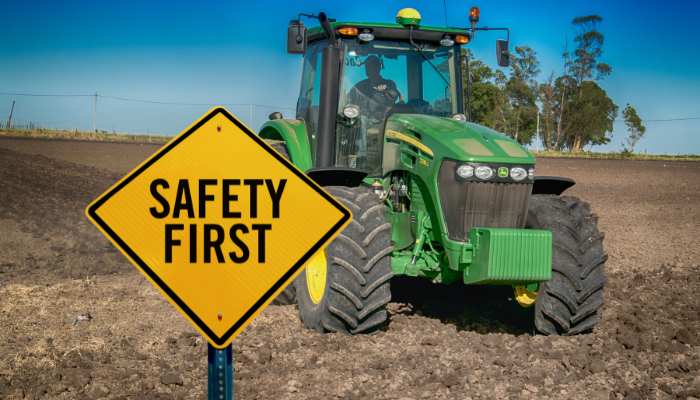
As part of Farm Safety Week, there is an emphasis on staying vigilant around farm vehicles. Francis Bligh, Teagasc Health and Safety Specialist, highlights the importance of understanding blind spots, maintaining clear communication, and managing vehicles to reduce the risk of injury.
This applies to all aspects of farm work, but it is particularly important when using farm vehicles. Farm vehicles are increasing in size, but they must still move and operate within the relatively small areas of Irish farmyards, roads and fields. Machine operators must have high levels of skill and experience to operate tractors and farm vehicles safely. Family members and neighbours need to be aware of the limits of a farmer’s visibility when operating these large machines.
Teagasc-FBD-HSA produced a short video highlighting the dangers of blind spots around farm vehicles
Tips to stay safe
- Limit people close to machines.
- Take action to minimise the risk of injury to bystanders. Keep them away from the working farm unless they are actively participating in the task.
- Remind people that if they don’t have the driver’s direct attention, they should not approach the vehicle. They should stay clear until they gain direct attention and the vehicle comes to a stop.
Blind spots – areas of poor visibility
Blind spots around farm vehicles are particularly hazardous in front of or behind a vehicle when a person is on the ground. However, blind spots can also be dangerous at the sides, as they can conceal the movement of someone approaching from the side. Mirrors are helpful in reducing blind spots; however, their effectiveness depends on their design, position and cleanliness. Mirrors and cameras are valuable tools to improve visibility but should not be exclusively relied upon, as blind spots may still exist.
Appropriate speed
Vehicle speed can be a major factor in people being struck by farm vehicles. The higher the speed, the greater the risk of collision and injury.
General safety tips
- Park vehicles in an orderly manner and develop a safe routine for vehicle use.
- Separate visitors from machinery areas.
- Use signs where necessary to highlight danger.
- Design the farmyard so that vehicles can be operated going forward as much as possible (minimise the need to reverse). This allows the driver a clear view ahead to see people or obstructions.
- Allow adequate space for turning circles that eliminate or greatly reduce the need for reversing.
- Manage the workplace to keep vehicle routes clear of obstructions.
- Ensure adequate lighting in the yard, farm buildings and on vehicles.
- Be aware that vehicle parts such as cab frames, exhaust pipes, loader headstocks, and in-cab equipment such as display screens can also interfere with the driver’s view.