
Stomach worms in lambs – what wormers are working on your farm?
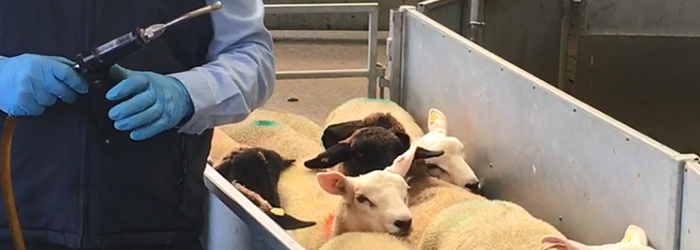
Sheep enterprises rely on the use of wormers to control stomach worms. Damian Costello, Teagasc Sheep Specialist, outlines a simple and cost-effective drench test that should be carried out on all sheep farms to determine if the anthelmintic classes being used are working.
One of the main challenges to lamb performance over the summer and autumn period is a continual exposure to picking up infective stomach worm larvae while grazing.
When the worm burden reaches a certain level, it will negatively impact lamb thrive. If infection becomes high enough, it results in ill health and even death in severe cases.
The sheep enterprise relies on the use of anthelmintic products (wormers) to control stomach worms. Over time, some of these stomach worms have developed an ability to survive a stomach worm treatment that should normally kill them.
Research studies have shown that this resistance to anthelmintic products is now widespread on Irish sheep farms. It is a waste of both time and money to dose your lambs with a product that is no longer working on your farm. There is a simple and cost-effective drench test that should be carried out on all sheep farms to determine if the anthelmintic classes being used are working.
Drench test to check if treatment was effective
There are a wide range of products on the market for the control of stomach worms in sheep, but they all fall into one of five classes of wormer. At farm level the main three used are:
- Benzimidazoles (white wormers)
- Levamisole (yellow wormers)
- Macrocyclic lactones (clear wormers)
A drench test is simply collecting faecal samples from a group of lambs before treating for stomach worms and sending the samples to a laboratory to count the worm eggs. The lambs are then treated with the product you want to test.
Depending on product used, a second sample is taken from the same group of lambs a set number of days post treatment. The number of worm eggs present in the second sample determines the efficacy of the treatment with no eggs present being the ideal result. A worm count post treatment is indicative of resistance and merits further investigation.
Carrying out a drench test
- The change in weather conditions following the dry spell has seen an increase in egg counts on faecal samples taken from lambs. Now is as good a time as any to check the efficacy of some or all the drenching products being used on the farm. The following is a step-by-step of the procedure:
- Randomly select 10-15 lambs from a group, spray mark to identify them and put them in a clean pen for an hour or two to allow them to defecate
- Collect a plastic teaspoonful from 10 separate faecal deposits and place them in sample containers
- Treat the lambs with the wormer you are testing according to manufacturer’s instructions, ensuring dosing equipment is calibrated and the lambs are treated based on the weight of the heaviest lamb in the group
- Send the samples taken to the laboratory, ideally on the same day. If there is a delay, keep samples in fridge and avoid leaving in direct sunlight
- Record the pre-treatment egg count and plan the post treatment sample as follows:
- Testing Levamisole-based product – 7 days post treatment
- Testing Benzimidazole or Macrocyclic lactone – 14 days post treatment
- After the appropriate number of days (7 or 14), gather the same 15 lambs into a clean pen and allow them 1 to 2 hours to defecate. Once again, collect a plastic teaspoonful from 10 separate faecal deposits and place them in sample containers
- Samples to be posted to laboratory straight away if possible. In the case of a delay, keep in fridge and avoid direct sunlight
- Record the post-treament egg count and calculate the percentage reduction
Calculating the percentage reduction in worm egg count
As previously mentioned, the best result is 100% reduction where no worm eggs are found in the post drench sample. The calculation is as follows:
% reduction = (Pre-treatment FEC – Post-treatment FEC x 100) divided by pre-treatment FEC
If the reduction is less than 95%, then the drench is deemed to have failed and is an indicator that the wormer is not effective on your farm. In this scenario, talk to your vet or advisor about follow up testing as well as advice on steps to take to slow down the further development of resistance.
For more resources on slowing the build up of anthelmintic resistance, visit here.