
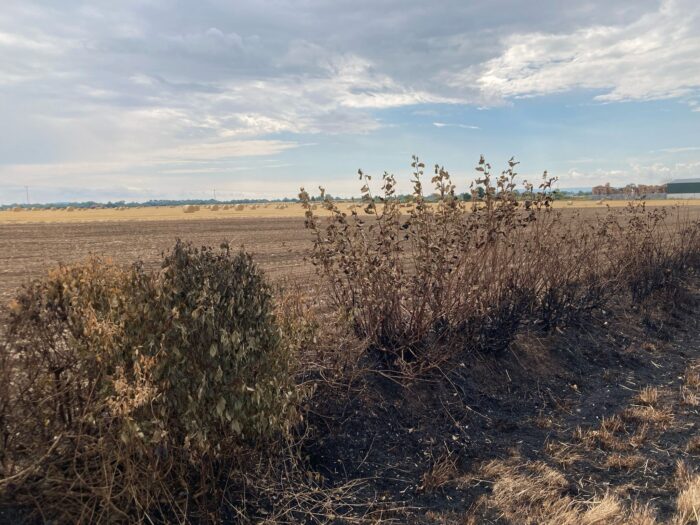
The risk of fire to life or limb is paramount, but machines are at risk too. In very dry hot periods, Dermot Forristal writes, there is a real crop or straw loss risk also.
Combines and balers are the big fire risks at harvest, followed by tractors.
Essential checks
Machine bearing failure, friction from rubbing components, and electrical shorts are the main sources of ignition for the flammable mix of crop residues, dust and oil found in harvest machines.
Checking all mechanical components is important, particularly where the modern cab isolates us from the smells and sounds that can occasionally forewarn us of pending disaster. Regular cleaning is vital to keep the engine and hydraulics cool, but particularly to remove the ‘fuel’ that is crop residue, dust and oil.
Training and limiting damage
Fire extinguishers are a must, and all operators should have a plan/training for a fire event. This may include safely tackling small fires, but also a strategy to limit the damage by preventing it spreading to more machines (by detaching implements etc.) or spreading to the surrounding crop.
Road vehicles in the field
Be particularly careful with road vehicles in the field. Today’s hot-running exhaust systems are a potential source of ignition. All road diesels have DPF units in their exhaust which reach a temperature of 600° C during regeneration to burn off soot. If this is in contact with dry stubble/straw, there is a fire risk. Keep all vehicles with underslung exhausts on roadways, hard surfaces, grass fields or areas where there is adequate clearance between the underbody and crop/stubble.