
Store lamb options for store lamb producers and purchasers
Forage availability, animal health and concentrate input are all important factors store lamb producers and purchasers need to bear in mind, Michael Gottstein, Teagasc Head of Sheep Knowledge Transfer, shares expert tips.
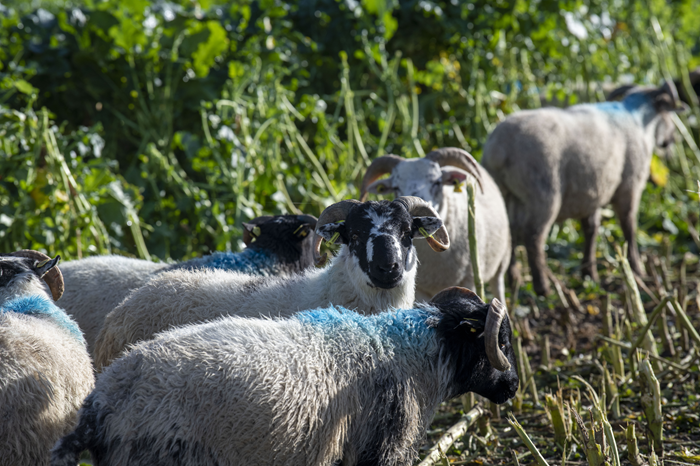
Our exceptionally dry summer and the corresponding drought / poor grass growth has resulted in less demand for store lambs, especially the lighter Scottish Blackface type lambs. Now that the rain has arrived, it will take a period of time for grass growth to build up on farms, and this hopefully will help farmers who are interested in purchasing store lambs.
Forage crops
Forage crops are now powering on. However, despite an early harvest, the lack of moisture delayed crops going into the ground and germinating and as such the yield potential of such crops is much lower than last year.
The carrying capacity of forage crops should be taken into consideration by anyone either considering holding on to their own lambs or those considering purchasing lambs.
Concentrates
In general, we recommend that lambs achieve a body weight of at least 38kg liveweight prior to being put onto intensive concentrate-based diets. This means that the lambs have grown the ‘frame’ to put on weight and, at that stage, can be relatively easily finished on concentrate diets.
Putting lighter lambs on intensive concentrate diets results in a lot of concentrate feed going in and the economics of this enterprise can be questionable.
Reducing costs
Concentrate inputs are the largest single variable cost going into store lamb enterprises. So how can we reduce these costs to improve margins?
Often the debate here centres around the cost of the concentrate feed and how it is purchased (e.g. straights vs nuts, bags vs bulk etc.). However, the cost of the feed is only one part of the jigsaw that determines the animal performance. It is important to consider other factors which affect animal performance such as:
- Animal health
- Issues such as lameness, internal and external parasites need to be addressed to maximise animal performance.
- Access to feed and forage
- Is there sufficient trough space to prevent bullying, are sharp areas of feeders etc. covered to prevent injury
- Access to clean water
- Lambs on high levels of concentrates will drink lots of water, up to 8 litres per head per day. Dirty water or lack of water will reduce intake and performance
- Mineral supplementation.
- Is the ration balanced for minerals and trace elements and in the case of ram lambs, is there ammonium chloride included (salt for organic lambs as ammonium chloride is not permitted in organic diets).
- Prevention of metabolic disease
- Is the ration properly formulated to minimise digestive upsets and is it introduced gradually and built up slowly over time to allow the lambs digestive systems to become accustomed to the new diet. This is also important if switching diets, always mix the old batch of concentrates with the new batch so that any change in ingredients doesn’t cause digestive upsets.
Do a budget
Regardless of whether buying stores or considering when to sell you own store lambs, a budget should be carried out to see if the enterprise is likely to leave a margin or when is the best time to sell.
Don’t forget to factor in the opportunity cost of grass / forage crops for other enterprises on the farm. If keeping store lambs out for the winter results in ewes and lambs having to be supplemented with meal post lambing or suckler cows having to be housed for an additional month, then these costs need to be accounted for.
Teagasc has developed a simple store lamb calculator that can be used to help in working out the costs and margins associated with store lamb production.
The Teagasc Store Lamb Finishing Calculator is available free of charge on the Teagasc website.
For more information on store lambs marketing and how to maximise the income from store lambs produced on your farm please, tune in to the Teagasc Sheep OviCast podcast: