
12 December 2024
Straw incorporation – its role in achieving net zero on tillage farms
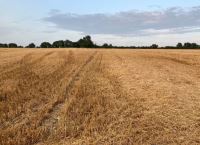
Ciaran Collins, Crops Specialist at Teagasc, takes a closer look at straw incorporation and its important role in achieving net zero on tillage farms. This follows an announcement by the Department of Agriculture, Food and the Marine that Straw Incorporation Measure payments had commenced.
This week, the Minister for Agriculture, Food and the Marine, Charlie McConalogue announced the launch of payments under the Straw Incorporation Measure. This scheme is designed to provide financial support for tillage farmers, enabling them to increase soil organic carbon (SOC) levels by chopping and incorporating straw from cereal and oilseed rape crops into the soil. Payments under the scheme are set at €250 per hectare for oats, wheat, barley, and rye, with a reduced rate of €150 per hectare for oilseed rape straw.
Straw incorporation is an important measure for tillage farmers in Teagasc’s Marginal Abatement Cost Curve (MACC), which outlines actions farmers can take to both reduce greenhouse gas (GHG) emissions and capture carbon. Other important measures highlighted in the MACC for tillage farmers include the use of cover crops and the application of organic manures.
Incorporating straw into the soil has been shown to deliver significant carbon sequestration benefits. According to the MACC, this practice can achieve an annual reduction of 1.08 tCO₂eq per hectare. A study by Teagasc and Tirlán measuring the carbon footprint of Irish grain found that Tirlán’s oats, wheat, and barley have some of the lowest carbon footprints globally. For example, Tirlán’s oats recorded a gross carbon footprint of 207kg CO₂ per tonne (significantly lower than those from other grain producing regions). When straw is incorporated into the soil, the carbon footprint is further reduced, bringing some crops close to achieving net zero emissions.
Straw incorporation not only mitigates climate change but also enhances soil health. By returning organic material directly to the soil, it boosts soil organic carbon levels and improves overall soil fertility.
The impact of straw incorporation on SOC depends on soil type, with fine textured soils like clay and silt being more effective at stabilising carbon, while coarse textured sandy soils see faster decomposition but arguably benefit more from the process.
Net zero emissions is within reach for tillage farmers and straw incorporation has a vital role to play in the process.