
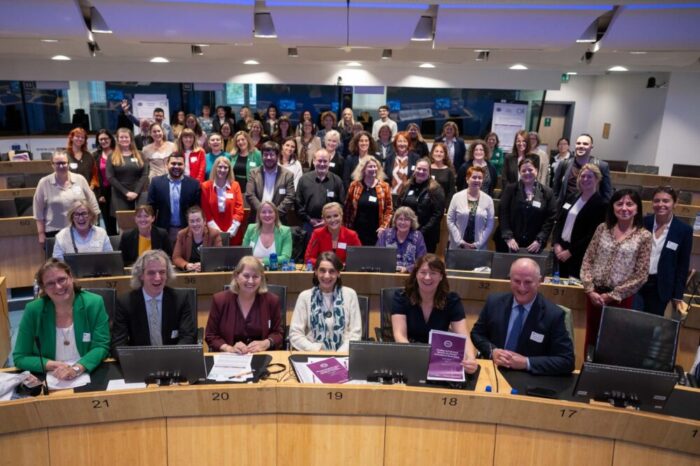
Europe cannot afford to lose the talent and innovation of rural women. Women do not lack ideas or ambition - they lack access.
Senior Research Economist at Teagasc, Anne Kinsella reports from the EU-funded FLIARA Final Conference held in Brussels on October 17, 2025, which gathered 100 participants onsite and over 200 online.
Marking a milestone in Europe’s effort to strengthen women-led innovation in farming and rural areas, the event unveiled three years of evidence, policy recommendations and hands-on experience gathered across 10 countries and celebrated the women shaping the future of rural Europe. Within Ireland, Teagasc, Longford Women’s Link and University of Galway are partners in the FLIARA project.
FLIARA is a Horizon Europe-funded project aimed at enhancing women-led innovation in EU farming and rural areas through a multi-actor approach, fostering collaboration and communication among various stakeholders to ensure effective project implementation and progress.
Underlining the urgency of change when opening the event, FLIARA Project Coordinator, Associate Professor Maura Farrell of the University of Galway noted that women remain under-recognised in rural leadership despite their central role in driving sustainability, community solutions and new economics.
“Innovation cannot be fully realised without women’s voices and visibility,” she said, paying tribute to FLIARA’s 20 case studies and network of 200 women innovators as well as the project’s ambassadors, whom she called “the embodiment of innovation in action.”
“The women of FLIARA were not participants – they were partners. They have already transformed their communities. Now it is time for policy and institutions to match their ambition,” added Associate Professor Farrell.
The policy front was covered by María Gafo Gómez-Zamalloa, Acting Head of Unit at the Directorate-General for Agriculture and Rural Development (DG AGRI) of the European Commission, in a keynote address.
Gender equality is both a founding value and a growing priority, she explained, but persistent imbalances exist; fewer than one-third of EU farms are led by women and only 2% by young women. To address this, she stressed the need for structural support, better data and targeted measures in future CAP and rural strategies.
The FLIARA Final Conference also heard testimonies of the FLIARA Ambassadors, who delivered some of the day’s most striking and emotional moments. They shared first-hand accounts of the bureaucratic hurdles, gender bias and cultural expectations that continue to slow women’s potential – alongside stories of resilience, community innovation and collective action.
Their message, echoed across the panel, was clear: women do not lack ideas or ambition — they lack access; access to transparent systems, tailored support, networks, childcare and decision-making spaces.
“Networks are not a luxury. They are oxygen,” Ursula Kelly, Irish ambassador for FLIARA, stated, capturing a theme that would return repeatedly throughout the day.
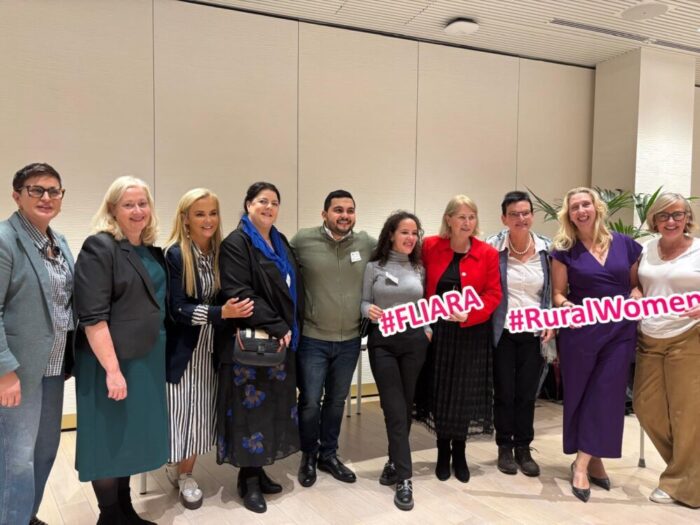
Members of the EU-funded FLIARA Project pictured with: Maria Walsh, MEP; Rose O’Donovan, Agra Facts; and Ambassador Cait Moran, who kindly hosted FLIARA in the European Parliament.
Policy, foresight and systemic change
The conference also showcased the project’s research foundation, which includes a foresight study involving 560 participants, a comparative policy analysis across 10 EU Member States, and a new benchmarking framework to advance gender-responsive policymaking.
Both researchers and policymakers acknowledged that women’s innovation remains systematically undervalued when success is defined solely by narrow economic or scalability metrics. They instead called for a shift toward ecosystem-based thinking, community-driven models and gender-sensitive governance.
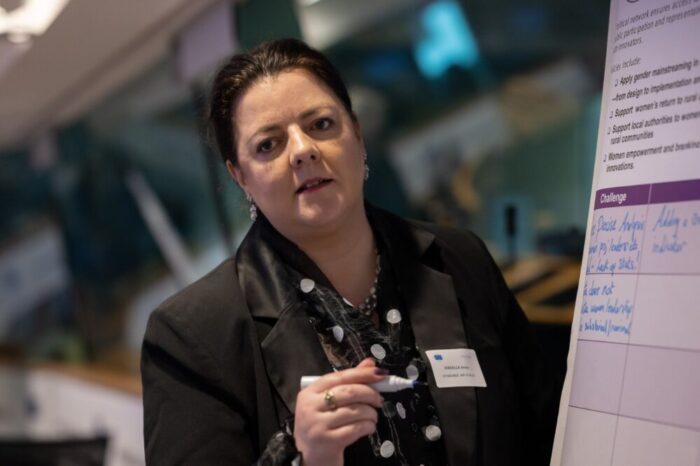
Anne Kinsella, Senior Research Economist at Teagasc, at the FLIARA Final Conference
Across two high-level panels featuring representatives from EU networks and initiatives, the European Parliament and the European Commission, speakers emphasised that gender equality must evolve from being optional to becoming structural. Persistent data gaps, fragmented policies and inflexible funding mechanisms were identified as major barriers – alongside a shared understanding that Europe cannot afford to lose the creativity and innovation of rural women.
The FLIARA consortium also introduced the FLIARA Toolkit, a resource created to ensure that knowledge and guidance remain accessible beyond the project’s conclusion. Alongside it, a vibrant Community of Practice and Ambassador Network will continue to collaborate, mentor and engage with policymakers.
For more on the FLIARA Final Conference, visit here.
More from Teagasc Daily: Trapped on the farm: How pension gap keeps older farmers at work