
Stronger prices drive suckler profits in 2025
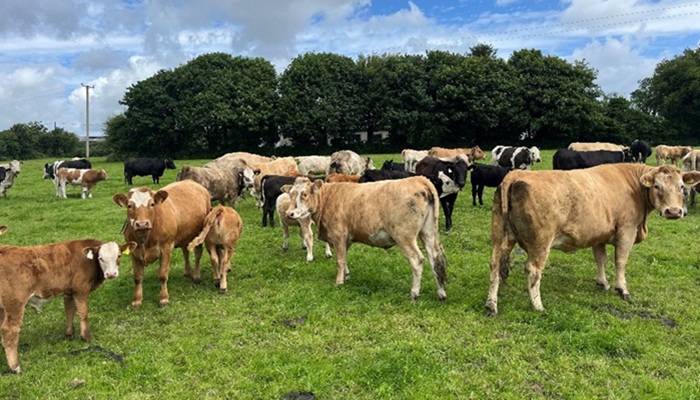
Suckler beef farms recorded a welcome improvement in profitability in 2025, as stronger beef prices helped offset input costs. Future Beef Programme Advisor, Aisling Molloy reports on the profit monitor results from the Teagasc Future Beef Programme farms.
The profit monitor results from the Future Beef farms show a strong increase in profit margins, with a good spring, output gains and tighter cost control also playing a role.
This analysis includes 22 farms; 21 commercial farms plus the Newford herd in Co. Roscommon. The systems vary from suckler to weanling, store and/or finish, combined with some dairy calf to beef operations. The farms are located right throughout the country and also include two organic farms. The average farm size in the programme is 50ha and the average herd size is 48 cows.
The main benchmarking figures include:
1). Output per livestock unit: 368 kg/LU (+4%)
This is a measure of everything that affects daily live weight gain on the farm, including bull fertility, cow fertility, mortality, grass management, animal health, silage quality, ration fed etc. The target is over 350 kg/LU for a suckler system and 500kg/LU for a dairy calf to beef system. The bull beef systems continuously rank the highest for this figure. This figure increased from 353kg/LU in 2024, mainly due to an early spring which got grass into the diet and extra ration fed to increase weight at sale.
2). Stocking rate: 1.87 LU/ha (+1%)
The focus of the Future Beef Programme is to improve the individual performance of each animal rather than driving up stock numbers. Only one farm in the programme is in derogation. Other limitations to increasing stocking rate include land, labour and housing. Most of the farms are content with the stock numbers that they are at and while they plan to increase slurry storage on their farms, few intend to move past the stock numbers they are currently at. It increased slightly from 1.85 LU/ha in 2024.
3). Gross output: €3,007/ha (+39%)
The gross output figure is calculated from cattle sales minus cattle purchases and add/subtract any changes to the inventory. This is the main ‘money in the pot’ to cover variable and fixed costs on the farm. This figure clearly shows the benefit of a suckling system in 2025 where programme farmers had their stock born at cost price and weren’t competing with the live trade to buy in cattle at high prices. The higher prices resulted in a 39% higher gross output figure, up from €2,018/ha in 2024.
4). Variable costs: €1,294/ha (+13%) & 43% of gross output
The highest variable costs across the farms continue to be purchased concentrate, fertiliser and contractor bills, accounting for 67% of total variable costs. Other variable costs include purchased forage, veterinary, breeding, young stock costs, seed & spray, other forage conservation costs, bedding and sundry costs. The variable costs can also be looked at in terms of the percentage of the gross output and this year’s figure was 43% which is well below the target of less than 50%. While variable costs were up 13% from €1,132/ha in 2024, it was not a cause for concern with the higher output prices as they were 56% of the gross output figure in 2024.
5). Gross margin: €1,713/ha (+64%)
This is the most comparable figure across suckler beef farms as fixed costs tend to vary dramatically depending on the level of hired labour and depreciation because of investment on the farm. This is the highest group figure achieved in the programme to date. However, there was a significant range even within the programme of €346/ha to €2,711/ha. The lowest range bought in cattle at high prices and struggled to get a return on them, while the higher gross margin systems sold cattle at the peak of the beef prices – either as finishing bulls to the factory or commercial weanlings from their yard. Overall, the figure was 64% higher than €886/ha in 2024.
6). Fixed costs: €828/ha (+14%)
The fixed costs include machinery running & repair (which tends to be higher for farms with low contractor costs), machinery leases, hired labour, farm car, electricity, water, depreciation of machinery and buildings, repairs & maintenance, insurance, professional fees and land lease charges. There is a wide range across the Future Beef Programme as it ranges from €458/ha to €1,255/ha and is expected to rise again due to investments in handling units, slurry storage and automated systems across the farms. Some of this investment was seen in 2025 as fixed costs increased from €720/ha in 2024.
7). Net margin (exc. direct payments): €884/ha (+137%)
When the fixed costs are taken away from the gross margin figure, this results in a net margin of €884/ha, significantly higher than €166/ha in 2024. When cattle only direct payments are included, this rises to €1,064/ha which is a significant increase on 2024 margins of €313/ha. Other direct payments are added such as BISS, CRISS and the eco scheme are then added to this.
8). Grass utilised per ha: 7.89 t DM/ha
A new figure included in the 2025 profit monitor system is the grass utilised per hectare. This is calculated based on the stock numbers for the year and their feed demand, minus the imported feeds such as purchased forage and ration. When one outlier from the group is removed, it shows that every 1t of grass dry matter utilised/ha was worth €107/ha in net profit.
The most profitable farms had an output per livestock unit of >359 kg/LU, produced 814 kg/ha of beef, had a gross output €3,724/ha and kept variable costs low at €1436 (38% of gross output).
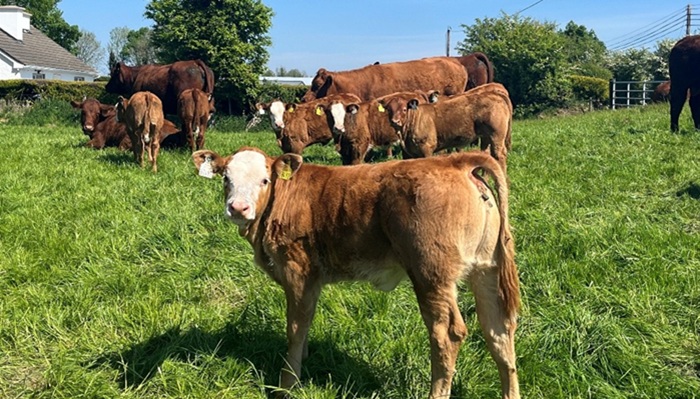
A group of heifers born from sexed semen on Shane Keaveney’s farm in Co. Roscommon
Focus on the basics
While beef price and a good live trade largely contributed to excellent margins across the Future Beef Programme in 2025, the basics remained as important as ever. Maintaining a 365-day calving interval, aiming for one calf per cow per year, calving heifers at 24 months, focusing on maternal and terminal genetics at breeding, maintaining grass quality throughout the year, following a herd health plan, making >72% DMD silage and having sufficient lying & feeding space and ventilation for stock over winter remained crucial. Controlling costs also helped to retain profits and strategic investments are being made into 2026 from this to improve labour efficiency across the programme.
An outlook for the year ahead
Input costs such as fertiliser, feed, diesel and silage plastic are already higher on farms this year. Soil fertility, clover, good silage quality and maximising cheap weight gain from grass will play a role in reducing some of these costs, as well as the management practices outlined above. The forecast for beef prices is positive in comparison to previous years, but margins were predicted to be back in 2026 from the ‘Outlook 2026: Economic Outlook for Irish Agriculture’ Conference. Ultimately, farmers can only control what’s inside their own gate and that will continue to be the case going forward. For now, the beef trade is on solid ground, offering a welcome boost of confidence and optimism across the suckler sector.
Aisling Molloy is an Advisor on the Teagasc Future Beef Programme. For full details of the programme and the farmers enrolled, visit the Future Beef Programme webpage.