
Supplementary feeds account for 50% of diets on worst drought-affected farms
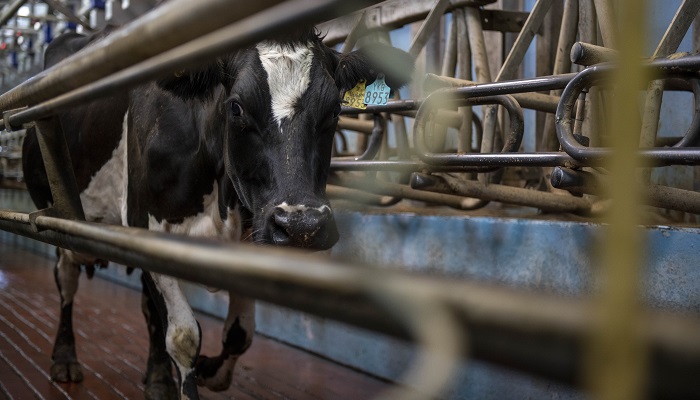
Silage and concentrates account for close to 50% of the diet of dairy cows in the worst drought-affected areas, data stemming from PastureBase Ireland and brought before a recent National Fodder Meeting has revealed.
Presenting to the meeting convened by Minister for Agriculture, Food and the Marine, Martin Heydon TD on August 18, Dr Michael O’Donovan, Head of the Grassland Science Department in Teagasc, provided a grass growth and fodder budget update.
Currently, Dr O’Donovan explained, there’s a very significant reduction in grass growth on many farms, especially in Leinster and Munster. To date in 2026, annual grass growth has been 8.2t DM/ha on farms recording through PastureBase Ireland. Albeit the average was similar to the five-year average, a noticeable dip in grass growth has been recorded since mid-July.
Given the decline in grass growth rates, Dr O’Donovan told the committee that significant supplementary feeding is on-going in affected regions, with close to 50% of dairy cows’ diets consisting of supplementary silage and concentrates (equally split between both) across Munster and Leinster (further details in table 1 below).
Table 1: Current feeding levels (16/8/2026)
| Grass (kg DM/cow) | Concentrate (kg DM/cow) | Silage (kg DM/cow) | % of diet as supplement | |
| Munster (1,218 farms) | 9.5 | 4.5 | 4.0 | 47% |
| Leinster (396 farms) | 10.5 | 4.8 | 4 | 46% |
| Carlow/Kilkenny/Laois/Kildare/Wicklow/Wexford | 9.0 | 5.0 | 5.0 | 53% |
| Connacht/Ulster (273 farms) | 14 | 2.0 | 2.0 | 30% |
When compared to normal feeding rates (16kg of grass + 3kg of concentrate), this supplementary feeding (4-5kg of silage and 5kg of concentrates) is resulting in additional costs at farm level of approximately €1.90/cow day or €1,330/week for a 100-cow herd. For the worst affected farmers, however, cost increases of €3.00-3.50/day may be being experienced.
Dr O’Donovan also presented summary data from fodder budgets in PastureBase Ireland and the wider Teagasc Fodder Survey.
Preliminary findings show that fodder stocks for next winter are currently less than required, at 4.1 months feed on average across the country, with 4.4 months in Connaught/Ulster, 4.2 months in Munster and 4.0 months Leinster. Additionally, preliminary data shows that 14% of farms have a significant shortfall in winter fodder supplies (vs 6-10% in a normal year), with a further 25% reporting a 10-20% shortfall.
“The longer the drought persists, the more fodder stocks will be diminished, and the worst affected counties are Kilkenny/Laois/Carlow/Kildare/Wexford/Wicklow/Tipperary/Waterford/Louth/Meath, Offaly, Westmeath and North Cork,” Dr O’Donovan said. If not already completed, Dr O’Donovan encouraged farmers to complete a fodder budget through PastureBase Ireland. Where it has been completed, he urged farmers to keep track of feed stocks used and to regularly update the budget to keep on top of the ongoing situation.
Table 2: Adequacy of winter fodder supply on farm (data from wider Teagasc survey through advisors 15/8/2026)
| Surplus | 8% |
| On target | 24% |
| Within 10% | 29% |
| 10-20% short | 25% |
| Significant shortage | 14% |
More from Teagasc Daily: Potato and vegetable growers under significant pressure
More from Teagasc Daily: Dealing with the drought – Teagasc Advisory Messages