
11 September 2023
Sustainable beef production in Monaghan
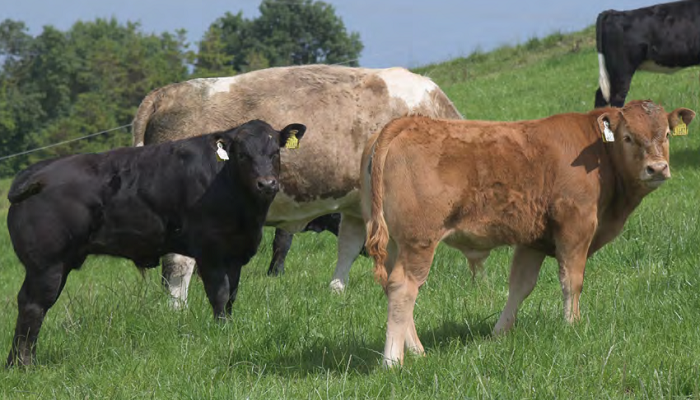
What does sustainable farming mean in practice? Monaghan drystock farmer Wesley Browne is showing how it can be done profitably, Gabriel Trayers, Teagasc Future Beef Programme Advisor, tells us more.
The world’s population is expected to rise from 6.7 billion in 2009 to 9.2 billion by 2050. Global food production will need to rise dramatically. The problem is that many food production practices are influencing our environment and climate in a very negative way.
The greatest agriculture challenge of our time is to achieve global food security while reducing, eliminating and, ideally reversing, environmental damage.
Sustainable agricultural practices offer a solution. It means farming in a way that has environmental, social and economic dimensions. In simple terms, it means farming profitably while enhancing the environment to the benefit of all.
To play its part in combatting climate change Irish agriculture must reduce its greenhouse gas emissions (GHG) by 25% by 2030. While it won’t be easy, we can achieve this target if practices and actions to reduce GHGs are quickly adopted by all farmers, whatever their enterprise.
The Teagasc-led Signpost programme is a multi-annual campaign to lead and encourage climate action by all Irish farmers. The programme includes a network of demonstration farms across the country that will be adopting these mitigating actions to reduce GHGs and enhance biodiversity.
The lessons gained and actions adopted by these farmers will be showcased for all farmers in their regions to see. Wesley Browne, is one such farmer. Farming just outside Monaghan town, he calves 90 cows in spring with all males finished as under 16-month old bulls and yearling heifers sold as breeding stock.
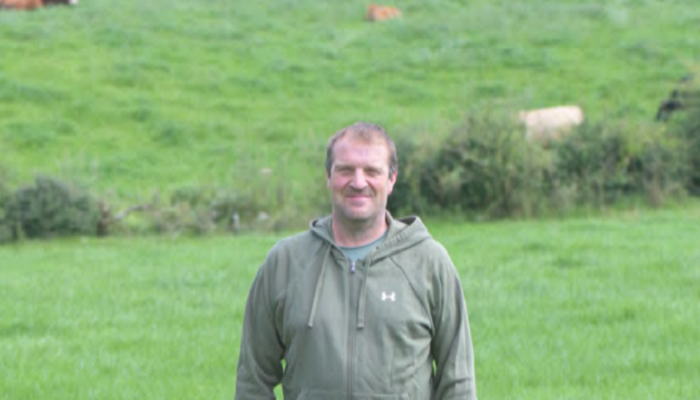
“Our land is typical of Monaghan, which means it is fragmented; the soil is heavy and many of our fields are sloping,” Wesley said.
In terms of economic sustainability, the farm is in a strong position. In 2022, the gross margin was €1,399/ha.
“We are primary producers of beef and I believe that a ‘greener’ image will be a big positive for the farm. If we want to survive, we need to showcase that efficient farming can be done in an environmentally friendly way. I’m committed to reducing the production of greenhouse gases on the farm which will reduce my overall carbon footprint,” Wesley commented.
‘Green’ and efficient
“The majority of the steps we are taking to reduce GHGs also make the farm more profitable. So I see them as a win-win for us and the environment,” Wesley explained.
The following are some of measures he has taken to reduce GHGs such as nitrous oxide, methane and ammonia:
- The only type of chemical nitrogen Wesley uses is protected urea. Protected urea results in much lower nitrous oxide emissions than CAN and is also cheaper per unit of N.
- Wesley has taken soil samples to help him build soil fertility in a targeted way and, where necessary, to correct the soil pH. Raising the pH to 6.5 means that the soil will release 64 units/ac of N naturally and the efficiency of chemical fertiliser is enhanced.
- To build the P and K indices, Wesley’s fertiliser of choice is now 18.6.12 rather than low P and K blends. The fertiliser programme only includes 18.6.12 and protected urea.
- Slurry is applied using a LESS slurry spreader. This reduces ammonia emissions and also increases the N value from 6 units to 9 units/1,000gal. Wesley prioritises areas like silage ground.
- Wesley has increased his focus on grassland management. The overall aim is a long grazing season with the herd consuming high-quality pasture. In 2022, the grazing season lasted 280 days – a high figure for the location. Wesley has divided the land into 42 paddocks, which allows him to grow more grass and to manage it effectively.
- He operates a very efficient suckler herd, which is hitting all the key performance indicators including: one calf/cow/year; a 360 day calving interval; 100% calving in 11 weeks; 96% of the heifers calve at two years of age. This is a big lever when it comes to reducing GHG on farms and can lower GHGs by 12%.
A proactive approach to carbon capture
Looking at his future farm sustainability steps, Wesley says he is aiming to increase the clover content in the swards.
“This will help reduce our fertiliser usage. In preparation for clover, we have applied lime at 2t/ac, docks and weeds have been sprayed off. We plan to sow clover in April next year.
“The other big area we are targeting to reduce GHG production from the farm is to further reduce the age at slaughter. Currently, the bulls are finished at 15.3 months. I feel that we can reduce this age by pushing the males more at the weanling stage.
“This year, we started forward-creep grazing and will introduce meal earlier in the autumn. The target is to reduce the average age at slaughter to 15 months,” Wesley said.
Wesley also wants to be proactive in terms of capturing carbon, adding: “There are different hedge types on the farm, so we are putting a plan in place on how we will manage these hedges over the next few years to maximise carbon capture.”
Upcoming event
Wesley will host a farm walk on Wednesday, September 13th at 5.30pm. Topics to be discussed include: breeding progress (2018-2023); improving grassland management; financial performance; and future plans to reduce carbon footprint. The event will take place on Wesley Browne’s farm, Ramanny, Co. Monaghan, Eircode: H18 R921.
This article first appeared in the September/October edition of Today’s Farm. For more information on this publication and to access in full, click here.