
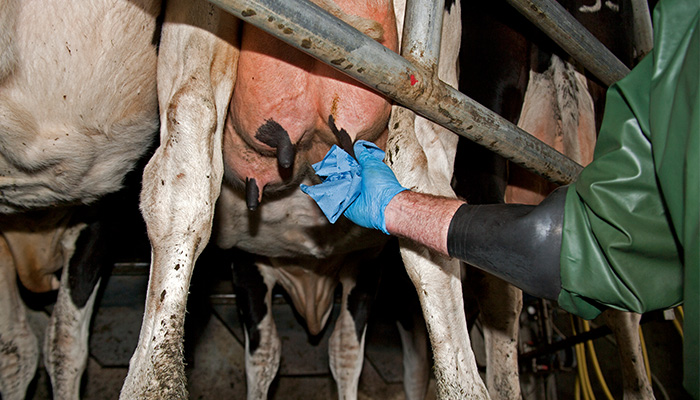
One of the valuable tools available to dairy farmers for managing and controlling mastitis, writes Padraig O’Connor, is culture and sensitivity testing.
As the dry cow period approaches, it is worth taking time to plan around this stage and consider the type of dry cow tubes to be used.
Culture and sensitivity testing involves collecting a milk sample from an infected quarter, either from a clinical case of mastitis or a quarter with a high somatic cell count (SCC) and sending it to a microbiology lab. The lab identifies the bacteria causing the infection, which helps determine whether it is contagious or environmental. This information enables the farmer and their vet to select and implement the most appropriate control measures.
In addition, the laboratory can assess whether the bacteria are resistant or sensitive to specific antibiotics. This process, known as sensitivity testing, is particularly useful prior to drying off the herd, as it helps in selecting the most suitable dry cow therapy for cows with infections.
The cost of testing will vary depending on the laboratory used and the number of samples submitted, but the average cost is approximately €25 per sample.
Equipment required for taking a sterile sample
- Sterile sample bottle
- Clean disposable gloves
- Teat disinfectant
- Disposable paper towels
- Cotton wool and methylated spirits/surgical spirits (or medicated wipes)
Procedure for collecting a sterile sample
- Label the sample bottle clearly with date, farmer name, cow number, and quarter.
- Put on clean disposable gloves.
- Disinfect the teat by spraying or dipping it with teat disinfectant.
- Allow 30 seconds for the disinfectant to act, then dry the teat with a disposable paper towel.
- Thoroughly clean the teat end with cotton wool soaked in methylated/surgical spirits or with medicated wipes. The teat end must be completely clean.
- Prepare the sterile bottle for sampling.
- Discard the first three streams of milk onto the ground.
- Collect the sample by holding the bottle at an angle (about 3–4 cm from the teat end) to avoid contamination.
- Fill the bottle only one-quarter full.
- Close the bottle immediately, ensuring the cap does not touch any surfaces.
- Store the sample in a cool dry place until it is sent to the lab
General guidelines
- Use the California Mastitis Test (CMT) paddle to identify the infected quarter in a high-SCC cow.
- Do not sample cows that have received antibiotic treatment within the past four weeks.
- Milk samples can be frozen and stored for up to four months without negatively affecting most major mastitis pathogens.
- Consult with your vet and advisor to interpret results and make informed decisions about dry cow therapy and herd management.
- Targeted antibiotic use, based on culture and sensitivity results, helps reduce the risk of antimicrobial resistance (AMR) within the herd.
Avoiding contamination
Contamination with environmental bacteria is one of the most common issues during milk sample collection. To minimise this risk:
- Always use a sterile sample bottle.
- Wear clean disposable gloves.
- Ensure the teat is properly cleaned and disinfected before sampling.
Collect milk only from the infected quarter, not a composite sample from all four quarters
Culture and sensitivity testing is a vital tool in mastitis control programmes. By identifying the specific bacteria responsible for infection and determining their antibiotic sensitivities, dairy farmers in partnership with their vets can make evidence-based decisions. This approach not only improves udder health and milk quality but also contributes to the global effort to reduce antimicrobial resistance.
More from Teagasc Daily: Tipperary and Cavan destinations for Teagasc Dairy Conference
More from Teagasc Daily: Tips to control thermoduric levels