
TAMS 3: Plan the investment, not just the grant
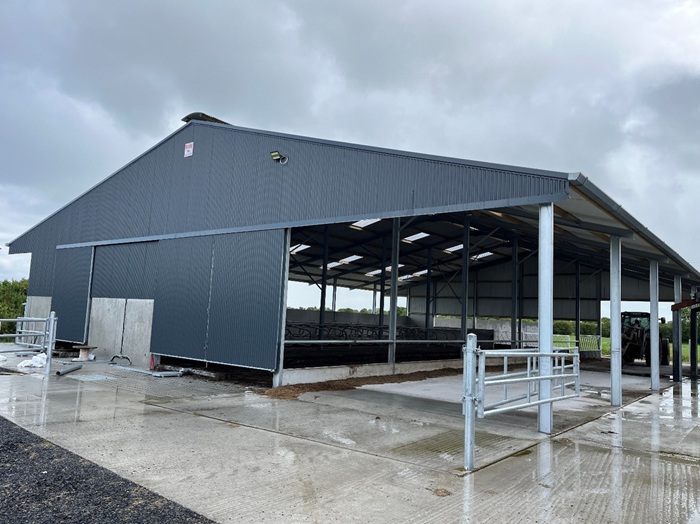
The best TAMS projects leave a farm safer and simpler to operate, John Galvin, Specialist Schemes Advisor in Teagasc Galway/Clare writes on the importance of planning the investment.
Since opening under the 2023–2027 CAP Programme, TAMS 3 has become one of the strongest drivers of farm investment in recent years. The first 12 tranches attracted 69,593 applications and tranche 13 added another 3,910, bringing submissions to just over 73,500.
By 18 September 2026, the Department of Agriculture, Food and the Marine (DAFM) had issued 54,432 approvals, received 24,338 payment claims and made 21,117 payments, worth a net €190.1m. DAFM says application numbers are more than three times those under the previous scheme. That level of demand is a clear measure of success, although ranking and selection now means approval cannot be taken for granted.
Table 1 – Tranche 12 (June 2026) Ranking and Selection cut off points and % Selection
| Scheme | % Selection | Cut off mark |
| AWNSS | 75% | 0.77 |
| DES | 20% | 10.61 |
| FSCIS | 100% | n/a |
| LESS | 10% | 31.8 |
| OCIS | 75% | 10.43 |
| PPIS | 75% | 25 |
| SCIS | 10% | 13.44 |
| TCIS | 70% | 6.77 |
| WFCIS | 75% | 1.52 |
| YFCIS | 75% | 0.28 |
TAMS is not one simple grant. It’s 11 schemes covering animal housing and welfare, slurry and nutrient storage, dairy equipment, farm safety, low-emission slurry spreading, solar energy, tillage, organics, pig and poultry production, young farmers, women farmers and facilities for importing nutrients onto lower-stocked holdings.
Standard aid is generally 40%, with 60% applying to several priority areas, including safety, solar, LESS, organic investment, eligible young and women farmers and qualifying nutrient storage. The Nutrient Importation Storage Scheme carries a 70% rate, subject in every case to its own eligibility rules and investment ceiling.
Start with the farm and farmyard plan
A successful application begins well before anything is entered online. The farmer and advisor should first identify the real bottleneck, whether that be housing, storage, labour, safety, energy use or machinery. The correct scheme and investment code must then be chosen, eligibility checked and realistic prices obtained.
For building work, that usually means involving an agricultural advisor or agent, along with a competent farm building designer, engineer or draughtsperson. Planning permission, or the required declaration of exemption with stamped drawings, must be in place before the TAMS application is submitted where applicable.
Applications are lodged through AgFood, supported by layouts, maps, dimensions and technical documents. Fixed work must not begin until written approval issues. Once completed to DAFM specification, the payment claim must include paid invoices, relevant certificates, tax-clearance details and geotagged photographs showing each completed sub-investment. That paper trail is every bit as important as the concrete and steel.
Shed design
Good-shed design should improve the whole yard, not merely add another building. Livestock, machinery and delivery routes should cross as little as possible; handling and calving facilities need safe access; sheds require effective ventilation without draughts; and clean roof water must be kept separate from slurry and soiled water.
Under the current Nitrates Regulations, manure and effluent storage must cover the statutory period – 16 to 22 weeks depending on location – and also cope with adverse weather. From 1 October 2028, dairy slurry capacity rises from 0.33m³ to 0.40m³ per cow per week, while dairy soiled-water provision rises from 0.21m³ to 0.30m³. A tank designed today should therefore allow for future compliance, rainfall, freeboard and a sensible operating buffer, rather than scraping past today’s minimum.
Planning exemptions were widened at the end of 2025. Qualifying animal housing may now extend to 300m² per structure and 450m² in aggregate, while a stand-alone slurry, effluent or soiled-water store may qualify up to 1,000m³, subject to a 1,500m³ farmyard limit.
Mind the funding gap
DAFM reference costs are grant benchmarks, not contractor quotations. For applications from 6 September 2025, the revised schedule applies. Grant aid is calculated on the lowest of the Department reference cost, the eligible paid cost excluding VAT, or the cost entered in the application. Farmers should therefore obtain firm supplier prices and budget for any difference between the grant calculation and the actual bill.
Funding may come from savings, a bank, credit union or specialist agricultural lender, with staged payments agreed with contractors where appropriate. However, the investment must be fully paid and owned before claiming; lease or hire-purchase funding is not accepted under the cited TAMS conditions. Cash flow is crucial because TAMS is generally reimbursed after completion; from my experience of late, all large-scale building projects are going over time and over budget.
The best TAMS projects leave a farm safer and simpler to operate; better handling reduces risk, improved layouts save labour, well-ventilated housing supports animal welfare, additional storage strengthens nitrates compliance, and solar, rainwater harvesting or precision equipment can lower resource use.
Looking beyond 2027, the Department of Agriculture is seeking evidence on possible future supports for climate-resilient infrastructure, energy, water, digital technologies, precision farming, safety, animal welfare and nutrient management. These are priorities under consideration – not promised grants. The practical message remains the same: invest in what the farm genuinely needs, build it properly and use the grant to support a sound plan, not to justify a poor one.