

Edited By
Pearse Kelly
Head of Drystock Knowledge Transfer
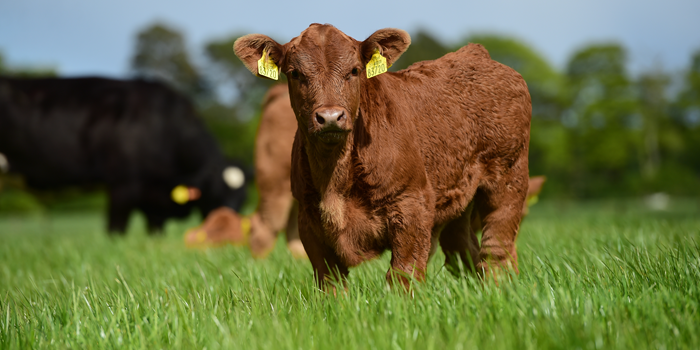
Welcome to the Teagasc April Beef Advisory Newsletter. In this edition, Teagasc Head of Drystock Knowledge Transfer, Pearse Kelly shares key grazing advice after a delayed spring, tips on fertilising silage ground, best practice in weaning dairy-beef calves and key pointers for the fast-approaching breeding season.
Grassland management
Higher rainfall this spring has delayed turnout on many beef farms around the country. As a result, plans for the first grazing rotation may need to be adjusted.
The good news is that, while ground conditions have been slow to improve, it has not been a cold spring. Soil temperatures are normal and day length is increasing, so grass growth should rise quickly during April.
The main priority now is to get through the first rotation without letting covers get too strong. If grazing is delayed for too long, there is a risk of heavy covers building up by the end of April. These stronger swards will be harder to graze out properly, which can then affect grass quality in the second and later rotations.
At the same time, farmers should keep a close eye on regrowth on paddocks already grazed. Good recovery will be important to ensure there is enough grass available for the start of the second rotation. This will depend on soil temperatures during April, but also on fertiliser application.
On medium- to higher-stocked farms in particular, fertiliser needs to be applied as soon as conditions allow. Where there is a phosphorus allowance available, a compound fertiliser is the best option in April. It will help encourage tillering and root growth and will also support recovery where there has been light poaching damage.
Later in the month, if some grazing ground still remains to be grazed but the first paddocks grazed have recovered well, it may be worth taking some of the stronger covers out as baled silage. This can help kick-start the second rotation earlier and maintain better grass quality for the rest of the grazing season.
Fertilising silage ground
Silage making has become more expensive in recent years, and with fertiliser and fuel costs higher again, the cost of producing silage this year will be under even more pressure.
At the same time, silage quality on many beef farms remains too low. This is a major issue, because poor-quality silage is a very expensive feed source. In many cases, cutting is delayed to bulk up the crop and try to reduce the cost per tonne. While that may have some value where silage is being fed to dry suckler cows, it is false economy for most other classes of stock.
The aim should be to grow a good, leafy crop that can be cut from mid-May onwards. To achieve this, the sward needs adequate nutrition from the start. Following the right fertiliser programme is essential if you want both good yield and good feeding value.
Key points to keep in mind:
- Treat first-cut silage like any other crop. The target is a heavy yield, but also high dry matter digestibility (DMD).
- Silage ground has a high demand for nutrients, especially potassium (K).
- Cattle slurry is a valuable source of nutrients and can help reduce the amount of expensive bag fertiliser needed. Where slurry is applied, fertiliser rates should be adjusted down accordingly. Every 1,000 gallons per acre will typically supply 9 to 10 units of nitrogen (N).
- Sulphur is essential to make the best use of applied nitrogen, so it should always be included in the programme.
- If the target is to cut silage in the second half of May, crops will need at least 80 to 90 units of nitrogen per acre. New leys can respond to higher rates of up to 100 units per acre.
- A 10-ton per acre crop of grass silage (fresh weight) will require about 16 units of phosphorus (P) per acre and 100 units of potassium (K) per acre.

Weaning dairy-bred calves
Dairy-bred calves born in early February will now be transitioning from a milk and meal diet to an all-forage and meal diet. The aim is to make this transition from milk to solid feed without compromising performance.
One of the most common questions asked is: when should I wean? The best indicator that a calf is ready to move onto a fully solid diet is the amount of concentrate it is eating. In group-housed systems, the group average intake should be at least 1.5 kg per day for three consecutive days.
Calves fed high volumes of milk or milk replacer may consume less concentrate and can be slower to develop their rumen. Ideally, calves should be gradually weaned, and no calf under 7 weeks of age should be taken off milk, regardless of how much meal it is eating. The more typical age range for weaning is 9 to 12 weeks.
An example weaning schedule for calves being fed twice a day is:
Day 1 to 3: Reduce milk volume by 25%
Day 4 to 6: Further reduce by 25% to 50%
Day 7 to 10: Switch to once-a-day feeding or stop milk completely
If calves are on twice-a-day feeding, step-weaning by moving to once-a-day feeding for a few days before stopping altogether can help ease the transition.
Other factors to take into account when considering weaning include:
- Ensure calves are in good health; delay weaning if any signs of illness are present.
- Avoid stressors such as castration, disbudding or vaccination during the weaning period.
- Continue to offer unlimited access to clean water, concentrate and straw.
- Avoid sudden changes to housing, grouping or feeding conditions during weaning.
- Monitor calves closely for 7 to 10 days after weaning to ensure performance is maintained.
- Consider weighing calves before and after weaning to track growth.
Restricted suckling
With the breeding season for spring-calving suckler herds fast approaching, many farmers will be aiming to tighten up next year’s calving pattern. In practice, this often means finishing the breeding season earlier to avoid late calvers.
However, this creates a challenge for cows that calved late this year. If the breeding season is shortened, will these cows have enough time after calving to return to cycling and go back in calf? In many cases, late-calving cows may only get one opportunity to conceive. If they do not go in calf at that heat, the breeding season may be over before they cycle again.
Unlike dairy herds, suckler cows can take longer to return to heat after calving because of the effect of the calf suckling. Restricted suckling can be an effective management tool in these situations. By limiting the calf’s access to the cow from 30 days after calving for just 10 to 14 days, heat can be induced in approximately 85% of cows during that period.
Once the cow has resumed cycling, the calf can return to the cow full-time, as further restriction offers no additional benefit. For this method to work successfully, selected calves – typically those from the latest-calving cows – must be separated completely from their dams so that they cannot see, hear, or smell each other. Calves should be allowed back to the cows morning and evening to suckle.
Cows should also be in a reasonably good body condition score, as this is essential for achieving the best results from restricted suckling.
5 questions to ask yourself before buying a new stock bull
Buying a stock bull is a major investment, so it is worth asking a few key questions before making a decision.
1). What figures are available?
Do not rely on appearance alone. Check the bull’s ICBF figures and star ratings before you buy. If buying privately, ask for the full tag number and look him up online. The figures can quickly tell you if the bull suits your system.
2). What is the bull for?
If all progeny will be sold for beef, focus on the Terminal Index. If you want the option of keeping replacement heifers, pay close attention to the Replacement Index. Choose the index that matches your breeding goal.
3). Which traits matter most on your farm?
Look beyond the overall star rating. Calving difficulty is critical, especially if the bull will be used on heifers. For replacement breeding, milk and daughter fertility are also important. Docility is a useful trait in any herd.
4). How reliable are the figures?
Breeding values are predictions, not guarantees. Reliability figures show how likely a bull’s stars are to hold up over time. In general, bulls with more recorded data and genomic information will have more dependable figures.
5). Is the bull physically right and fit for work?
The bull’s shape and correctness should match his published figures. Check his feet, legs, locomotion, testicles and overall body condition. A bull must be sound, fertile and ready for breeding. Also ask what diet he has been on so that any feed changes can be introduced gradually.
A stock bull has a huge influence on herd performance, so taking time to ask these questions can pay off for years.
Diary Date: Newford Demonstration Farm Open Day
A Suckler Cow Breeding Event will take place on Wednesday, 22nd April at 4pm on the Newford Suckler Demonstration Farm in Scrine, Co. Roscommon, focused on improving herd performance and reducing labour through smarter tools and management practices.
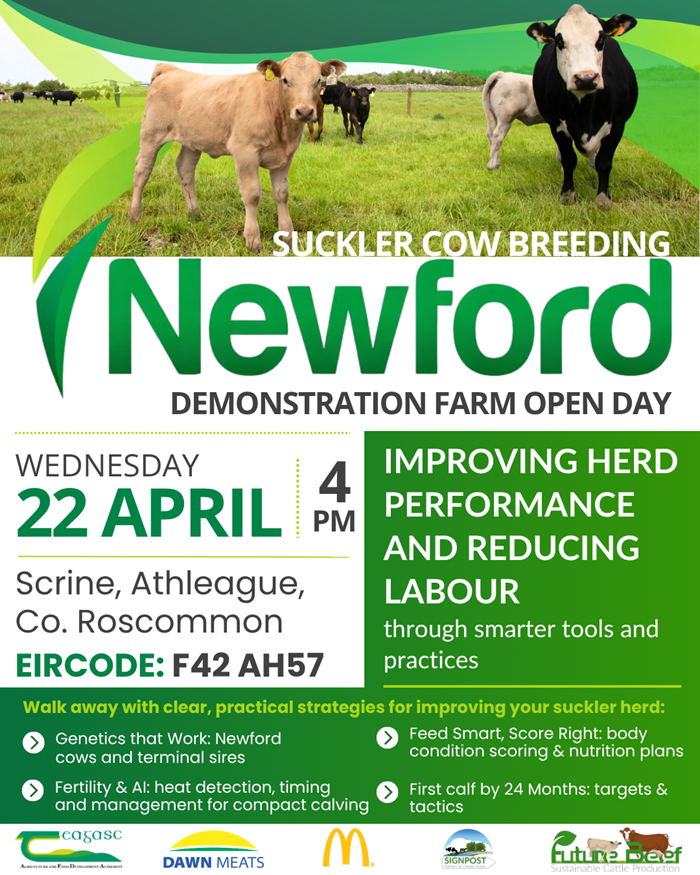
Visit here for more on the Newford Demonstration Farm Open Day.
The Beef Edge Podcast
The Beef Edge is Teagasc’s weekly beef podcast for farmers. Presented by Catherine Egan the podcasts will cover the latest news, information and advice to improve your beef farm performance.
Listen in to the latest episodes below:
Demonstration Farm Programmes
The Teagasc Drystock Knowledge Transfer Department run dedicated demonstration farm programmes in the areas of suckler and dairy beef.
For the latest from the Teagasc DairyBeef 500 Programme, view its e-newsletter here.
For the latest from the Teagasc Future Beef Programme, view its e-newsletter here.
To keep up to date with the latest happenings from both programmes, sign up to their frequent e-newsletters here.