

Edited By
Damian Costello
Sheep Specialist
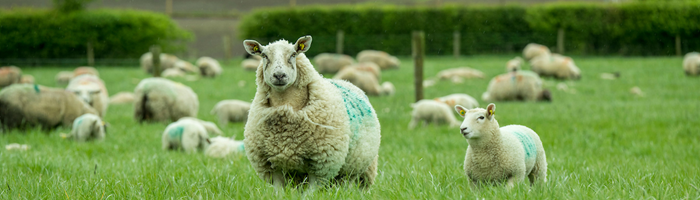
Welcome to the Teagasc May Sheep Management Notes. In this edition, Teagasc Sheep Specialist, Damian Costello shares management notes on flock health and grassland management and provides a reminder on the fast approaching National Sheep Welfare Scheme deadline.
Grassland management
Flock performance is at its optimum when a constant supply of fresh, high-quality grass is readily available to ewes and lambs. If grazing group size is not sufficient to graze out an area in about 3 to 4 days, one option is to increase the group size. Where this is not practical, temporary electric fencing should be used to subdivide paddocks to the appropriate size for the grazing group. Where overall grass supply on your farm is adequate, take out grass covers that have gone over 8cm as high-quality silage bales.

Despite the poor weather delaying closing for silage in April, the aim should still be to harvest designated first cut silage in late May, especially where lower chemical nitrogen (N) levels were spread. The general rule of thumb is that applied N is used up at a rate of 2 units/day in good growing conditions. If in doubt, contact your advisor before harvesting to test the grass for nitrate and sugar levels.
National Sheep Welfare Scheme (NSWS) deadline
It is important to note that the National Sheep Welfare Scheme runs separately to the Sheep Improvement Scheme (SIS), and all intending applicants need to apply annually online via their own Agfood portal or through an approved FAS advisor authorised to act on their behalf. A new application must be submitted for all intending applicants, even if they participated in the 2025 NSWS, before the 15th of May 2026 deadline. The application screen is pre-populated with the payable number of ewes, and this can be adjusted down if applicable.
Applicants must complete two mandatory actions for which they will receive €8 per ewe from the following Category A options:
- A. Shearing
- B. Body Condition Scoring Ewes and appropriate follow-on management
- C. Clostridial vaccination of ewes or Blue Tongue vaccination of ewes
Applicants have the option to top up their payment to €13 per ewe if they choose to complete a further one voluntary or optional Category B option from either:
- D. Footbathing
- E. Plunge dipping to control external parasites
Actions selected must be completed by 13th October 2026, however applicants who are unable to compete their chosen actions by this date can select the later date of 24th November 2026 when completing their application form online. Farmers should note that should they choose the later completion date, payment will not issue until January 2027 at the earliest.
Further information, including full terms and conditions, is available here.
Flock health
Nematodirus
Lambs born in early March or before have probably been dosed for Nematodirus in mid to late April. For later lambs, treat with a white drench at five to six weeks of age once they are eating sufficient quantities of grass to ingest the infective larvae or as soon as any symptoms such as scouring are observed.
Scald
Avoid any setback in lamb performance due to scald. Early intervention is key as it will spread rapidly. A whole flock approach is best and footbathing all sheep in a 10% zinc or copper sulphate solution will both treat and prevent scald.

Blowfly strike
As we get into the month of May, any warm and humid weather conditions will increase the risk of blowfly strike, particularly on soiled fleeces. The most common prevention of blowfly strike are topical pour-ons which, depending on product used, provide cover from 7 weeks up to 19 weeks.
The products providing longer protection are generally dicyclanil based and act as insect growth regulators (IGRs), which prevent development of larvae. These must be used before flystike occurs with application technique important for efficacy – ensure equipment is calibrated to deliver correct rate and apply to a clean fleece following manufacturer’s instructions for correct application.
The products providing the longer cover come with a withdrawal period of up to 40 days, which is an important consideration in terms of not using these products on lambs that are getting close to drafting.
Many farmers will treat lambs with a long cover product in mid-May meaning the 40-day withdrawal period ends in late June, coinciding with weaning and the first draft of lambs for sale. On the cover side, 19 weeks from mid-May will take you to late September when hopefully a good proportion of lambs will be drafted and we are approaching a lower risk time of the year for blowfly strike.
In the video below, Head of Sheep Knowledge Transfer, Michael Gottstein gives an overview of the different pour-ons on the market and also demonstrates the best way to apply the pour-on:
The OviCast Podcast
The Teagasc OviCast podcast is presented by Ciaran Lynch and brings you the latest advice, insights and technical updates for the sheep industry. Listen to the latest episodes below or via Apple Podcasts or Spotify
Keep up to date with Teagasc
Teagasc offers a suite of digital products – ranging from insightful podcasts, trusted eNewsletters, social media, website and mobile app channels – to provide you with the latest news, information and knowledge.