
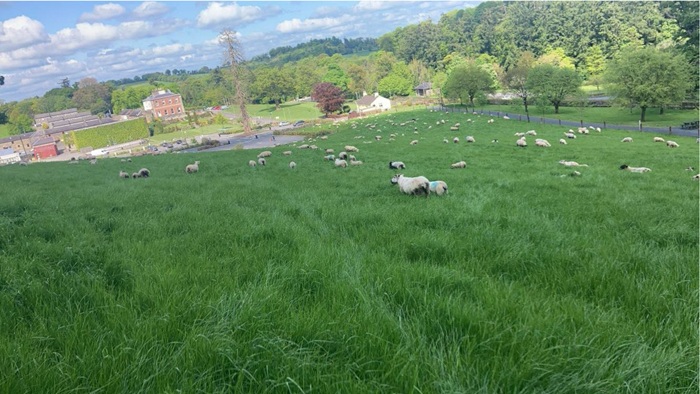
With almost one-third of the national sheep flock located in its surrounds, Fergus O’Rourke and Niall Conaty of Ballyhaise College provide an update on the sheep flock’s performance and explain how learning and commercial farming blend for better learning outcomes.
There is a strong enrolment of sheep-focused students in our courses every year, seeking a balance of theory and practical-based learning – both students completing their Level 5 Certificate in Agriculture and Level 6 Advanced Drystock Management courses.
Lamb performance
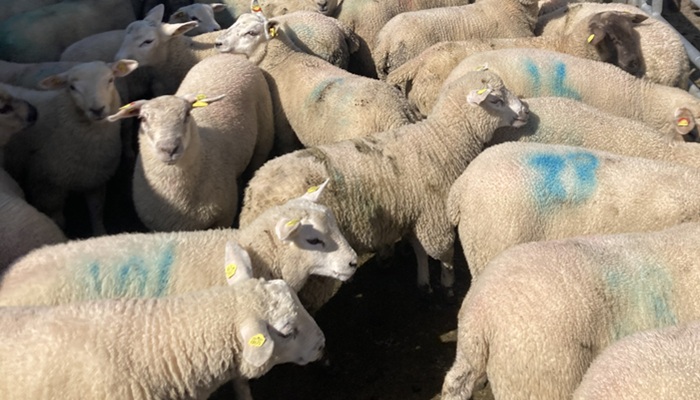
The kind weather in the spring left the lambing season relatively easy with ewes and lambs turned out to grass in ideal conditions, which has had a positive impact on lamb performance. The lambs were weaned off the ewes on the 11th of June, with an average weaning weight of 34.6kg. This is 4.7kg heavier than the average weaning weight recorded on the 12th of June 2024. The knock-on effect of this improved lamb thrive is that we have drafted our first lambs to slaughter exactly one month ahead of last year. When looking at our 7- and 14-week weighings, we can see that, on average, lambs achieved an average daily gain (ADG) of 360g, excluding lambs reared from hoggets / ewe lambs. The farm does not creep feed lambs, so we are very happy with how lambs are doing so far this year.
Health
To protect from clostridial diseases, all lambs have received both shots of their 10:1 clostridial vaccine and are foot-bathed regularly to prevent scald. We have noted the incidence of lameness is much reduced from the same period last year.
To date, lambs have only been dosed with a white drench (albendazole) for nematodirus control. Otherwise, regular faecal egg counts are taken to monitor the worm burden of the flock, which has remained low to date.
For blowfly control, forward lambs have been covered for blowfly with a short withdrawal pour on, while lighter lambs have received a product offering longer control with a corresponding longer withdrawal time.
Grassland management and silage
Grass growth is back for the third week in a row, with the sheep enterprise recording growth rates of 44kg DM/ha/day this week, leaving the farm with an average farm cover of 729kg and 15 days grazing ahead. First-cut silage was harvested in mid-May and was made in ideal conditions. Some of this area has been closed up for second cut, while more of it is available for the lambs to graze following weaning.
Supporting learning through the Ballyhaise College flock
The sheep flock at Ballyhaise College plays a significant role in supporting the teaching of sheep modules to both our first- and second-year students. During first year, students spend 50% of their time in the classroom and the other 50% of their time developing skills and putting into practice what they have learned in the classroom. Students get experience right across the sheep production cycle, including lambing, feeding, healthcare, breeding and drafting lambs for finish. When students progress to second year, their attention moves to the management of the enterprise; weekly grass walks are completed, recorded through PastureBase Ireland, with the students then deciding on what paddocks to graze or remove as surplus silage.
New Development
Ballyhaise College has recently been granted planning permission to carry out significant improvements to the facilities on the farm. A new sheep shed will be constructed, incorporating a mixture of slatted and straw-bedded accommodation, lambing pens, handling unit, training room along with a wash and boot room. This is an exciting development and will provide a modern and efficient working environment to support our students learning.
For more information and the courses available at Ballyhaise College, visit here.
More from Teagasc Daily: Mapping the route to clover at Ballyhaise
More from Teagasc Daily: Making sustainability real – a Ballyhaise experience
More from Teagasc Daily: The benefits of the Teagasc Green Cert in improving farm performance