
09 August 2024
The importance of pellet quality
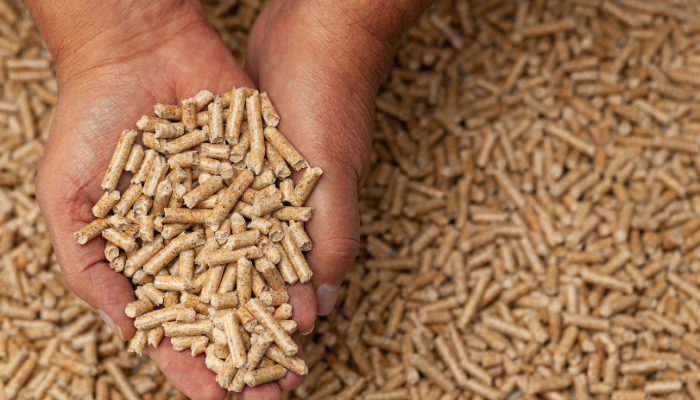
Peadar Lawlor discusses the benefits and challenges of feeding pigs pelleted diets, emphasizing the importance of minimizing fines to improve feed conversion ratio (FCR) and reduce feed costs.
Typically when dry or wet-dry feeding, pig producers opt to feed pelleted diets to their pigs. Although, pelleting comes with increased cost, it also improves palatability of the feed, feed flowability, reduces feed wastage and ingredient segregation, and can help in reducing microbial counts in the feed. Improvements in feed efficiency, due principally to reduced feed wastage, are expected to more than offset the cost of pelleting the feed. However, the magnitude of the feed efficiency improvement, in response to pelleting, is influenced by the percentage of fines in the pelleted feed at trough level.
Badger et al. 2022 in a Kansas State University study looked at this. Treatments in three experiments consisted of pelleted feed with varying levels of fines (between 9.6% to ~90%) and meal feed. There was no difference in the ADG or feed intake of pigs fed the meal diet compared to those fed any of the pelleted diets. However, feeding pigs pelleted diets with 12.5, 15.5, and 9.6% fines in Experiments 1, 2, and 3, of the study improved FCR by 4.1, 4.5, and 6.7%, respectively, compared to meal fed pigs. Additionally, increasing the percent fines in the pelleted diets from 12.5 to 90.4%, 15.5 to 86.0%, and 9.6 to 83.6% worsened FCR by 5.9, 8.6, and 6.4% for Experiments 1, 2, and 3, respectively. Furthermore, as a result of increased feed intake and poorer FCR, increasing the percentage of fines in the pelleted diets increased total feed cost and reduced income over feed cost.
It is evident from the work above that pelleting diets improves FCR and thereby reduces feed cost for finishing pigs. This is very much in line with our own work from Moorepark, which has shown that a pelleted diet is worth up to €25 more per tonne more than a meal diet. Nonetheless, we must pay particular attention to the quality of the pellets delivered to pigs to ensure that the level of fines in the diet are kept to a minimum since the benefits of pelleting diminish as the percentage of fines in the pelleted feed increases.
The advice would be to monitor your pelleted diets for fines at the feed hopper after the diet has been through the auger etc. If you are seeing lots of fines then it is likely that you are not getting the full financial benefit from pelleting your diet. In this instance you could ask your feed provider to run a pellet durability test on your diet after it is manufactured (They are most likely doing this anyway). If this confirms what you are seeing at the feed hopper then it may be necessary for changes in pelleting criteria to be made in the mill. However, it could also be that there are issues on your unit with regard to augers etc. causing excessive pellet damage during delivery that need to be addressed. Either way the issue needs addressing as it is costing you money.
Read the full Teagasc Pig Newsletter