
22 April 2023
The importance of silage quality for beef production systems
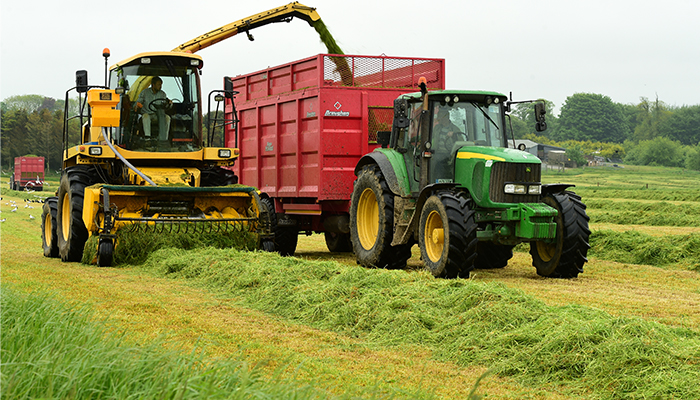
Grass silage typically makes up around one quarter to one third of total feed dry matter (DM) consumed on drystock farms. Compared to grazed grass, it is quite expensive to produce (usually twice the cost per tonne DM).
However, when taken as part of an integrated grazing system, it is good value compared to concentrates and alternative forages.
Recent experiences with national fodder shortages have underlined the value of having a good reserve of quality silage available on beef farms. Teagasc national fodder surveys showed that while the majority of beef farms had adequate silage reserves, a cohort of farms are consistently running a significant feed deficit of more than 20% of winter requirements. This is a high-risk strategy, especially during periods of fodder scarcity and high input prices.
Early intervention to correct shortages is advised, starting with completing a winter feed budget. While most beef farms have tended to secure adequate supply of silage tonnage in recent years, average silage quality (as measured by dry matter digestibility, DMD) remains consistently poor on drystock farms at 65-67% DMD. The principal challenge for beef producers therefore is to balance the dual objectives of having adequate supply of silage, while meeting feed quality targets for good animal performance.
Defining targets for grass silage production
The three key elements to cost effective grass silage production are:
- High grass DM yields for first-cut and subsequent cuts, with high total annual grass yield (>14.0 tonnes DM/ha). Guideline yields are 4.8t DM/ha and up to 6.2t DM/ha for silage harvested in mid-May and early June, respectively.
- Appropriate feed quality for the category of stock to be fed. This is best measured as digestibility of the crop dry matter (DMD); protein content is also important and is positively associated with DMD. Silage quality is a function of growth stage at cutting (leafy swards have higher DMD than stemmy swards).
- Clean, stable feed with good intake potential. This is achieved through good fermentation and can be assessed from silage pH (3.9 to 4.2 for un-wilted crops), ammonia (target less than 9%), and lactic acid (target over 8%) content. High DMD (leafy) swards can be well-preserved with good management.
First cut silage quality targets for different stock types
Grass DM yield at harvest is the single most important factor determining the cost per tonne of silage in the pit. Fixed costs per hectare (e.g. land charges, contactor fees) may be diluted over the extra tonnage for a given cut, and so too are some variable costs associated with fertiliser and slurry applications.
Many beef farms have largely abandoned any consideration of feed quality when planning first-cut silage crops, focussing only on feed ‘bulk’. Dry suckler cows can be adequately fed on 67-68% DMD grass silage. However, for growing/finishing cattle (and suckler cows suckling calves) the target is to have silage at 72- 74% DMD or higher.
The effect of silage quality (DMD) on animal live weight performance was assessed by a study carried out at Grange, where a silage sward was harvested at four different dates and fed to growing cattle the following winter (Table 1). While first-cut yield was lower with earlier cutting as expected, average daily live weight gain was much improved on the leafy silage. Feeding the higher quality (75% versus 65% DMD) silage at farm level would result in approximately 40kg extra live weight gain over a 150-day housing period, or 2.0 to 2.5 kg reduction in daily concentrate intake for similar daily gain. In fact, it took less than half the amount of silage DM to achieve 1 kg carcass gain with the better quality sward.
Table 1: Effect of silage quality (DMD) on daily weight gain and feed efficiency in growing cattle
| DMD | 75 | 70 | 65 | 60 |
|---|---|---|---|---|
| Harvest date | 20th May | 2nd June | 15th June | 28th June |
| Silage yield (t DM/ha) | 4.8 | 6.0 | 7.0 | 7.7 |
| Daily live weight gain (kg) | 0.83 | 0.66 | 0.49 | 0.31 |
| Feed efficiency (DMI/kg carcass gain) | 17.6 | 21.1 | 28.1 | 46.7 |
It is clear therefore that poor silage quality is a major limitation to growing animal performance over the winter period on many farms. Feeding low DMD silage made for ‘bulk’ may actually contribute to a silage shortage in the long-term, because animals require more days on-farm in the subsequent grazing season to achieve a given final carcass weight, reducing area available for silage cutting. Furthermore, delaying first-cut will limit yield and/or delay date of second-cut silage, resulting in a potential reduction in annual forage yield per hectare. Management decisions around first-cut date should prioritize meeting DMD targets and improving annual grass tonnage per hectare, rather than focussing solely on the yield from first cut.
Finding the right balance between yield and quality
While growing cattle require silage made from leafy swards, there is a risk of unnecessary/excess body condition gain for late-gestation suckler cows offered this type of feed. Beef farms with a mix of stock types (e.g. dry suckler cows, weanlings and finishing cattle) must plan for making silage at varying DMD levels.
Differences in silage DMD can be created by varying the cutting date within a well-managed grass sward. High quality silage is produced by cutting in mid-May when grass has high leaf content, while lower DMD silage is produced by delaying cutting into early June when grass has become ‘stemmy’ after seed head emergence.
Therefore, while the objectives of good DM yield and excellent preservation remain consistent, target DMD should dictate the optimum stage of grass maturity at which to harvest the crop. The practical reality for beef farms feeding varied stock types over the winter is that no single cutting date is suitable for all stock. A simple silage management plan that takes this into account can be developed for the farm, using the following steps:
- Define the highest quality silage required on the farm first.
- Estimate the total quantity of this silage needed.
- Calculate the area of first and subsequent cuts needed to produce this silage.
- Mark on the farm map and set targets for spring grazing, fertiliser, cutting date.
- Manage the remaining area to produce silage of standard quality.
Flexibility is needed around cutting date management, and each farm should develop a plan that suits its own scale, facilities and stock type. For example, a farm carrying spring-calving suckler cows plus some finishing cattle may take an early-cut of high DMD bales in mid-May on 20-30% of silage area, with the remainder of first-cut taken at 67-68% DMD in early June for feeding to dry cows.
Table 2 outlines the potential farm-scale value of taking this approach to achieve the correct target silage DMD. In this simple example, a farm with 40 weanlings and 40 forward store cattle requires 350 silage bales for a standard winter. The cost of total winter concentrates required to maintain target performance is reduced by 47% by moving from national average silage quality to target silage quality for the stock type on hand.
Table 2: Effect of silage quality (DMD) on winter concentrate costs for a calf-to-beef farm
| High DMD | Low DMD | |
|---|---|---|
| Number of weanlings | 40 | 40 |
| Number of store cattle | 40 | 40 |
| Silage type and quantity of bales needed | ||
| High-quality bales (74% DMD) | 350 | 0 |
| Low-quality bales (66% DMD) | 0 | 350 |
| Winter concentrate cost @€380/t | €5,791 | €10,944 |
This article by Joe Patton first appeared in the Beef 2022 ‘Supporting Sustainable Beef Farming’ open day book.
Also read: Rebuilding of fodder stocks a priority
Also read: Fertiliser recommendations for silage swards