
The latest from Johnstown Castle on calf rearing
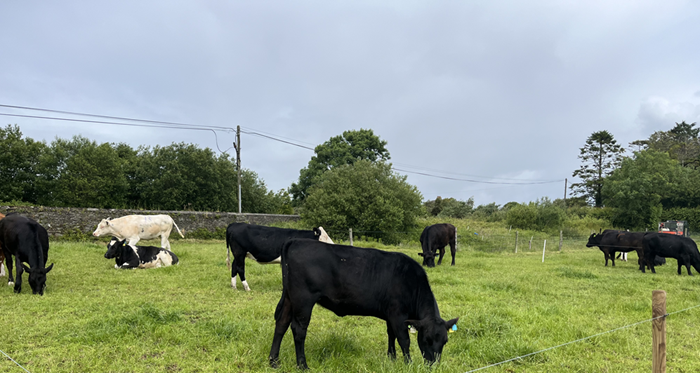
Attendees at the Farming for a Better Future Open Day, taking place at Teagasc, Johnstown Castle, today, June 10 were provided with a refresher on the principles of successful calf rearing Dr. Ellen Fitzpatrick, Research Technologist.
Important topics such as sourcing health calves, milk feeding programmes, promoting rumen development, weaning and the transition to grass were discussed. Below is the paper authored by Dr Ellen Fitzpatrick and Dr Nicky Byrne for the event:
Efficient calf rearing is essential for maximising growth, profitability, and sustainability in dairy-beef systems.
Calves have a feed conversion efficiency estimated to be 2–3 times greater than adult cattle, making early life an important period for efficient liveweight gain. Poor growth during this stage can negatively affect lifetime performance, resulting in delayed finishing ages, lighter carcass weights, increased feed costs, and greater greenhouse gas emissions.
Achieving strong growth rates early in life is therefore critical to ensure calves reach target weights at key stages such as weaning and housing.
In the below video, Dr. Ellen Fitzpatrick outlines the principles of successful calf rearing at the Farming for a Better Future event:
Calf sourcing
Sourcing healthy calves is a key factor in successful calf rearing. Calves should ideally be purchased directly from the birth farm to minimise disease risk associated with additional transport and mixing. The health status of the source herd, calf genetic merit and previous liveweight performance should all be considered.
Farms with strong vaccination programmes and good colostrum management practices are particularly valuable sources. Calves should receive at least 3 litres of high-quality colostrum within two hours of birth to ensure adequate immunity transfer.
Before purchase, calves should be examined to ensure they are healthy, alert, free from disease, and suitable for transport, which generally occurs at 3–4 weeks of age when calves weigh more than 50 kg.
Milk feeding
During the pre-weaning period, calves should achieve growth rates of 0.6–0.7 kg/day. Typically, calves are fed 6 L of milk replacer daily up to four weeks of age before milk allowance is reduced to encourage concentrate intake and rumen development.
Research at Teagasc Grange found that reducing milk allowance from 8 L to 4 L/day after four weeks had no negative effect on lifetime growth or carcass traits, while reducing calf-rearing costs by €33 per head. As a result, this reduced milk feeding strategy is now widely used on Teagasc research and demonstration farms.
Calves should receive a high-quality milk replacer containing 20–23% crude protein and 18–20% fat, with consistent feeding temperature and hygiene standards maintained.
Solid feed
Solid feed and water are also critical for rumen development. A high-quality calf starter ration should be offered from the beginning of the rearing period alongside fresh water and straw. Restricting milk intake while encouraging concentrate consumption promotes development of the rumen and improves the calf’s ability to digest solid feed efficiently.
Housing
Housing conditions greatly influence calf health and welfare. Calves require warm, dry bedding, adequate space, and good ventilation to reduce disease risk, particularly respiratory disease. Group housing provides a balance between labour efficiency and calf welfare, with a minimum allowance of 1.5 m² per calf recommended.
Weaning
Weaning generally occurs between 8–12 weeks of age and should be gradual to minimise stress and maintain performance. Calves should be consuming sufficient concentrate and weigh approximately 85– 90 kg before weaning. Following weaning, calves should transition gradually to high-quality pasture with continued concentrate supplementation to support growth and adaptation to grazing systems.
For further insights on the dairy-beef research being undertaken at Teagasc, Johnstown Castle, view the proceedings produced as part of the Farming for a Better Future Open Day.