
25 March 2025
The Next Generation Herd II
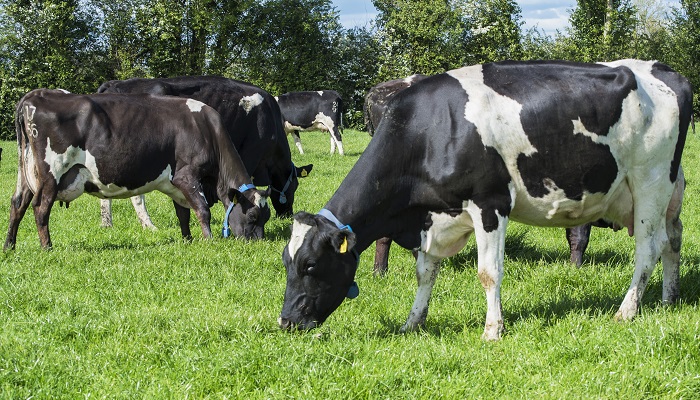
The Next Generation Herd study explores sustainable dairy farming through high-genetic-merit cows. It has driven breakthroughs in productivity, efficiency, and breeding strategies, tackling climate change and methane emissions. Dr Brian McCarthy and Prof Frank Buckley tell us about the next phase.
The Next Generation Herd (NGH) was established in 2013 as sentinel research herd to provide a futuristic view of the phenotypic performance of dairy cows selected for extremely high genetic merit based on the Irelands dairy breeding strategy, the Economic Breeding Index (EBI).
Results from the NGH experiment provided clear evidence of enhanced productivity, feed efficiency, energy balance, reproductive efficiency and longevity when selecting for higher EBI. Since that initial experiment, expansion of the national herd post-European Union milk quota removal, in conjunction with climate change, has resulted in multi-factorial sustainability challenges, including increased enteric methane emissions, static/declining water quality and over supply of low value male dairy calves.
Therefore, the continued evaluation of breeding goals/strategy (i.e. the EBI) is prudent to validate the direction of genetic gain. A renewed focus on the impact of organic nitrogen (N) stocking rate on farm productivity, profitability and environmental performance is also required in light of the recent changes in the Nitrates directive and reduction in N fertiliser use in the last 2 to 3 years.
Hence, a revitalised whole farm system research study (NGH II), including progeny, will incorporate three contrasting dairy cow genotypes (n = 66 cows each):
- National Average – current national average Holstein-Friesian (HF) based on EBI
- Elite – current top 1% HF based on EBI
- Elite Jersey x HF (JEX) – current top 1% JEX based on EBI
The genotypes will be compared across three contrasting pasture-based systems differing in milking platform organic N stocking rate. The three systems will have organic N stocking rates of:
- 170 kg organic N/ha (whole farm – all area available as milking platform)
- 220 kg organic N/ha (whole farm – all area available as milking platform)
- 270 kg organic N/ha (milking platform – the whole farm organic N stocking rate will be 220 kg N/ha by utilising an out-block of equating to 19% of total farm area)
The objective of the study is to validate breeding strategy, investigate economic and environmental efficiency of the genotypes and production systems and generate progeny that will be followed to slaughter, ultimately contributing to a futuristic blueprint for sustainable milk production. Detailed production, and environmental measurements (in particular enteric methane and nitrate leaching) will be taken from the systems.
A strict mating strategy will be implemented to optimise dairy sexed semen use for the purpose of replacement generation, and high merit beef semen to enhance the value of non-replacement dairy progeny, in order to maximise calf crop value from dairy cows of contrasting genetic background. This will allow for the investigation the interaction between dairy cow genotype and beef sire genotype on progeny slaughter characteristics.