
14 June 2024
The potential for Precision Livestock Farming to improve pig health and welfare
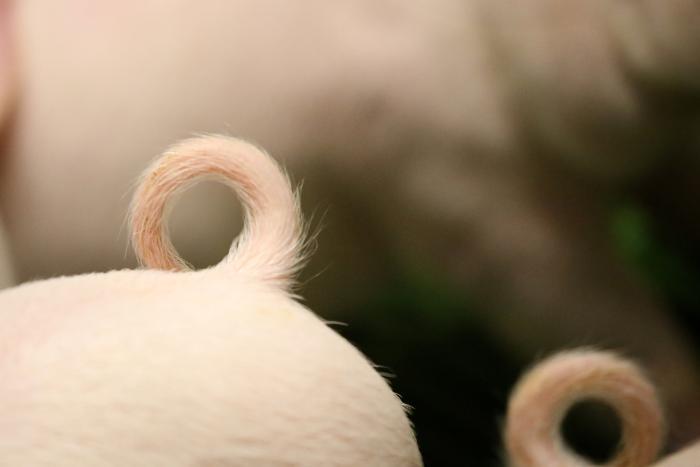
Florence Viard & Keelin O’Driscoll tell us about a recent workshop as part of the TailBiteAdvice project: An ICT-based real-time advisory tool to minimise tail biting in fattening pigs.
Precision Livestock Farming (PLF) refers to using electronic tools and methods to manage livestock. It generally involves automated monitoring of the animals or environment, and can be targeted to monitor of performance, health, welfare etc. This project is developing a tool that should be able to identify when pigs are at risk of tail biting. However, it is also important to find out what are the views of people working in the pig industry.
For this workshop invites were issued to people who represented various stakeholder groups, to obtain a balanced number of views from across the industry. The final participant composition was; 4 farmers, 3 vets, 3 DAFM animal welfare inspectors, 3 pig advisors, 4 pig researchers, including the head of the Teagasc PDD and 2 persons from certification organisations (Bord Bia and Animal Health Ireland).
Prof. Ilan Halachmi, on sabattical at Teagasc Moorepark, provided an overview of PLF in general, along with examples of how it can be practically used on farm, for a range of species. Dr. Laura Boyle presented an overview of the subject of tail biting, including research in Teagasc, and Dr. Keelin O’Driscoll presented the TailBiteAdvice project.
As part of the discussion, a SWOT exercise was carried out: An investigation of the ‘Strengths’, ‘Weaknesses’, ‘Opportunities’ and ‘Threats’, that the participants thought could be associated with PLF tools for pig farming. Participants were asked to think specifically about PLF tools that are vision based, and had potential to tackle the area of tail biting.
Strengths
All sub-groups identified that PLF tools could act as an early warning system for tail biting. Two groups described the advantage of having recordings available for farm audits, insurance needs, and evidence of farmer’s intervention. Two groups also thought that PLF could improve pig welfare. It was also identified that PLF helps detecting unusual behaviours without bias, track patterns and manages these behaviours. Finally, all three groups thought that PLF could lead to a reduction in labour, and permit the ability to monitor important numbers of pigs.
Weaknesses
All groups identified the cost of the tool, its installation and adaptation on commercial farms, the maintenance, the volume of data to analyse and its reliability, as potential weaknesses. Two groups also mentioned the need of training for staff.
Opportunities
The opportunities were mainly the efficiency that the tool has potential to allow, and the possibility of opening doors on new markets, towards higher welfare standards.
Threats
These concerns related to the use of camera-based PLF specifically, and included data hacking, the ethical aspect of recording staff, over-reliance on the system in place of going to see the pigs, and the issue of applying biosecurity protocols to maintenance staff.
Conclusion
Overall, the workshop provided highly valuable information regarding the potential positives and negative aspects of camera based PLF for pigs. As well as the SWOT analysis, a number of other questions were included in the discussion, such as; ‘What innovations would participants like to see in regard to PLF?’ and ‘What should we stop, continue, and start doing in Ireland regarding reducing the need to tail dock?’
The discussions from each sub-group were recorded, and will undergo analysis to see if we can pull out common themes and ideas, which we will be sure to share with you in upcoming issues of the Teagasc Pig Newsletter!
This project is funded by Ireland’s Department of Agriculture, Food and the Marine (DAFM) (project no: 2020EN505), and is aligned with the EU funded ICT-Agri-Food network (ERA-NET Cofund). It involves researchers from Ireland, Denmark and Belgium aiming to investigate and improve health and welfare in commercially farmed pigs, using a vision based precision livestock tool.