
06 June 2025
The role of native riparian forests in protecting upland rivers
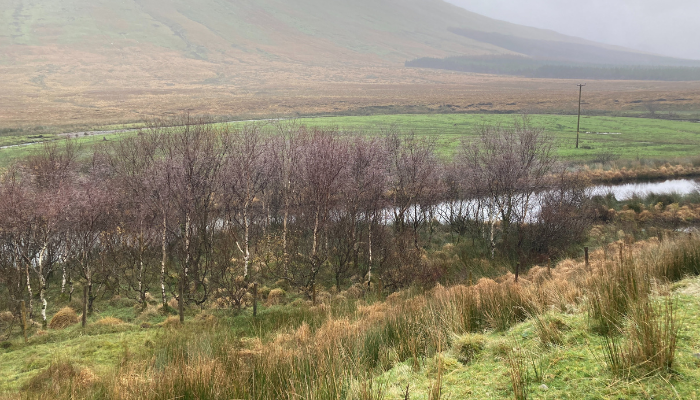
Ireland’s mountains and uplands are renowned for their spectacular beauty. Upland rivers and streams together with adjoining areas of native trees and forests are iconic features of the wild landscape. Noel Kennedy discusses the protective role of native riparian forests to conserve our rivers.
Upland rivers and streams are unique ecosystems providing aquatic habitats to fish and invertebrate communities that can include salmon and trout. They may also be an important source for drinking water.
However, they are also harsh and unpredictable habitats subject to high water flows, flash flooding, bank erosion, channel widening and sedimentation. Climate change impacts in the form of more intense rainfall events and increased water temperatures are already occurring.
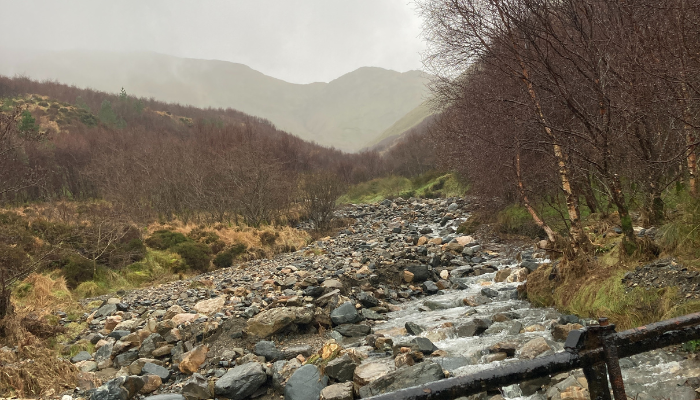
Intense rainfall events can cause significant erosion damage in upland rivers
Riparian forests
Riparian forests can be found in areas subject to periodic flooding by a river, stream or lake where a build-up of more nutrient rich alluvium soils contributes to the growth of native trees including Oak, Birch, Alder, Rowan and Willow. These forests help to conserve biodiversity and provide a refuge for indigenous flora and fauna.
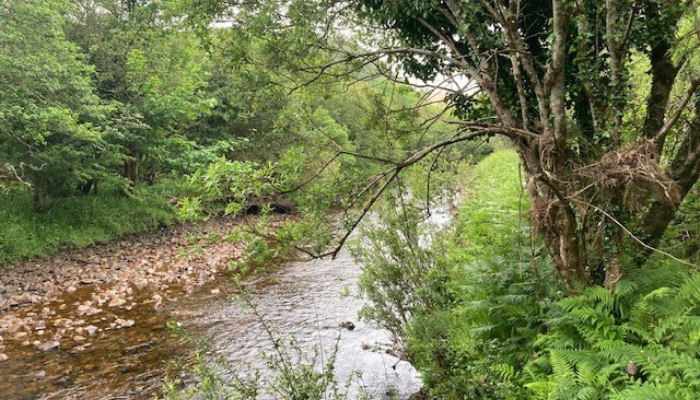
Mature broadleaf riparian woodlands provide important water protection and biodiversity ecosystem services
With concerns about increasing pressures on water quality, biodiversity and important fish communities, native riparian forests along all rivers, streams and lakes can provide a wide range of a range of significant protective water-related ecosystem services. These can include:
- River and stream bank stabilisation
- Reduction in sediment mobilisation and runoff into watercourses
- Food input into the aquatic ecosystem
- Shading and cooling of water and banks
- Interception of potential nutrient runoff into watercourses
In addition, trees that grow in riparian forests can often fall into a watercourse and become a natural obstacle. This “large wood” is a naturally occurring component of healthy river ecosystems providing a beneficial range of ecological and water flow regulation functions.
River restoration
In some cases, the physical habitat of upland rivers may be impacted by a number of factors including surrounding land use pressures and climate change with negative consequences for the fish community. This may result in some upland rivers being at risk of failing to meet the minimum requirement of Good Water Framework Directive (WFD) status because its fish community element is unsatisfactory. Science-based river restoration projects may be necessary to stop and reverse this decline. These projects should be designed to work with, rather than against, natural processes to create a self-sustaining river ecosystem in the longer term by re-establishing the ecological and hydro-morphological processes that underpin healthy rivers.
Riparian forests and river restoration
New riparian forests can be most effective when planted as broadleaf buffer zones. An extensive buffer will help capture fine sediment and nutrients before they enter the river channel. Such landscape features intercept overland flow pathways disrupting fine sediment transport. Riparian buffer zones contribute energy to aquatic food webs directly via the introduction of organic matter such as leaf and woody material and through falling insects that are an important food source for fish.
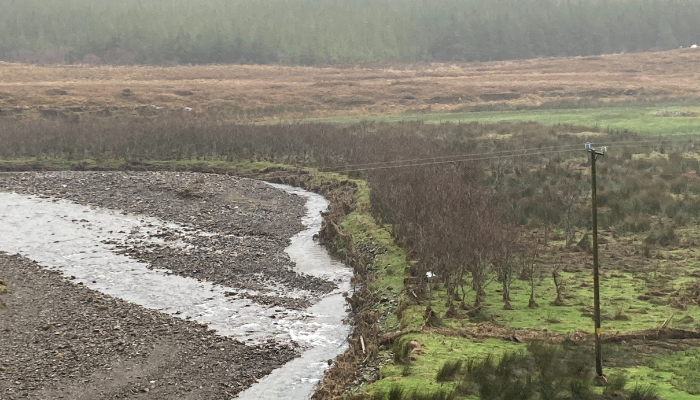
Even at a young age, broadleaf riparian woodlands act to slow high water flow and stabilise riverbanks
Additionally, development of a riparian buffer zone and associated root network will improve bank cohesiveness and help normalise erosion rates. This can also complement bankside and marginal vegetation that provides cover/refuge for juvenile fish in the form of overhanging branches and tree roots, as well as moderations of high summer water temperature from canopy shading.
Afforestation scheme opportunities
The highest sections of upland rivers pose unique environmental and physical challenges to planting and establishing riparian forests and may not be eligible for support under the Afforestation Scheme 2023-2027. However at lower altitudes where water flow is slower, soil fertility improves and where the land is being farmed, there may be real opportunities for farmers and landowners to explore the potential to strategically plant and establish riparian forests along watercourses with grant support under the Afforestation scheme 2023-2027.
Forest Type (FT) 2 – Forests for Water supports farmers and landowners to create new native riparian forests in strategic locations where this land use change would deliver specific ecosystem services regarding the protection of water and aquatic ecosystems or would reinforce and expand areas of riparian forests.
FT2 attracts an Afforestation grant of €6,744/ha and an annual premium of €1,142/ha for up to 20 years for farmers. An additional top-up of €1,000/ha is payable after planting.
Forest Type 1 (FT1) – Native Forests is designed to create new native forests focusing on the planting of native tree species, minimal site disturbance and long-term ‘close-to-nature’ management. Although not specifically designed for riparian planting, FT1 is a practical alternative where FT2 is not applicable.
FT1 attracts an Afforestation grant of €6,744/ha and an annual premium of €1,1103/ha for up to 20 years.
Native Tree Area Scheme (NTAS), which is separate to the Afforestation scheme, supports the creation of small native forests up to 2 hectares on farmed land. The scheme is open to both farmers and non-farmers.
Two NTAS options are available
NTA 2 – Creation of native forests for water protection
Supports the establishment of up to 1 hectare of new native forests alongside streams, rivers and lakes protecting and enhancing water quality and aquatic habitats. Through the creation of such corridors, existing native forests can be reconnected thereby addressing the negative effects of fragmentation. NTA2 attracts an establishment grant of €6,744/ha and an annual premium of €2,284/ha for 10 years.
NTA 1 – Creation of small native forests
Supports the establishment of up to 1 hectare of new native forests on farmed land which can also be planted along watercourses. NTA1 attracts an establishment grant of €6,744/ha and an annual premium of €2,206/ha for 10 years.
Our rivers and in particular our upland rivers provide the water which supports all life. Native riparian forests can help to protect, conserve and restore our rivers because they are transition zones between terrestrial and aquatic ecosystems providing important benefits to both.
If you are interested in planting a riparian forest to protect your river and wider environment, more information on the Afforestation scheme 2023-2027 and the Native Tree Area Scheme is available here.