
07 December 2023
Tillage advice: Pest control in recently drilled winter wheat
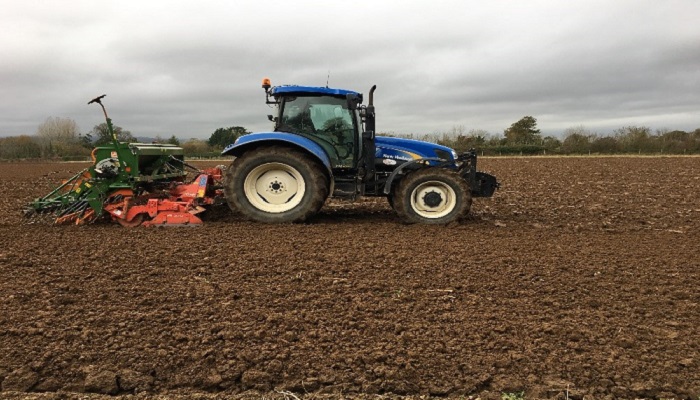
Shay Phelan, Teagasc Crops Specialist, offers advice on the management and pest control of late-drilled winter wheat crops, herbicide programmes for winter barley and oilseed rape, while also providing a reminder on the importance of fertiliser planning for 2024.
Winter wheat
The dry weather over the last week has helped many growers to continue to drill winter wheat varieties which should ease the workload next spring. Provided they come through the coming weeks undamaged by birds, slugs and wet soils then there is no reason why these crops should not perform relatively well; although trial work shows crops planted in December do not yield as well as those planted in October.
Over the next few weeks, efforts will have to be made to prevent crow damage using scarecrows, bangers and by firing a few shots to keep them off the crops. Where bangers are set up, remember they are only allowed to be active during daylight hours, so make sure they are turned off each evening.
Some earlier crops have suffered badly from slug damage and again late-planted crops are also at risk. Make sure that all fields are baited and numbers of slugs are carefully monitored. Where numbers are high and quad bikes can travel then apply slug pellets to prevent damage.
For most of the earlier-sown crops, herbicide applications will be left until the spring, as ground has been simply too wet to drive on fields. Anyone deciding to spray now should walk crops beforehand to make sure there are no wet pockets where a tractor and sprayer could get stuck. Applying a herbicide now can help to make spring applications less complicated, but should only be considered if ground conditions are suitable. Options include Firebird Met (a recent label change allows it to be used up to GS24), Flight, Tower etc.
Winter barley
There have been a few reports of winter barley having been drilled in the last week and while some are confident that it will perform due to limited past experience, the risks are much greater than with wheat, as barley does not cope with wet conditions. Location and drainage are key components in picking a field that might be suitable to drill. Remember, it is not the conditions that the crop is drilled into rather the weather in the following weeks before it emerges that will determine if it grows or not.
Most established crops have not yet received a herbicide, as many are under various forms of stress. Even though options in controlling grass weeds are less effective in the spring, they may be a better option than placing extra stress on crops now and potentially reducing tiller numbers and consequently yield.
Winter oilseed rape
December is often the month when the main post-emergence herbicide is applied to oilseed rape crops. Both kerb and Astrokerb work best when temperatures drop and growth rates slow down. Astrokerb also brings the benefit of controlling difficult grass weeds including blackgrass and is one of the key control measures in dealing with the problem. Apply either products at full rate and remember to clearly label fields treated with Astrokerb, as the straw from these fields must be incorporated back into the soil and so should be included in the Straw Incorporation Measure (straw chopping scheme) in 2024.
Fertiliser planning
Over the coming weeks, try to get a Nutrient Management Plan completed. This will help to plan your fertiliser purchases for 2024. With the new fertiliser register now in place, you run the risk of exceeding your allowances for your farm and subsequently end up with a penalty on you 2024 BISS payment. Remember soils tests must be carried out for every 4ha and where none is available, you will have no allowance for Phosphorus (P) fertilisers. This especially important where you plan to import organic manures.
For more advice on agronomy matters, visit the Teagasc Tillage Edge podcast here.