
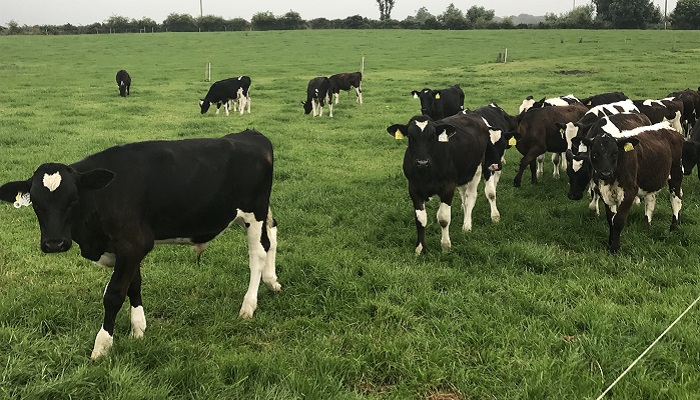
Early, well-managed castration of dairy beef males reduces stress on calves, improves safety on farms and prevents complications later in life, DairyBeef 500 Advisor, Fergal Maguire tells us more.
For many dairy calf-to-beef farmers, early autumn is the time to plan castration of their bull calves. Timing is critical. Once calves reach six months of age, a local anaesthetic must be administered, and this can only be carried out by a veterinary surgeon.
Some farmers are tempted to delay castration and leave calves entire for longer, hoping for improved performance. However, both farmer experience and Teagasc research show that there is little to gain from this approach.
Two years ago, Irvine Allen, a participant in the Teagasc DairyBeef 500 programme, left his bulls entire over the winter, hoping for better weight gains and earlier finishing. While the bulls were heavier after the first winter, castrating them later proved both a big job and an added cost, as a vet had to carry out the procedure. During their second summer at grass, the animals did not perform as well as expected and finished at the same time as previous batches castrated under six months of age.
“I’ve gone back to squeezing bulls now at less than six months,” Irvine explained, “it’s easier on man and beast, avoids the vet cost, and there’s no extra performance to be gained by leaving them entire over the winter.”
Research at Teagasc Grange supports this experience. While bulls grow faster than steers in the short term, the liveweight advantage is largely lost once they are eventually castrated. In addition, managing bulls brings added challenges, from keeping them away from females to the increased health and safety risks of handling them.
Methods of castration
There are three main methods used on Irish farms:
- Rubber ring/banding – cuts off blood supply to the testes and scrotum, which then dry up and fall away.
- Burdizzo – crushes the spermatic cord and associated blood vessels, leading to loss of blood supply to the testes.
- Surgical castration – involves opening the scrotum and removing the testes. This procedure must be carried out by a vet.
Key tips for success
- Properly restrain the animal before starting.
- Confirm that both testicles have descended.
- Ensure equipment is clean and in good condition. With a burdizzo, make sure jaws are parallel and closing evenly.
- Vaccinate calves against tetanus at least one month before castration. Give a booster on the day of castration if using a bander.
- Only use rings up to eight days of age without anaesthetic.
- Calves over six months must receive a local anaesthetic, administered by a vet.
- Give a non-steroidal anti-inflammatory (NSAID) at castration to support quicker recovery.
- Check calves four weeks later to ensure there is no regrowth of testicular tissue.
Training and safety
Castration should only be carried out by someone with proper training. Farmers are advised to learn the technique under the supervision of an experienced operator before attempting it themselves.
For more tips and advice, view the DairyBeef 500 webpage here.
Find out more by reading the Castrating Cattle – Best Practice tech note (PDF) here.