
Tips on improving your vegetable garden, from an award-winning farmer
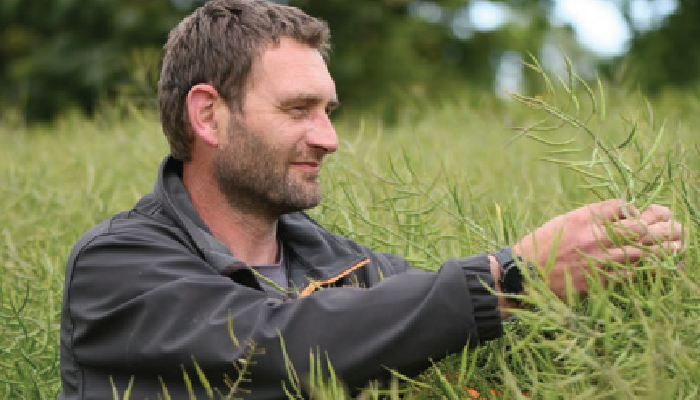
In a recent RTÉ Brainstorm article, Siobhán Kavanagh and John Mahon share Don Somer's tips from his farm that can be applied to home gardens, especially by those wanting to grow their own vegetables.
The Teagasc FBD Environmental Sustainability Awards aim to recognise and celebrate the actions that farmers are taking to improve the overall environmental sustainability of their farming business, while continuing to farm productively and profitably. In 2025, Don Somers, a tillage farmer from Oylegate, Co. Wexford, won the overall award in the Teagasc/FBD Environmental Sustainability Awards. Like any good grower, soil health is at the heart of Don’s system. He believes that the future of farming depends on keeping soils healthy, so crop rotation and soil care are always at the centre of what he does. Sounds familiar to a vegetable gardener!
Digging the dirt
The spade is the most inexpensive but most widely used tool in the shed. Regular checks on the soil all year round are key to operations on the farm. If the soil conditions are not right, the tractor or harvester is not pulled out of the shed. Assessing soil health can help pinpoint any problem areas and allow farmers like Don to make better management decisions.
So, what is he looking at?
Soil structure: Don checks to make sure he has good soil structure, plenty of small round peds (soil aggregates), the soil has adequate porosity and is not compacted.
Soil biodiversity: He checks the biology of the soil to make sure there is a thriving population of worms, bacteria, fungi, and other soil organisms.
Soil chemistry: Don will regularly send samples to be analysed to ensure his soil is well balanced for soil fertility and pH. Based on yields from different areas of the field recorded on maps in the combine, he takes individual samples from these areas, called precision soil sampling – so if the area of a field is not performing well, he will see what nutrients are missing.
Grounds for action
This year Don is doing a thing called the “Cotton Underwear Decomposition Test” to check for biological activity in the soil. This requires burying cotton underpants in several locations on the farm for two months before carefully digging it up. He will lay it out, take a photo and then use a scorecard to record the level of degradation of the underpants. This will give Don an indication of the level of biological activity in his soils.
If this is something you’d be interested in doing in your garden or on your farm, check out the ‘Ground Truth’ project resources.
Rotate for resilience
Rotation of crop types is very important to Don. He will switch crop type in each field and rotates this normally on a five-year rotational cycle. Dons finds this an excellent and effective way to use nature to control many pests and diseases such as clubroot in brassicas, and aphids from spreading virus in barley.
Top tip for the veg gardener: Rotate crop types, for example: year 1 roots, year 2 leafy greens, year 3 fruiting crops.
Catch crops
After crops are removed at harvest, Don establishes catch crops in ground destined for spring cropping to ensure no ground is left bare over winter. He uses catch crops to protect the soil from heavy rainfall damage, to improve soil structure with the addition of organic matter when these are mulched back in, and to soak up soil nutrients rather than have them wash through the soil into groundwater and streams.
More than half of the farm’s straw is recycled into the soil after harvest. Returning straw to the soil reduces fertiliser needs and builds up organic matter. In the long run, it leaves the soil healthier and more resilient.
Top tip for the veg gardener: Grow green manures in empty beds or mulch with compost, bark, or straw.
Manure, soil’s superfood
Alongside the use of some chemical fertiliser, Don makes good use of organic manures such as poultry litter and farmyard manure to feed his plants.
Getting hold of enough manure and transporting it can be tricky, but he sees big benefits through cost savings, adding valuable organic matter to the soils and thus making the whole system more sustainable. It’s good for nutrition, soil structure, soil biology and moisture retention.
Top tip for the veg gardener: Use garden compost and organic manures to build soil structure, fertility and health.
Bugs with benefits
Don uses Integrated Pest Management (IPM) to cut down on the amount of chemical sprays he uses. Don has used no insecticide in the past nine years, instead encouraging natural predators. Careful management of his hedgerows and field margins is adding to the natural predators on the farm.
Top tip for the veg gardener: Encourage beneficial insects like ladybirds and plant pollinator-friendly flowers. Try to limit or, if possible, eliminate your use of chemicals.
A Somers Evening Farm Walk takes place at Don Somers’ farm in Oylegate, Co. Wexford on June 17th. Booking essential.