
To feed or not to feed?
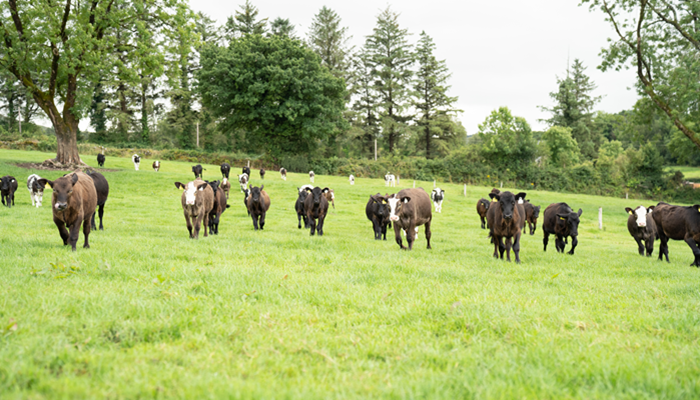
At this time of year, one of the most common questions asked is whether calves should continue to receive concentrates during the summer months. DairyBeef 500 Advisor, Fergal Maguire shares some essential reading.
The answer is that it really depends on two key factors: the calf itself, and the level of grassland management on the farm.
Firstly, calves need to be old enough before meal can be removed from the diet. As a general rule, calves should have been born before St Patrick’s Day before even considering to cut meal. Younger calves simply will not be able to consume enough grass to meet their energy requirements.
In addition to age, calves must also be well grown and on target for weight. By 1 July, a calf should typically weigh at least 130 kg before concentrates are removed.
Grouping calves
Many farmers will have a wide range of calf weights within the same group. Grouping calves according to liveweight allows lighter calves to continue receiving meal, while stronger, heavier calves can be taken off concentrates.
Even where meal is being fed to all calves, grouping by weight is still advisable, as heavier calves tend to consume more meal than lighter calves. It is the lighter calves that will benefit most from concentrate supplementation.
The importance of grassland management
Even if calves are early born and have reached the target weight, concentrates should only be removed where grassland management is of a high standard. Good grassland management for calves means entering paddocks at approximately 1,200 kg DM/ha and moving calves every three to four days. Where calves are grazing heavier covers or are being continuously set stocked, up to 2 kg of concentrates per head per day should continue to be fed.
Research from Teagasc Grange has shown that calves supplemented with 1 kg of concentrates during their first grazing season are heavier at the end of that grazing period than unsupplemented calves, when both are managed on good quality grass. However, by the time the animals are finished, the unsupplemented cattle have caught up, with no difference in final carcass weight between the two groups.
Reintroducing concentrates
If concentrates are removed during July and August, they should be reintroduced by mid-September, as grass quality and weather conditions begin to decline.
At a meal price of €360 per tonne, removing 1 kg of meal per calf for 60 days saves approximately €22 per head. While this saving is unlikely to make or break the system, many farmers appreciate the reduction in daily labour during the summer months. Others prefer to continue feeding meal, as it provides an opportunity to observe calves every day and quickly identify any health or performance issues.
Fergal Maguire is an advisor on the Teagasc DairyBeef 500 Programme. For more on the Teagasc DairyBeef 500 Programme, visit here.
More from Teagasc Daily: Labour-efficient DairyBeef 500 participants to host national farm walk