
28 June 2024
Too much of a good thing!
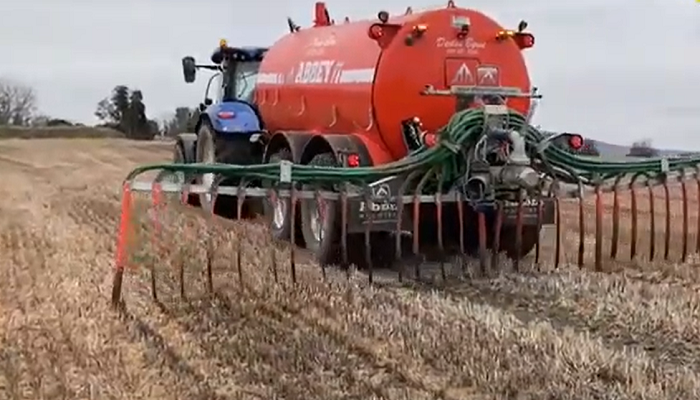
Michael McKeon tells us that over the last few months the main topic of conversation for pig groups has concerned pig manure storage and spreading.
It has been a difficult year so far, primarily due to the very wet autumn-winter-spring, making ground conditions difficult for spreading. More than ever before pig producers are now re-evaluating the volume of pig manure they are producing and assessing whether they can reduce this volume further or improve existing storage facilities. This assessment can be broken down into either ‘refurbishment of existing buildings’ or ‘new build’ options.
Refurbishment of existing buildings
Feed system
One of the biggest areas for potential manure reduction is the feed system. Generally in a refurbishment situation a producer is not going to change their overall feed system but you can make significant improvements to the existing system, especially if it’s a wet–feed system.
Finishers produce 60-65% of the total manure produced on a pig unit so ‘less water-in is less manure-out’. Many pig units have a finisher water:feed ratio of 3.25:1 due to the length of the circuit, number of bends or changes in feed in heights. A ratio reduction to 2.75:1 would reduce manure output per year by 2,436 m3 (536,000 gls) per annum for an 800 sow integrated unit. This is 90 less truck loads to have to organise every year! Achieving this reduction will require capital investment which may require; new satellite tanks, extra feed lines for shorter circuits, reorganising existing circuits etc.
Reducing the sow water:feed ratio is a much easier change but will not generate as large a savings in volume. A reduction from 5:1 to 4:1 (dry sows) and 4:1 to 3:1 (lactating sows) would together save 1026m3 (226,000 gls) per annum per 800 sow farm. If undertaking this reduction it’s important to ensure that the sows have good water pressure in the water bowls/drinkers.
Overground storage
If you currently have any uncovered manure storage (over or below ground level) then this should be covered, as up to 33% of the total storage availability may be taken by rainfall during the winter months. This is obviously when you most require the storage.
Existing tanks
All pig units have 6 months manure storage on paper, however a build- up of solid material at the bottom of tanks may significantly reduce the actual utilisable storage. Any house refurbishment should incorporate a plan to fully empty the solid material from the tanks. This will be a significant cost / logistical problem so will require careful planning, however if it increases a tank’s effective manure storage e.g. 20%, it will be worth the pain!
New buildings
If you are building new pig housing then effectively you have a blank canvas. Don’t simply copy an existing house design on the unit, see if you can improve upon it. From a manure output perspective the feed system will have the greatest effect on volume.
Feed system
If you are using a wet feed system should you consider changing to a dry fed system in the new unit/house? Research by Moorepark has shown that finisher pigs on wet-dry feeders have a better FCE (2.28 vs 42) than wet-fed pigs due to less wastage etc. Aside from the better FCE (worth €3.80/pig), an 800 sow herd with a finisher wet-dry feed system using a water:feed ratio of 2.25: 1 would produce 4,872m3 (1,071,694 gls) less manure than a wet feed system at 3.25:1. This would be 179 less truck per year to organise!
Overground storage
If you are building extra manure storage to meet BAT regulations then it may be financially advantageous to go for a larger size than required to meet your six month storage requirement. The difference per cubic metre storage between a 1,136 m3 and 1,591m3 tank is relatively small but the extra storage may be very welcome in a wet April!
Manure management system
To minimise/reduce the build-up of solid material in slurry tanks and therefore reduce your storage capacity over time, it is important to carefully plan how manure can be kept in solution / agitated / fully emptied. This is particularly important for units that are home-milling as generally there is a much faster build-up of ‘solids’ in these tanks.
The design becomes even more critical where new tanks are ‘shallow, with frequent emptying’ or where they have a ‘solid sealed cover’. In general, tanks with a relatively short distance to sluice / suction points work best. Where tanks with a large area are being considered, then a ‘river flow’ or a ‘continuous suspension’ system may have to be considered.
In conclusion, if you are considering refurbishing or building from scratch, a little bit of thought on how to minimise your manure production will pay dividends long into the future. Hopefully we won’t see as wet a nine months again anytime soon, but if we do hopefully you’ll be even better prepared.