
Top Tips for March and April to protect water quality
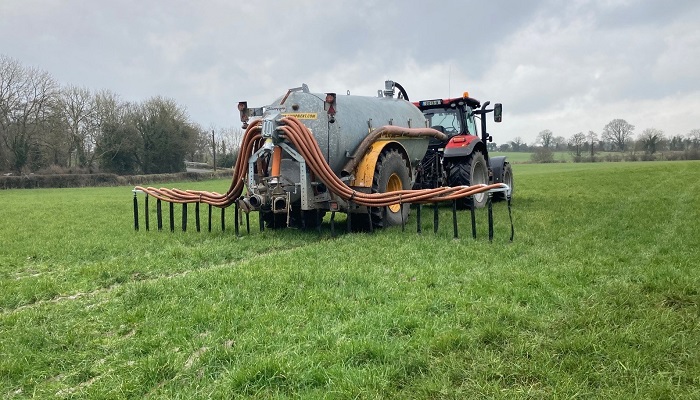
Along with improving nutrient efficiency and farm profitability, the Teagasc Better Farming for Water Campaign team share top tips to protect water quality on your farm.
As spring gets underway, March and April are key months for setting your farm up for a productive and environmentally responsible year. Daylight is increasing, soils are starting to dry out, temperatures are beginning to rise, grass growth is starting to increase and decisions made now will shape both grass and crop performance in the weeks ahead.
At the same time, spring is a high-risk period for nutrient loss, as changeable weather and heavy soils can increase the potential for runoff and leaching. Striking the right balance between driving growth and protecting water quality is essential. The Better Farming for Water – 8 Actions for Change Campaign highlights areas where actions taken on farm can make a real difference to both water quality and farm performance.
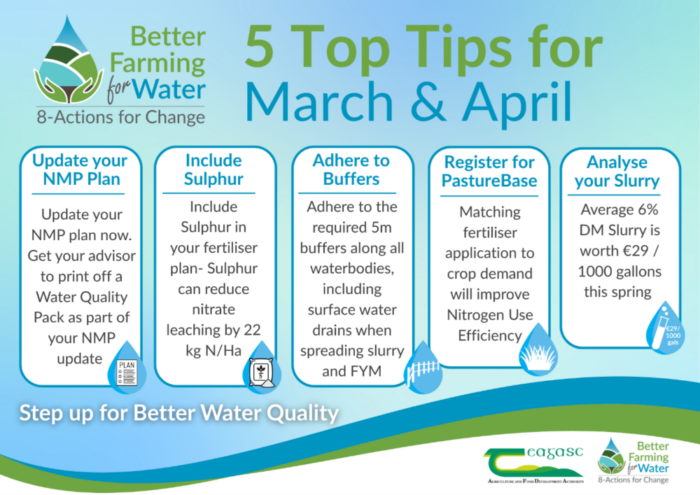
1). Update your Nutrient Management Plan (NMP)
Now is the time to review and update your Nutrient Management Plan. An up-to-date NMP ensures you are applying the right nutrients, at the right rate, in the right place. Speak to your advisor and have a Water Quality Pack printed as part of your update. This will help identify any high-risk areas on your farm and guide decisions that protect local watercourses while maintaining output.
2). Include sulphur in your fertiliser plan
Sulphur is often overlooked, yet it plays a vital role in maximising nitrogen use efficiency. Including sulphur in your fertiliser programme can reduce nitrate leaching by up to 22 kg N/ha. By improving how crops and grass utilise nitrogen, you not only protect water quality but also get better value from every unit of fertiliser applied.
3). Adhere to buffer zone requirements
Maintaining the required 5-metre buffer zones along all waterbodies, including surface water drains, is essential when spreading slurry or farmyard manure (FYM). These buffers act as a safeguard, reducing the risk of nutrient and sediment runoff entering streams and rivers. Careful attention to weather forecasts and ground conditions will further minimise the risk of losses.
4). Register and use PastureBase
Matching fertiliser application to crop demand is one of the most effective ways to improve Nitrogen Use Efficiency (NUE). Using PastureBase allows you to measure grass growth accurately and make informed decisions about nutrient applications. Applying fertiliser in line with actual growth demand reduces waste, saves money and lowers the risk of nitrate leaching to groundwater.
5). Analyse your slurry
Slurry is a valuable resource. On average, 6% dry matter slurry this spring is worth approximately €29 per 1,000 gallons. Testing slurry gives you accurate nutrient values, allowing you to adjust chemical fertiliser rates accordingly. This improves nutrient balance, cuts costs and reduces the risk of over-application.
By taking these five steps over the coming weeks, you can help protect water quality while improving nutrient efficiency and farm profitability. Small, timely decisions now will deliver lasting benefits for your land, your business and your local water quality.
For more on the Teagasc Better Farming for Water Campaign, visit here.