
Top tips to avoid nutrient losses during drought conditions
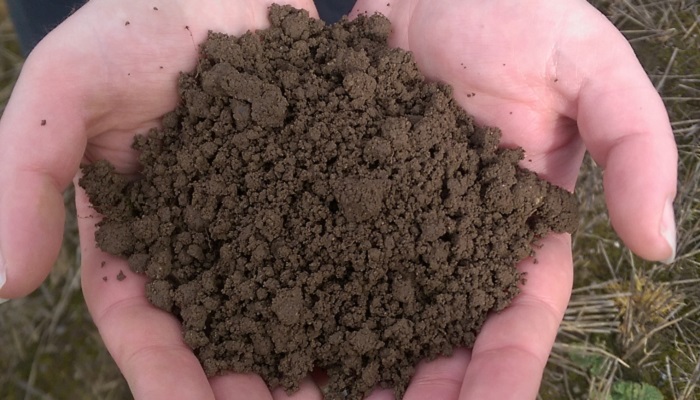
Philip Murphy, Teagasc Better Farming For Water Campaign Blackwater Catchment Coordinator, shares his top tips for dealing with drought conditions.
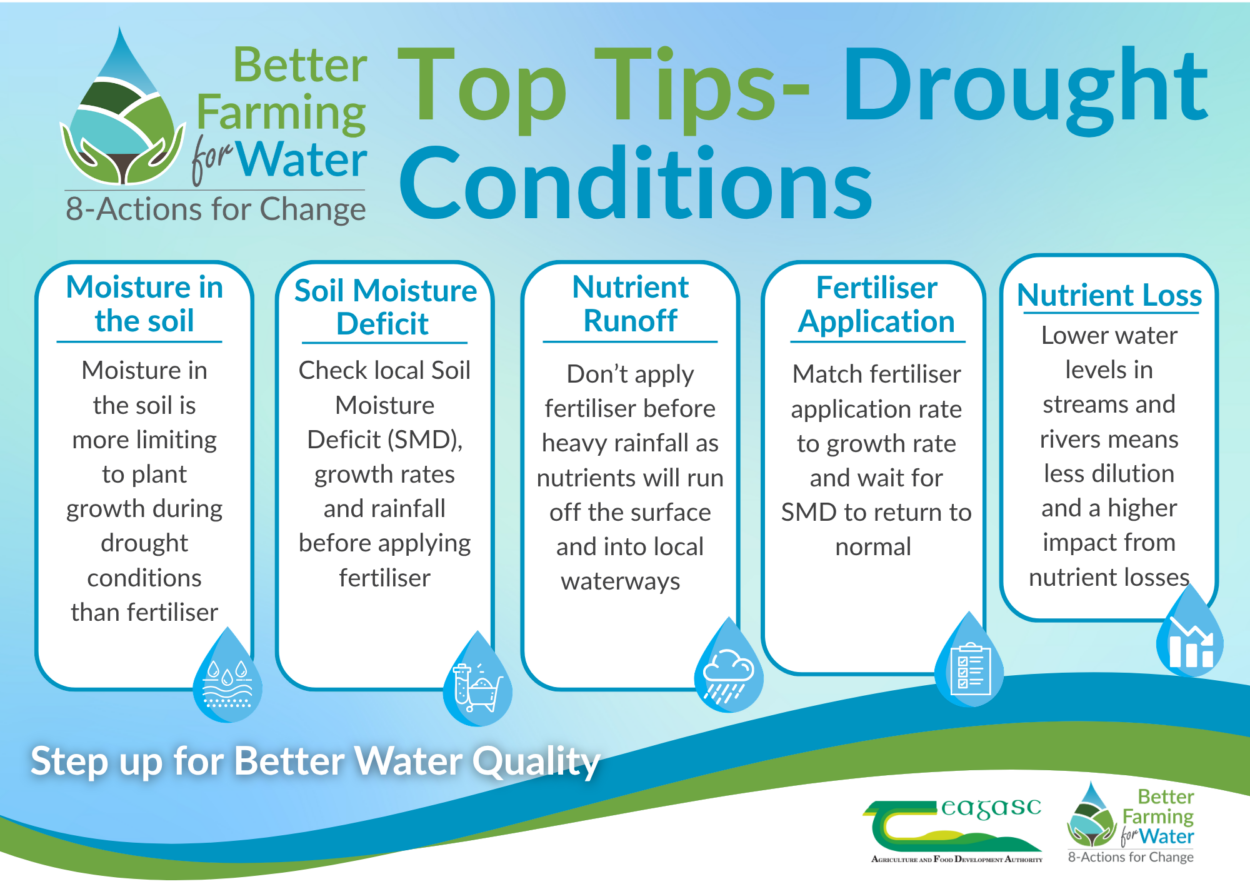
1. The role of moisture in the soil
For nutrients like nitrogen and phosphorous to be used by plants the fertiliser they must first be dissolved in moisture in the soil solution (water in the spaces between soil particles). Only when there is enough moisture in the soil can these nutrients be absorbed by the plant roots and used for stem and leave growth. With little or no rainfall over the last few weeks, and little or no morning dew, the soil is very dry and the movement of nutrients is severely restricted. In the short term, if a nutrient application of organic manure or chemical fertiliser were applied right now nutrient transport to the plant roots for absorption would be very limited, reducing the immediate effectiveness of the application.
2. Soil Moisture Deficit – a farms indicator of soil “dryness”
Soil Moisture Deficit (SMD) is the amount of rainfall (mm) that needs to fall to get the soil back to “normal levels” for plant growth – this is called field capacity. Met Éireann’s SMD model ranges from -10mm (soil is waterlogged or flooded), to 75mm+ (soil is in drought conditions). As of the week starting 20th July SMD levels being recorded in the north and west of the country are between 32 and 35mm of rain required to achieve field capacity. While the east and south east SMD levels range from 67 to 86mm (across all soil types). According to best practice;
- If SMD ≥ 50mm and grass growth rates fall to <50 kg DM/ha per day reduce fertiliser N applications in line with demand and top up with additional N once sufficient rain arrives.
- If SMD is ≥ 75 (severe drought) and grass growth is << 50 kg DM/ha hold off further N applications until sufficient rain arrives or further rain is forecast.
- Where re-growths are poor or non-existent, stop spreading fertiliser. Have fertiliser bought for spreading as soon as soil moisture levels begin to return
What about the moisture from an application of soiled water? To give an example;
- An SMD of 25mm [1 inch] approximately requires an effective rainfall level of 250,000 litres/ha or ~22,000 gallons water/ac.
3. Types of rainfall and the risk of nutrient runoff
Rainfall will replenish the Soil Moisture Deficit over time i.e. as rainfall returns the SMD level will decrease. But depending on how the rainfall arrives will determine the risk of nutrient loss to waterways.
- Heavy rainfall (forecast within 48 hours i.e. Met Éireann’s “yellow,” “orange,” or “red” rainfall warning or thunderstorms) will hit the hard ground and run off the surface initially where the soil can’t absorb water and especially where the ground is compacted. This type of surface runoff can carry nutrients, sediment and organic matter into drains, streams and rivers.
- Light rainfall (light or moderate rainfall levels); Gentle/gradual rainfall allows soils to gradually rewet and absorb moisture. Let the soil soak the rainfall first, and after the first rainfall and provided it’s not before heavy rainfall apply nutrients according to grass growth and Soil Moisture Deficit.
With nitrogen levels in the estuaries around Ireland showing elevated nitrogen levels the best opportunity to reduce potential nutrient losses is now. Follow this advice and best practice will contribute to reducing the risk of nutrient losses to the estuaries for 2026.
4. Best practice fertiliser application for minimising nutrient loss in the catchment
According to best research if repeated N fertiliser applications are carried out during the summer and early autumn (July and August/September) it may lead to a significant accumulation of soil nitrate-N above the needs of the grass for the remainder of the growing season. The risk of this then means there is a surplus N remaining in the soil root zone in October and November which increases the risk of N leaching (N loss in drainage water) to groundwater, rivers and streams over the winter.
Do not spread fertiliser in the hope that rain will arrive.
5. Nutrient loss is delayed – not eliminated during a drought
Rivers and streams are running with less water at the moment – so there is less water for dilution where nutrient losses occur. In this kind of consistent high temperature scenario rivers and streams have less capacity to absorb oxygen – increasing the risk of low dissolved oxygen levels for stream ecology. This means the aquatic life – fish and invertebrates, which relies on healthy rivers and streams is much more prone to the impact nutrient losses and organic matter inputs which further reduced dissolved oxygen levels in the water. The impact to water quality is much more significant in these drought conditions.
One final and important note; The first heavy rainfall after a drought can wash a concentrated pulse of nutrients, sediment and organic matter into farm drains and local streams. Taking extra considerations before forecasted rainfall after a dry spell can help protect both fertiliser investment and local water quality.