
Tractor Safety Week: The importance of safe tractor operation
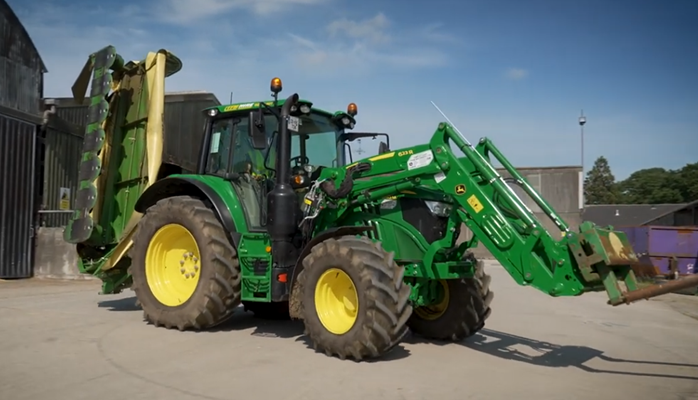
Tractors and farm vehicles are vitally important on farms, but they must be operated carefully to prevent accidents. As part of Tractor Safety Week, Teagasc Health and Safety Specialist, Francis Bligh writes on the importance of safe tractor operation.
Operators must be adequately trained and competent to carry out safety checks and associated daily tractor maintenance. They must also manage the tractor and associated machines safely. It is important that the tractor section of the farm safety code of practice risk assessment document is checked on a regular basis to identify hazards and put a plan in place to eliminate or manage them.
To safely operate a tractor, operators must carry out daily checks, proper mounting and dismounting using three points of contact, maintaining situation awareness, and never exit the cab without fully engaging the handbrake. Always wear high visibility clothing when operating tractors.
1). Pre-Operation and cab checks
- Daily inspection: Check tire pressures, look for oil leaks and ensure all safety guards and power take-off (PTO) covers are in place.
- Cleanliness and visibility: Clean your windows and ensure mirrors and in-cab monitors are properly adjusted to minimise blind spots.
- Lighting: Ensure headlights, taillights and orange flashing beacons are working perfectly before driving on a public road.
2). Mounting, dismounting and parking
- Handbrake danger: Never assume the handbrake is securely engaged. Test it by applying the brake, putting the tractor in gear and gently attempting to move forward.
- Never mount/dismount on the move: Always maintain three points of contact and ensure the engine is off and the handbrake is on before exiting.
3). Sloping ground and terrain
- Walk the slope first to check for hidden obstacles.
- Use four-wheel drive, select the correct gear before the slope and use engine braking when traveling downhill.
- Weight distribution: Keep as much weight uphill as possible, avoid quick turns and turn uphill if working across a slope.
4). Crush zones and implements
- Three-point linkage: Never step into the crush zone between the tractor, a wall, and a piece of machinery.
- Stationary shut-off: Turn off all moving machine parts (e.g., grain rollers, agitators) before approaching them for adjustments.
- Stability awareness: Remember that attaching new equipment or implements (like a trailing shoe to a slurry tanker) can destabilise the vehicle.
5). Road travel and passengers
Passengers: Children under 7 are strictly prohibited on tractors. Passengers may only travel in the cab if there is a proper, manufacturer-approved seat and seatbelt.
Beacons and lights: An orange flashing beacon is a legal requirement for slow-moving vehicles on Irish public roads. Turn off high-intensity work/ploughing lamps while driving on roads.
Phone: Never use a mobile phone while operating a tractor
For more information watch the video below:
Tractor Safety Week is an initiative of the Farm Safety Partnership Committee. For more information on Tractor Safety Week, visit here.