
Teagasc’s long-running birch research and the new BirchGen project are revealing how Ireland’s downy birch can be improved, conserved and better adapted for future forestry, Dheeraj Singh Rathore, Tomás Byrne and Stephen Byrne, Teagasc, tells us more.
Downy birch (Betula pubescens) is one of Ireland’s most adaptable native trees. It tolerates a wide range of soils and conditions, including heavier or damper ground where fewer species succeed, making it a valuable choice for restoring challenging sites and enriching biodiversity.
Birch also plays an important role in improving soil quality and providing habitat for many insects and birds. In recent years, it has gained attention as a resilient native hardwood suited to timber, landscaping and native woodland planting when established and managed under suitable conditions.
For over two decades, Teagasc, in collaboration with national academic and industry partners, has led work to improve birch through field selection, progeny trials and the establishment of indoor seed orchards. This research has produced Ireland’s first ‘qualified’ downy birch seed, now supplied commercially through None So Hardy Nurseries Ltd. with support from the Department of Agriculture, Food and the Marine. The Teagasc Birch Improvement Programme continues to evaluate both downy and silver birch for growth and adaptability across the country.
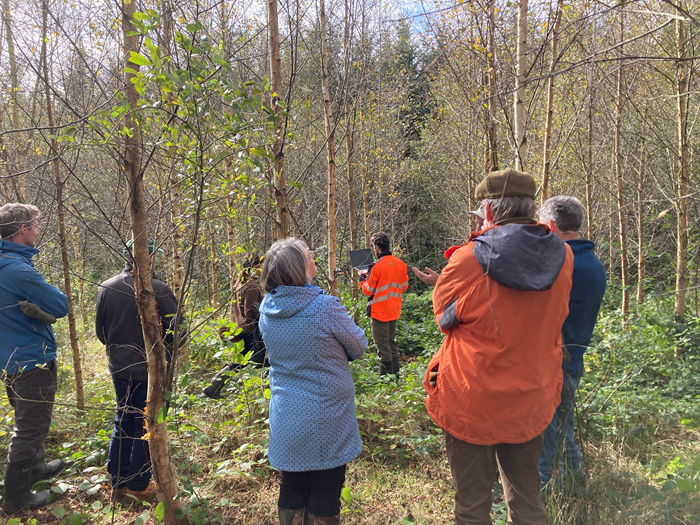
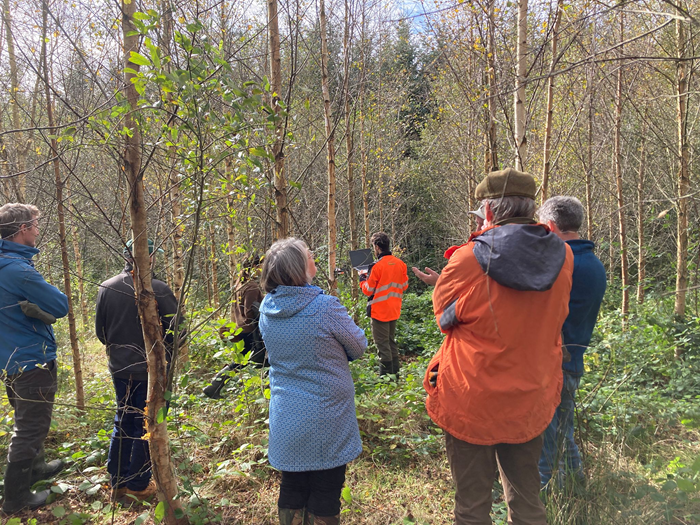
Stakeholders and Teagasc staff visiting a downy birch progeny trial established on private land as part of ongoing birch improvement research
The BirchGen project; ‘Genomic Characterization and Conservation of Downy Birch for Sustainable Forestry and Biodiversity’, builds on this foundation. Funded by the Department of Agriculture, Food and the Marine (DAFM) under the Conservation of Plant and Animal Genetic Resources Scheme (2025), the project is using advanced genetic sequencing to read and map the complete DNA of Ireland’s native downy birch.
By decoding the downy birch genome, researchers can identify the natural differences that influence growth, timber quality and resilience to changing environments. This knowledge will help select well-performing trees for future breeding and conservation, safeguard genetic diversity, and support the development of climate-resilient, biodiverse forests in Ireland.
More from Teagasc Daily: Recognising farmers integrating farming and forestry