
21 February 2025
Update on storm damage extent and forestry felling licences
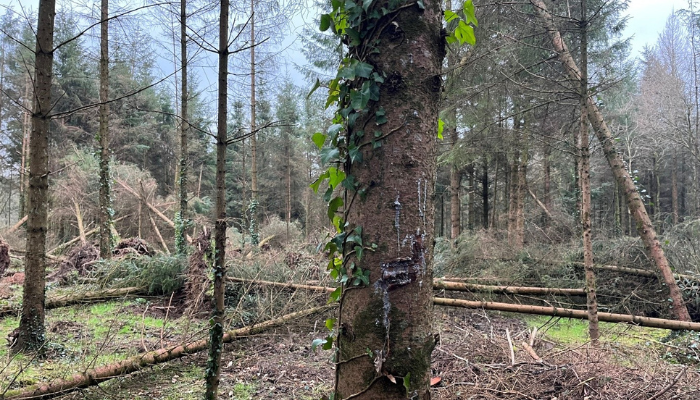
Recovery planning for impacted forests is a key focus in the aftermath of recent severe storms. In this article, Teagasc Forestry Advisor, Jonathan Spazzi, provides updates on the assessment of recent storm damage to forests at national level.
Jonathan also summarises the latest from the Department of Agriculture, Food and the Marine (DAFM) on the use of felling licences in managing storm-damage. He also reminds forest owners of ongoing advisory supports available from Teagasc.
In a press release yesterday, February 20, Minister of State Michael Healy-Rae confirmed that an initial satellite assessment puts the extent of storm-damaged forests at almost 24,000 ha. This estimate is based on a sample-based approach, devised using the Irish National Forest Inventory sampling framework (2 km x 2 km grid across the country), in conjunction with satellite imagery analysis (Figure 1). It provides estimates of impact at both national and provincial level.
There is a reported even split in impact between public and private forests. The analysis estimates that approximately 10 million cubic metres of timber has been affected, predominantly in spruce plantations older than 20 years of age. To put this in context, in 2023, a total of 4.3 million cubic metres of timber was harvested from Ireland’s forests. These unprecedented findings will be central to discussions of the National Windblow Taskforce, which meets again next week.
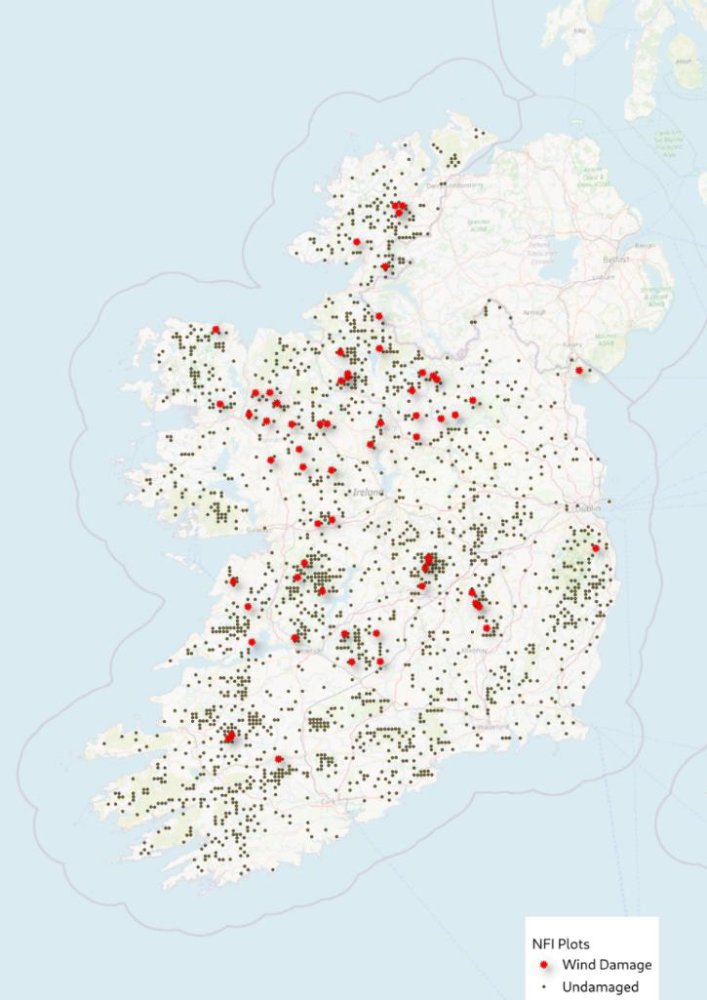
Figure 1: Spatial distribution of NFI plots, including wind-damaged plots (red pointers)
Source: DAFM website
DAFM have recently issued updates on felling licences in relation to clearance of storm damage in forests.
Existing clearfell licences
DAFM have confirmed that existing in-date clearfell licences (including combined thinning and clearfell licences) may be used to fell and remove trees, where the forest plots covered by these licences have windblow damage caused by Storms Darragh and/or Éowyn. The existing conditions of the licence shall apply to any cutting, felling and removal of timber, including any timing restrictions in the licence conditions that might apply for the protection of bird species.
Existing thinning-only licences
Forest owners who wish to use their existing thinning-only felling licences to clear forests that have experienced windblow damage from Storm Darragh and/or Storm Éowyn can now complete and submit a notification form to the following email address: felling.forestservice@agriculture.gov.ie using the email subject line ‘Notification of storm utilisation of thinning licence’.
Information regarding the replanting of the clearfelled area must be sent to the same email address within 6 months after completion of clearing operations. Details of both the notification and replanting forms are set out in Circular 5 of 2025
Felling licence applications already in the system, to be licenced
DAFM will prioritise any clearfell or road licence applications already in the system which have yet to be licenced, for forests impacted by Storms Darragh and/or Éowyn. To help facilitate this prioritisation, forest owners or their registered forester will need to email the DAFM at felling.forestservice@agriculture.gov.ie with the following information:
- Email Subject: “Application impacted by Storm”
- Licence application number
- Confirmation that the licence application will be used in forests damaged by Storm Darragh and/or Éowyn.
- For clearfell applications only, estimate the percentage of the applications total area impacted by Storm Darragh and/or Éowyn.
Guidance on new applications not yet submitted and applications already in the system are set out in Circular 3 of 2025
There is a commitment by DAFM to making the application as efficient and fast as possible. DAFM has confirmed that all windblow-related licence applications submitted on or before August 31, 2025 will be prioritised. The same also applies for applications already submitted and notified to DAFM as been impacted by the storms.
New felling licence applications not yet submitted
Owners and registered foresters submitting new felling and forest road licence applications will need to confirm if the new licence application will be used in forests damaged by a recent storms and to give an estimate of storm damage as a percentage of the application’s total area.
This process will allow owners and DAFM to quantify the extent of the damage and ensure that the harvest recovery of windblown timber is carried out in a prompt and safe fashion.
Teagasc guidance to forest owners
Teagasc has issued guidance to forest owners on managing storm damage, with an emphasis on safety and the importance of planning the recovery process and getting advice. This guidance incorporates the following key points:
- Don’t rush in – prioritise safety first
- Check your insurance status
- Seek professional guidance and advice
- Assess the damage in a safe manner
- Ensure a valid felling licence is in place
- Plan access and apply for a road licence, where required
- Selling timber – engage all available markets and secure the best deal
- Keep records and monitor progress
- Prepare an appropriate replanting plan.
For further information on felling and replanting see the DAFMs’ publication Felling and Reforestation Policy
Teagasc continue to engage with forest owners impacted by recent storms, providing guidance on the key steps on process of recovery from storm damage. Through ongoing engagement with forest owners groups and the Forest Windblow Taskforce, Teagasc are organising collaborative events in the coming days and weeks to support forest owners in managing storm-damaged forests.
Details of upcoming events, as they are announced, will be posted on our Teagasc forestry events page.