
Vet perspectives on pig tail docking
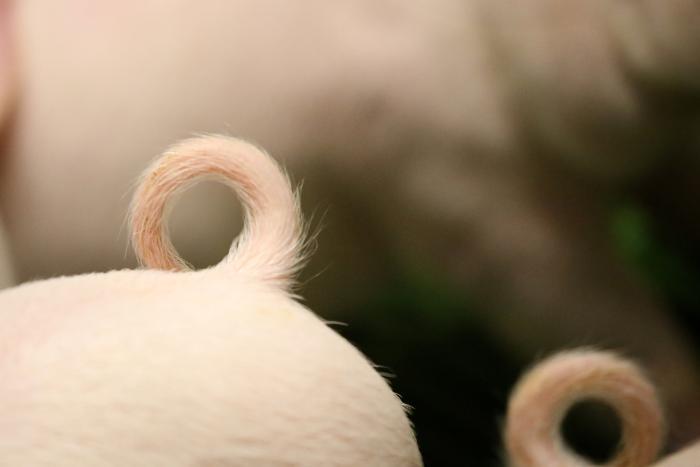
The PigTail project aimed to equip policymakers with clearer insights into the challenges faced by the industry, and what changes would be needed to progress towards reducing the practice of pig tail docking. Molly Harrison, Teagasc Social Science Research Officer, tells us more.
As well as interviewing farmers, government veterinary inspectors and private pig veterinarians were asked for their views, which we grouped into three themes:
Capability
Capability considers how vets perceive their own and farmers’ skills and knowledge regarding rearing undocked pigs. Vets believed farmers were generally well informed and had access to various information sources but felt system-level constraints limited their ability to stop tail docking. They also saw scope to improve the advice provided to farmers and enhance the effectiveness of inspections and assessments by making them more engaging and cyclical.
One vet said, “Farmers would know how to do it, and they would be able to do it very well if the system allowed them. I think it would be entirely possible, but not at the moment.”
Opportunity
Opportunity encompasses environmental and social factors that influence vets’ ability to encourage stopping tail docking. Vets believed that the current intensive pig farming systems in Ireland, and most of Europe, driven by tight margins and a focus on efficiency, are unsuitable for rearing undocked pigs. They felt that countries where docking is not routine have different systems, large subsidies, and small, nationally focused markets where consumers pay more for pork. They recommended gradual improvements to housing and management in Ireland to reduce tail-biting risk factors and provide consistently good environments for pigs. Good stockmanship, nutrition, improved pig health, docile genetics and an industry mindset shift were repeatedly mentioned.
Motivation
Motivation includes both vets’ conscious and unconscious responses, and mechanisms of reinforcement. All vets feared an immediate ban on docking would increase tail biting, harming pig and human welfare and farm businesses. Conversely, some vets felt happy at the idea of undocked pigs as being able to rear them would signal high welfare, however, others questioned what successful rearing would look like and emphasised the need to manage farmers’ expectations. Overall, there was cautious optimism, noting that gradual changes and support could foster further research and farm improvements.
Private practitioners were not confident in advising farmers to stop docking, due to the absence of clear alternatives and the unpredictable, difficult-to-manage nature of tail biting. Government inspectors felt unable to enforce legislation due to the wording, or offer realistic advice, making visits feel futile.
The lack of financial incentive or viability of stopping docking was a major concern. Vets felt farmers operate within precarious economic cycles and do not receive enough for their product. Substantial incentives (e.g. through premium pricing and higher building grant ceilings) would be needed to offset additional infrastructure and production costs.
According to one vet, “The only way to stop tail docking is through enforcement and economic incentive to the farmer. And not one euro per pig, it has to be a significant premium.”