
05 March 2024
Water quality and Teagasc’s agricultural catchments programme

Mark Boland, Teagasc Agricultural Catchments Programme Advisor, describes how targeted management, like Declan Roche’s efforts in the Ballycanew catchment, can significantly improve soil pH and phosphorus levels, reduce nitrogen usage, and enhance sustainable farming practices.
Teagasc’s agricultural catchments programme (ACP) has been monitoring water quality and assessing the changes to Irelands Nitrates Action Programme and the Derogation since 2008 in six river catchments across the country. Soil sampling fields within all catchments every four years has been an essential building block in forming strong working relationships between the 300 farmers, advisors and researchers.
The Ballycanew catchment in Co Wexford is predominantly grassland, with heavy soil formed from glacial marine deposition. Phosphorus (P) and sediment are most at risk of loss to water, where the soil is saturated over the winter and early spring. Over half of the 30-35 farmers within the catchment are dairy farmers with high stocking rates.
Soil fertility levels in the Ballycanew catchment are low and successive analyses every four years have shown an increase in the number of P index 1 fields (see Figure 1). Soil pH levels across the catchment are also less than optimum, with only 45% above 6.2. This is an increase from <40% in phase 1, however it represents a significant reduction from approximately 68% in phase 3 (see Figure 2).
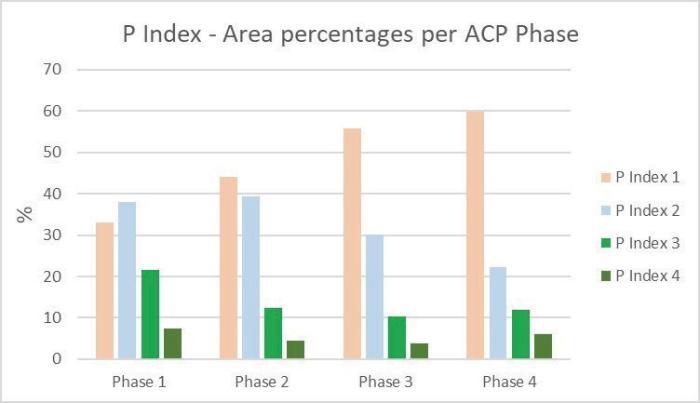
Figure 1: Soil Phosphorus Trends in Ballycanew Catchment Phase 1-4
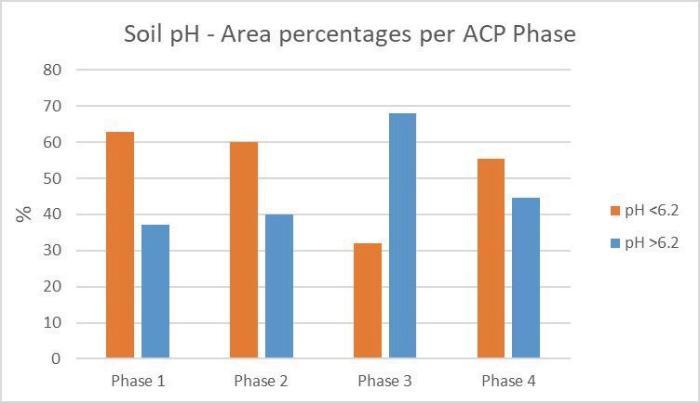
Figure 2: Soil pH Trends in Ballycanew Catchment Phase 1-4
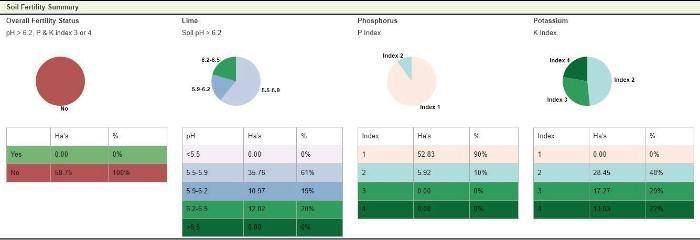
Declan Roche farms on the edge of the Ballycanew catchment, milking 90 cows on 59 hectares in one block at a stocking rate of just over 170 kg N/ha. Soil sample results for the farm were initially in keeping with the overall catchment trend as shown in figure 3.
Declan improved his farm’s soil fertility levels through simple yet effective management. Lime application targeted pH levels which had fallen with over 60% below 5.9, while most of the farm was index 1 for phosphorus.
“We note down every application, including rates, of organic and chemical fertiliser and lime to each field,” says Declan. “Combining our soil sample results with these records allows us to make decisions around grazing and silage production and where and when to target nutrients.”
Declan availed of the P build up allowance since 2019, giving additional P allowances on index 1 and 2 soils. Nutrients from slurry are targeted to silage ground in particular. Indeed he has taken the view that timing of slurry application on heavier soils must be effective, so much so that he constructed an extra slatted tank to act as a receptor tank during the winter. “The tank enables us to apply slurry at times when weather and ground conditions are favourable, rather than simply applying when the closed period has passed.”
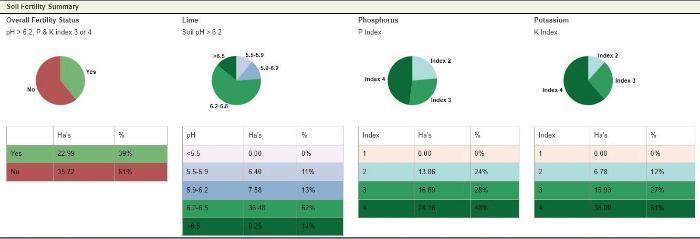
Linking application of both organic and chemical manures to soil sample results has allowed Declan to target the whole farm rather than relying on fields closest to the farmyard. The most recent soil sample results on the farm highlight how Declan has reversed the falling soil fertility trends, vastly improved soil pH and P levels (figure 4).
This has led to a reduction in chemical nitrogen (N) applied, at just 155 kg/ha in 2022. Good growth and utilisation of quality grass on the farm has resulted in usage of only 500 kg of concentrates per dairy cow.
This article was first published in Today’s Farm, read more from the latest edition here