
28 December 2023
Weed control and monitoring the BYDV challenge
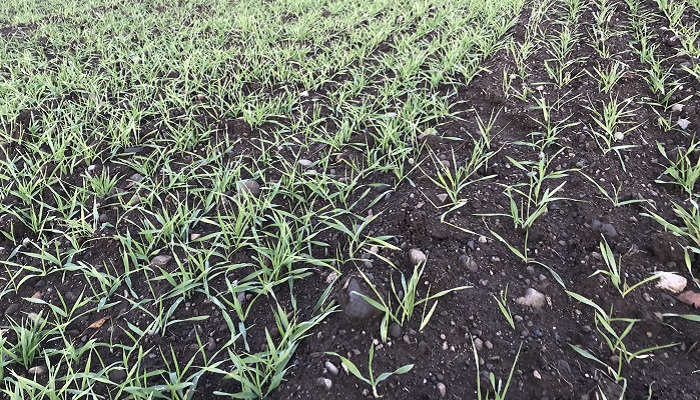
Very few winter cereal crops have received any herbicides so far in 2023. In this article, Shay Phelan, Teagasc Crops Specialist, looks at the options for weed control in winter barley, wheat and oilseed rape.
While many will opt for spring applications for winter barley, where grass weeds can be an issue, these will need to be treated as soon as land is trafficable.
Most product will claim to control annual meadow grass up to the three-leaf stage. However, once tillering starts, then control becomes more difficult. Options on winter barley are limited, with flufenacet, prosulfocarb, pendimethalin or chlotoluron only effective on small grass weeds. Firebird Met has a new latest timing up to GS25 and other products such as Firebird, Tower, Stomp, Defy and Diflanil are the main options either as solo products or in mixes. Consult the label for the weeds controlled by each product to see what are the best options for each field situation – bearing in mind different products may be needed for different fields.
Oilseed rape
For oilseed rape crops, many of which may have only received a graminicide to control volunteer cereals, many growers have opted to use Astrokerb or Kerb to do the majority of the weed control.
These will control problem grass weeds, while the aminopyralid in the Astrokerb will give more broad-spectrum weed control including: groundsel; poppy; bindweed; and mayweed. Caution is advised, however, as crops sprayed with Astrokerb must have the straw incorporated and not baled. These fields should be entered into the Straw Incorporation Measure (SIM) on the 2024 BPS application if you haven’t reached the limit with cereal crops. Both Kerb and Astrokerb work best when soil temperatures are below 8oC and are dropping, so the coming week may be the ideal timing for the two products.
Winter wheat
For winter wheat crops, there are still plenty of options to control grass weeds in the spring. These include products such as: Pacifica Plus; Broadway Star; Monolith; or Alister Flex – all will give good control of bromes etc. However, Broadway Star for example will not control annual meadow grass. So again, choose products to control the different target weeds in different fields.
BYDV
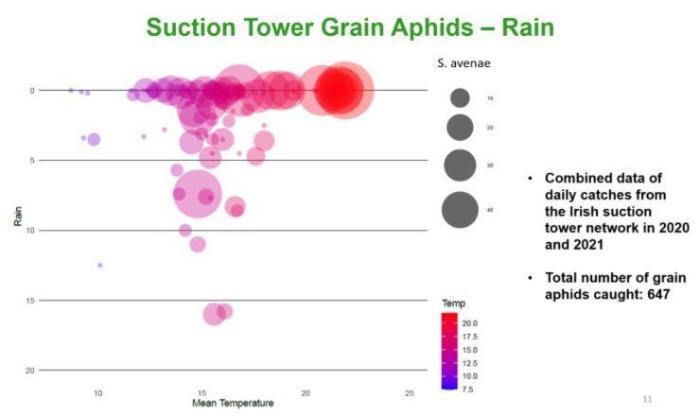
Weed control and insecticide application often go hand in hand at this time year. Sometimes, however, things may be different. The recent wet weather normally would reduce aphid flight, as is seen by previous results from the aphid suction towers that Teagasc has placed in different parts of the country. In spring 2023, there were very few winter crops showing signs of BYDV. This occurred as the wet weather seemed to reduce flight, so this may well be the case again this season.
Figure 1: Effect of rainfall on aphid flight
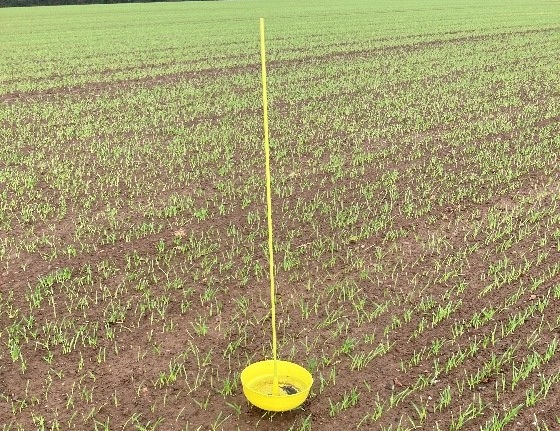
However, crops locally should be monitored to check for the presence for aphids. Teagasc currently has more than 20 crops in different locations throughout the country, using yellow traps to trap aphids. We can see what species are flying and also if they are carrying virus. To date, numbers in many of these yellow traps appear to be relatively low – similar to 2022 – but there are some differences between locations.
Figure 2: A yellow trap in winter barley
Grower feedback wanted on winter crop plantings
Following a challenging autumn and early winter period on tillage farms, Teagasc has launched a survey to help identify the areas planted this autumn and to shed light on farmers’ cropping plans for next spring.
With wet conditions persisting from mid-September through to late-November, plantings have been hindered in all areas. This loss of winter crop area looks to be compounded by a lack of seed for spring cereals, which may lead to unsown land on many farms in 2024.
To establish an accurate picture of the areas planted nationally thus far, Teagasc is asking for as many tillage farmers as possible to participate in the survey. The survey aims to assess how much planting has been completed this autumn and to identify if tillage farmers plan to sow winter cereals in January and February.
We would like to get your feedback to create a national picture of winter plantings this year and your intentions for 2024.
To complete the survey via Survey Monkey, click here.
Tillage Edge podcast
Each week, Teagasc Head of Crops Knowledge Transfer, Michael Hennessy brings you the latest agronomic advice through the Tillage Edge podcast. To listen to the latest episode of the Tillage Edge podcast, click here.