
What farmers can do to improve water quality
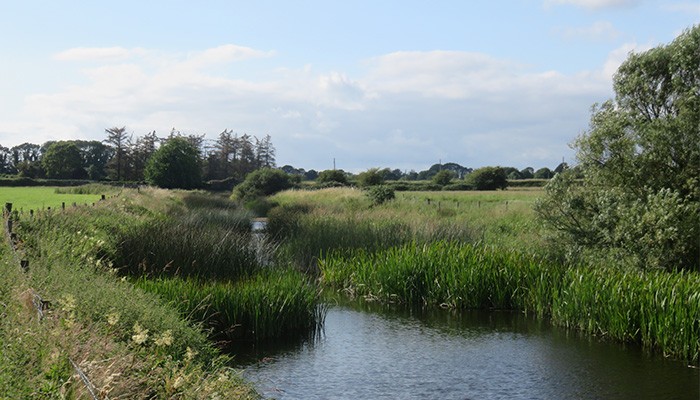
Sinéad Devaney, Teagasc Advisor with the Agricultural Sustainability and Advisory Support Programme (ASSAP), says water quality is everyone's concern and responsibility. From farmers and foresters to fishers, landowners and rural and urban communities, everyone has a role in protecting and restoring Ireland's waters.
In mid-June two reports were published by the Environmental Protection Agency (EPA) regarding water quality:
- Water Quality in 2025: An Indicators Report
- The National Agricultural Inspection Programme Summary Report 2025
Water Quality in 2025: An Indicators Report
This report provides an update on the key indicators of the quality of Ireland’s rivers, lakes, estuaries, coastal and groundwaters using monitoring data collected in 2025. There has been little change in water quality indicators in 2025. Overall water quality remains unsatisfactory in many areas.
The key points are:
- Excess nutrients from agriculture and wastewater remain the greatest challenge to water quality improvements. Phosphorous and nitrate levels are still too high in many of our waters.
- Some areas show improvements which is promising, but these are being offset by declines elsewhere. The scale and pace of implementation of actions to protect and restore water quality needs to be increased.
TheNational Agricultural Inspection Programme Summary Report 2025
The EPA has set inspection targets for each local authority based on risk that prioritises areas where agricultural activity poses the greatest risk to water quality. The number of Good Agricultural Practice (GAP) inspections have been increased with the aim of reaching the target of 4,500 farm inspections per annum as set out in the Water Action Plan 2024. The key points from this report are:
The non‑compliance rate for initial GAP inspections on farm was 43% while the top three reasons for non‑compliance were:
- poor control of soiled water,
- discharges with potential to impact water quality,
- inadequate management of farmyard manure.

When follow up inspections were carried out 48% of farms were found to be compliant. 199 farms were cross‑reported to The Department of Agriculture, Food & the Marine (DAFM) for non‑compliance, resulting in Basic Income Support for Sustainability (BISS) payment penalties. Note the DAFM carry out a portion of inspections on behalf of the local authorities each year.
So, bearing all the above in mind what can farmers do to play their part in improving water quality and avoid inspection penalties?
Firstly, it is important to note that the above non-compliances are mainly issues that can be resolved with good management on the farm, either in the yard or in the field. Good management by and large is not costly and doesn’t require elaborate outlay. It is achieved by following best-practice advice when carrying out daily tasks on the farm.
The main actions farmers can take
- Analyse soil samples for the farm and get a nutrient management plan (fertiliser plan) in place
- Ensure there is sufficient slurry and soiled water storage capacity on farm. Having fully emptied tanks in advance of winter housing will help address this, as does ensuring that clean water is not getting into slurry tanks. Leaking troughs can be a culprit here.
- Manage farmyards and roadways effectively to minimise nutrient losses
- Ensure gutters and downpipes are in good working order, with good separation of clean and soiled water. Clean water can be diverted away from the yard and out to drains while soiled water is not allowed to enter drains and ditches.
- Ensure adequate management of silage pits so that all effluent is collected
- Silage bales must be stored at least 20m from watercourses including drains
- Ensure runoff from manure storage areas is collected
- No field storage of farmyard manure during the closed period
- No field storage of farmyard manure within 20m of water bodies.
- Follow best practice for slurry & FYM spreading – 5m buffer zones from watercourses and drains (10m in first 2 weeks and last 2 weeks of open period)
- Follow best practice for chemical fertiliser spreading – 3m buffer zones from watercourses and drains
- For plant protection products (PPPs), a minimum 3m no spray buffer zone applies to all watercourses. Use drift reducing nozzles.
- Observe best practice when using sheep dip chemicals. Ensure sheep are held in a drip pen for 10 minutes post-dipping followed by 24 to 48 hours in field with no access to drains or watercourses. Proper dilution and disposal of spent sheep dip afterwards.
- No supplementary feeding points may be located within 20 m of surface water or on bare rock.
Your local ASSAP advisor, Teagasc advisor or private consultant can assist you with nutrient storage calculations and fertiliser planning for your farm and will be able to give you more detailed information on complying with the above advice.