
What five years organic has taught us
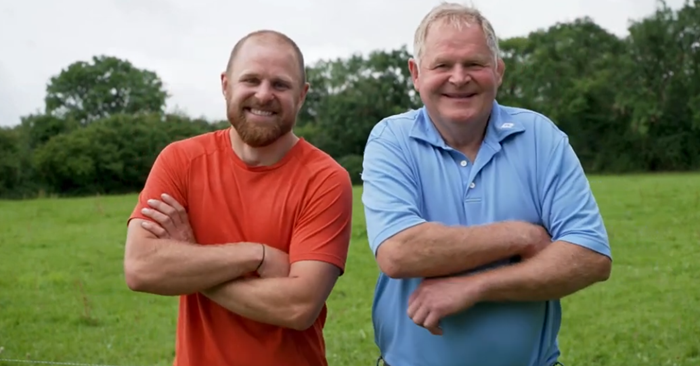
Brian Meredith and his father Keith quickly learnt that the sky was not going to fall in when they went organic, although the first couple of years did bring a certain amount of worry and anxiety for them both. Siobhan Kavanagh, Marianne Mulhall and Bernadette Bennett write on some of the changes they’ve witnessed.
Would the system still work? Would they be able to grow grass? Would they still be able to finish animals?
Like all farmers that convert to organic production, they had come from years and years of a safety net of tools like chemical fertiliser and veterinary products.
In organic suckler beef production for five years now, here they share their experiences in converting to an organic suckler beef system.
Changes since converting to organic
One of the big changes for the Merediths has been flipping their thinking from short-term thinking to more longer-term thinking. This applied to many tasks on the farm including managing soil fertility and maintaining yields, it applied to incorporating tillage into the system and it applied to herd health management.
Traditionally, if you had an issue with grass growth you went out with chemical fertiliser to sort it; if you had a problem with weeds, you sprayed them and if you have a worm problem you dosed.
All this changed in organic beef production, and they needed to plan ahead because the short-term fixes weren’t there.
Tillage
Introducing tillage into the system was a big change for the Merediths and a big learning curve. They had never grown tillage crops before, and soil fertility was less than ideal where they wanted to start a tillage rotation. But they knew that grain crops were going to be an important part of the system for them – creating self sufficiency in terms of animal feed, extra straw for bedding and a diversified income with potential markets for oats and combi crops. It made a lot of sense in so many ways.
It’s probably the area they found hardest to tackle. Learning about how to grow crops, getting soil fertility right, reducing the risk of weed infestation, knowing when to cut and how to handle the grain after harvest, needing infrastructure for storing the grain as well as finding a market for saleable grain. This was the biggest change and the biggest challenge after the initial conversion to organics. And all the changes after that became less challenging.
Technical efficiency
Brian believes that in many ways organic farmers need to be more technically efficient if you want to do it right and optimise output and profitability. Why? Because you don’t have the quick fixes.
You now have to soil sample regularly to make sure the soil will support grass growth and animal performance. You need to be on top of herd health management to avoid unnecessary use of veterinary medicines etc. You need a robust crop rotation to support soil fertility, maximise yield and reduce the risk of disease and weeds. If you are not technically efficient, the system won’t be productive.
For more information on their farm, watch the below video:
Adjustments to the system
Adjustments had to be made. Silage area had to be adjusted upwards because now the ground was only producing 70% of what they were producing conventionally. Stock numbers had to be adjusted to match the capacity of the land. All this takes a few years to re-balance.
On the veterinary side, they would have always gone with the dose just in case. Now, they were relying on the faecal egg sampling to tell them whether or not to dose. This would have made them quite worried initially but now realise that they really didn’t need as much dosing as they thought.
You become more comfortable with your decision making as you become more confident that the system is working well.
Relying on the people around you has been an important part of the journey for Brian and Keith. They meet every Monday morning and plan out the week ahead and all ideas are discussed at an early stage of planning. Brian says that this short meeting every week is invaluable and something all partnerships working on a farm together should do.
A break from the farm
Brian and Keith have also started organising ‘a morning cup of tea’ where 10 local farmers meet on the first Thursday of every month for a cup of tea to chat about farming. It’s a mix of conventional and organic farmers.
You could say it’s an informal discussion group. Initially people were wary because they were feeling guilty for taking the 1-1.5 hour of their day every month. Now, they see huge value in it from a social perspective, sharing of problems and sharing of ideas from conventional to organic and visa-versa. It’s the ‘I have done X, Y or Z’ practical experience that is invaluable to them.
“There’s comfort in working together and sharing ideas,” they explain.
Market considerations
Keith and Brian have learnt that it is important to have thought about your market for organic meat, milk and grain before you convert to organic production. Where are you going to sell the produce to get a premium price for it?
They sell some of the finished cattle to local organic processor/retail outlet, Coolanowle Organic Meats, while others will go to the mart.
Eddie Mulhall at Coolanowle Organic Meats lets them know what he needs and if they can they supply it, it works out well for both parties. They have built up trust over time and that helps.
They also are using Tullow Mart. Tullow Mart has been having an organic mart every four weeks for the past 12 months. This has also given Merediths another outlet locally.
Key learnings
There is a certain level of anxiety with switching to organic production. And Brian’s Dad, Keith, felt that more acutely for the first couple of years. He had been farmed a certain way for so many years and then, all of a sudden, the system changed drastically, and he / they had to trust that it would work.
Brian didn’t have the same level of anxiety about converting to organic farming as he had been away from the farm for a while. Brian would say that that the uncertainty and nervousness of the first couple of years is not a bad thing and shouldn’t stop people going into organic production.
The sky hasn’t fallen. They soon realised that you don’t need that many inputs as you thought for livestock production. The grass will still grow, and the animals will still thrive. Now they have become better at reading situations on the farm and making decisions that will work for a number of years ahead. The system is a win-win for them. They are producing high quality food profitably and it’s good for the environment, helping reduce greenhouse gas emissions and enhance biodiversity.
Both are now delighted with their decision to switch to organic farming and are looking forward to the next phase of their development with the introduction of social farming.
The above first appeared in the Farming Independent as part of a Signpost Programme update.