
What happens beneath your feet when the rain stops?
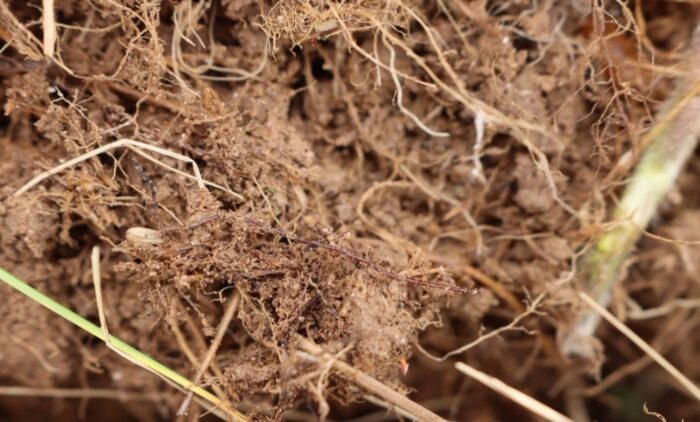
After weeks of warm, dry weather it's easy to assume that the soil beneath our feet has become lifeless. Crops are under increasing moisture stress, the soil feels hard and dry, and life beneath the surface appears to have all but disappeared. Dr. Veronica Nyhan, Soil and Plant Nutrition Specialist, tells us this isn't the case.
While activity below ground has slowed, soil biology hasn’t disappeared. Soils are home to almost 60% of all known species, making them one of the largest reservoirs of biodiversity on Earth. Like crops, the billions of organisms living in the soil are simply responding to the conditions around them.
Every day, billions of soil organisms are quietly working beneath our feet. They recycle nutrients, help break down crop residues, improve soil structure and support healthy root growth. In many ways, they are the engine that keeps soil functioning.
Microorganisms such as bacteria and fungi depend on soil moisture to remain active. As soils dry, their activity slows, reducing the breakdown of organic matter and the release of nutrients into forms that crops can use. This is one reason crops often respond more slowly during prolonged dry weather. Even where nutrients are present, the biological processes that help make them available are operating at a slower pace.
Larger soil organisms, including earthworms, springtails and mites, respond to drought conditions in different ways. Some become dormant, others move deeper into the soil profile or into protected habitats, while others survive the dry period as resistant eggs, spores or cocoons until favourable conditions return. Instead of thriving, soil organisms are simply surviving.
The good news is that healthy soils are remarkably resilient. When rainfall returns, soil biology quickly becomes active again and nutrient cycling resumes. Soils with good organic matter levels and stable soil structure are generally more resilient to drought and recover more quickly because they retain more moisture and provide a better environment for soil life.
While we can’t control the weather, we can improve the resilience of our soils. Maintaining soil organic matter, returning organic materials such as manures, straw and cover crop residues, reducing unnecessary soil disturbance, avoiding compaction and maintaining optimum soil pH all help support a healthy and diverse soil community. These management practices won’t prevent drought, but they can help soils cope better with periods of stress and recover more quickly afterwards.
Your soil is still working, even if it doesn’t look like it. The recent dry spell hasn’t switched off your soil biology. It has simply slowed one of the busiest engines on your farm.