
What impact can a spur roadway have on your farm?
Spring and autumn can bring challenging grazing conditions. Proactively improving grazing infrastructure on farm can help farms overcome this and increase the number of days at grass. The Grass10 team tell us more.
It is important to think back to spring 2026 and identify areas on your farm that need improvement. Can you add another entry to a paddock by putting in a new gap handle? Is there an area that would benefit from a spur roadway or an extra water trough?
In the video below William Dennehy, Dairy farmer, from Currow Co. Kerry describes how crucial spur roadways were to his grazing system in spring 2026. Despite challenging grazing conditions William was able to start grazing on the 20th of February and was able to stay grazing by day and night. Consistently having grass in the diet of the cows gave William great return on his milk constituents in spring and reduced his concentrate input.
What is a spur roadway?
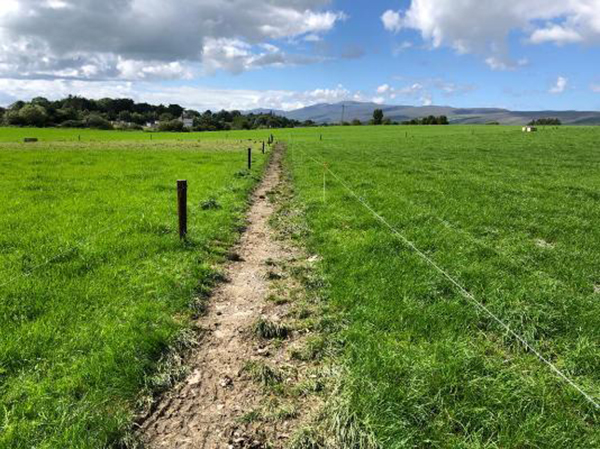
Spur roadways are 1-2m wide paths for livestock only. They allow branching off the main roadway to allow access to the back of paddocks and protect wet ground and ungrazed swards. Many farmers implement fully temporary spur roadways (just using temporary wire on bare ground) however, if the same spur roadways are being used every year it would be beneficial to utilise a simplified surface construction.
William has been consistently adding spur roadways on his farm and now has 7 spur roadways off his main roadways. Williams spur roadways are approximately 3 ft wide and the topsoil layer is dug out and filled in with hardcore and this works out around €10/m. A vibrating roller is then used to compact the hardcore.