
28 June 2023
When are you going to ‘pull your bull’?
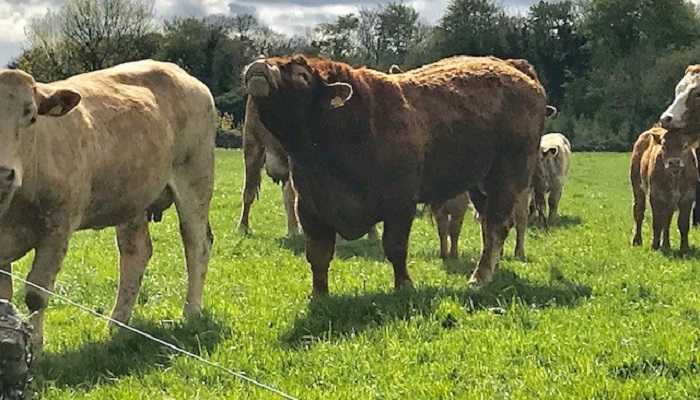
The breeding season for spring-calving herds is now into its final weeks on most suckler farms. Aisling Molloy, Future Beef Programme Advisor, provides a refresher on the breeding targets for suckler herds and outlines how the breeding season progressed for programme farmers.
Earlier calving herds in the Future Beef Programme began breeding around March 17th, with other herds starting to breed from May 1st. Most of them found the weather this spring very challenging; the wet weather in late March/April in particular causing the most difficulties.
Cows had to be rehoused for two to three weeks on some farms and the change in diet delayed heats. In some cases they were fed poorer-quality silage, as the best silage had already been fed to young stock over the winter. One herd using AI had 12 cows repeating from 17 cows served during the month of April alone, which was hugely frustrating and way behind conception rates achieved other years. Another herd only AI’d 45% of their cows in the first three weeks of the breeding season, well below the target 90%. However, the farmers reacted quickly as they knew their breeding targets.
So, what are the targets during the breeding season?
- Breed 90% of your cows in the first three weeks;
- Breed 100% of your heifers during the first three weeks;
- Aim for a breeding season of less than 12 weeks;
- Over 60% of cows should hold in calf to the first serve for natural service from a bull or for conventional AI straws.
For herds that were aware early on that they weren’t meeting these targets, what did they do?
- John Dunne in Co. Offaly fertility tested his two stock bulls. He found that one was infertile just one week before the breeding season was due to start, which averted a serious crisis.
- All farms ensured that the cows had received booster shots of vaccinations such as against leptospirosis.
- Re-housed suckler cows were turned out to grass as soon as weather conditions allowed, as they needed a consistent diet and to settle back at grass.
- Keeping records was vital. Most farms observe cows and heifers before the breeding season starts and recorded heats. They also watched closely for repeats after breeding.
- Heat detection was next and John Barry in Nenagh, Co. Tipperary purchased a vasectomised bull to help him pick up heats while he was using AI for the first seven weeks.
- John also reacted quickly to synchronise cows and heifers that hadn’t been bred. Firstly administering a prostaglandin injection which delivered heats in 5 out of 12 cows and then by using a CIDR for 7 days in 5 other cows, which was inserted by his vet.
- Automated heat detection systems such as Sensehub and MooCall proved their worth by picking up heats in cows and heifers that may have gone undetected without them.
Why pull your bull?
Now the focus on the Future Beef Programme farms has turned to the end of the breeding season. Although the length of the breeding season varies from six to 21 weeks across the programme, most farmers have an end date selected for the breeding season before a cow or heifer is ever served. This means that they will either separate the stock bull from the breeding females or finish artificially inseminating on the farm.
Eamon and Donnchadh McCarthy are farming in Glendine, Co. Waterford and have a strict six week breeding season for their autumn and spring herds. According to them, the benefits of a tight breeding season are:
- “It’s easier to stay motivated for 6 weeks of AI or calving than 9 weeks or more.”
The target is to calve over 70% of the herd in the first six weeks of the calving season. While this can be challenging to ensure there are enough calving pens available, condensing the workload means they are very focused during that time. According to the National Farm Survey results for 2022, 57% of farm holders or their spouse worked off farm, so it can also help them to plan time off work if necessary.
- “A more even group of calves at all stages of life.”
This is really useful when carrying out routine tasks such as disbudding and castration. If calves are closer in age, these jobs can be carried out for the whole herd in one day instead of having to do batches of calves on a number of different days.
- “More heifers to pick replacements from, as there are no late calvers that could have lighter calves that don’t meet their targets.”
- “You will have more fertile cows in the herd as the later calving cows are culled.” While this increases the culling rate on the farm, Eamon and Donnchadh are firm believers that it works very well for their herd and system.
Other benefits include:
- Heavier weights if selling weanlings – the difference in weight between a calf that is born on February 1st versus a later calf born on May 1st could be 117kg (1.3 kg/day over 90 days). If selling weanlings from the farm at a value of €3/kg, this amounts to €351 per head!
- Reduce feed costs for finishing cattle – similar to the points above, it is much easier to have an even batch of cattle for finishing that can be housed together. For example in a spring-calving, under 16 month bull beef system and with a 1st February versus a 1st May calf, there is a big difference in costs. The 117kg heavier bull will have gained that weight at a cost of 19c/day* at grass and at a younger age with a lower intake. Meanwhile the lighter bull, who will most likely be housed at the same time, will have to make up the same weight difference in the shed over an extra 90 days, with a higher intake, at a cost of €4.13/day*.
- Get a break between calving and breeding – farmers that have a tight calving spread of <8 weeks might have a month off after calving before the breeding season starts. This gives them a chance to catch up on other jobs like spreading slurry and fertiliser, cleaning sheds, vaccinating or even just taking a well-earned rest to catch up on sleep.
Cows and heifers can be scanned 30 days after the breeding season ends. Any that are empty can be weaned early and culled to reduce feed demand. Completing a fodder budget will help to plan for winter feed supplies and sort alternatives early if needed.
So when will you ‘pull the bull’ on your own farm? Keep up to date with scanning results on the Future Beef farms over the next few months at: https://www.teagasc.ie/animals/beef/demonstration-farms/future-beef-programme/
* Feed costs are based on 2022 figures of 12.1c/kg DM grass, 23.2c/kg DM silage and 40c/kg DM ration. Photo caption: John Barry’s Charolais stock bull on his farm outside Nenagh, Co. Tipperary.