
Why barley is the brewer’s grain of choice
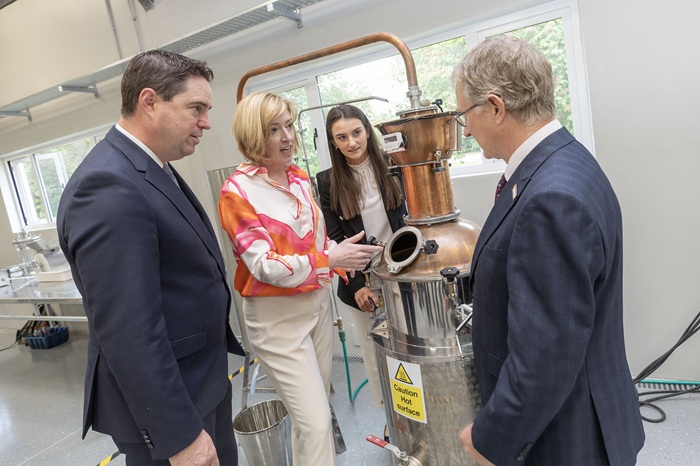
Through a recent RTÉ Brainstorm article, Gemma Merrins, Laboratory Technician at the National Centre for Brewing and Distilling, Teagasc Oak Park, detailed how quality checks at every stage ensure that the barley in your beer results in a consistent, flavourful beverage.
Barley is harvested in late summer and then dried and stored until after Christmas when it will germinate. It is then ‘malted’, that is germinated in large vessels which releases the enzymes that can convert the starch in the grain to sugar. The ‘malt’ is then dried and roasted to produce malt of different colours and flavours before taken to a brewery where it is mixed with water to produce a sugary liquid called ‘wort’.
What makes barley good for beer?
- Barley has a high starch content. When properly malted and mashed, this starch is converted into the soluble sugars that the yeast eats to make alcohol and bubbles.
- Malting wakes up enzymes in the grain. These enzymes break the starch into sugar. Barley varieties selected for malting retain a robust enzymatic complement that outperforms many other cereals.
- Protein levels are important in beer for head retention and stability.
- The intact husk of barley acts as a natural filter bed during the brewing process, improving beer clarity.
Mating is a controlled process of geminating grain and then drying it to cease germination. It goes through the following process:
Steeping: Clean barley (usually 12–14% moisture) is soaked in water for typically two 4-8 hours periods, then drained and aired in cycles until the kernels soak up enough water (about 40–45% moisture). This wakes the grain up and gets it ready to sprout.
Germination: The moistened grain is turned and aerated for several days. The grain starts to grow (germinate) and makes enzymes that will later break down starch. Regular turning and temperature control ensures uniform germination.
Kilning: The sprouted grain (“green malt”) is dried and gently heated to stop the sprouting, to lower the moisture to a safe storage level (around 4–5%) and keep the useful enzymes. How long and how hot you dry the sprouted grain also affects the malt’s colour and flavour. After kilning you have malt, and you can roast or caramelise it more to make special darker or flavoured malt.
The other agronomic and quality traits maltsters look for include:
- Uniform grain size and low screenings; these ensure even malting and reduce dust. Screenings are the small broken grains, dust, and straw pieces that fall through the screens during drying and intake.
- High germination and uniform dormancy means that the grains sprout well at the same time for an even malting performance.
- Low levels of fungal toxins and absence of disease protect food safety and preserve flavour.
- Good yield, resistance to lodging and major diseases provides economic viability for growers.
- Storability of grain that remains dry and sound during storage reduces quality loss and variability.
Spring vs. winter barley
Spring barley (sown in March–April and harvested in August in many regions) is the preferred choice for malting as the grains tend to deliver the plump kernels, have consistent protein levels and predictable germination that maltsters prefer. Winter barley can be malted successfully too, but spring varieties often dominate malting programs.
Going from seed to glass, this is a typical timeline and quality checks in Ireland:
- Sowing: March-April (spring barley)
- Harvest: typically, August
- Post-harvest testing: malt houses and buyers test samples for protein, moisture, hectolitre weight (bulk density), screenings, varietal purity and mycotoxins (e.g., Fusarium toxins).
- Cleaning, drying and storage: grain is cleaned, dried to safe storage moisture and stored under controlled conditions.
- Germination monitoring: repeated germination tests help predict malting behaviour during storage.
- Malting: steeping, germination and kilning produce malt; further roasting or caramelising creates specialty malts.
From malt to beer the typical steps are:
- Milling: Malt is crushed to expose the middle starchy endosperm while preserving husks for filtering.
- Mashing: Water and grist (milled grain) are mixed and held at temperature rests to allow enzymes to convert starch and proteins into fermentable sugars and free amino nitrogen.
- Lautering: The sugary liquid (wort) is separated from spent grain using the husk bed. The husks form a natural filter that helps the liquid run clear.
- Boiling: Wort is boiled with hops for bitterness, flavour and aroma; boiling also sanitises and stabilises the wort.
- Fermentation and conditioning: Yeast ferments the sugars into alcohol and CO2. After maturation, the beer may be filtered, pasteurised and packaged.
Barley’s physical structure, chemistry and agronomy combine to make it the ideal raw material for brewing. From careful varietal selection and field practices through controlled malting and precise brewhouse operations, quality checks at every stage ensure that barley’s potential is realised in a consistent, flavourful beer.