
Why certain foods give you wind, and what you can do about it
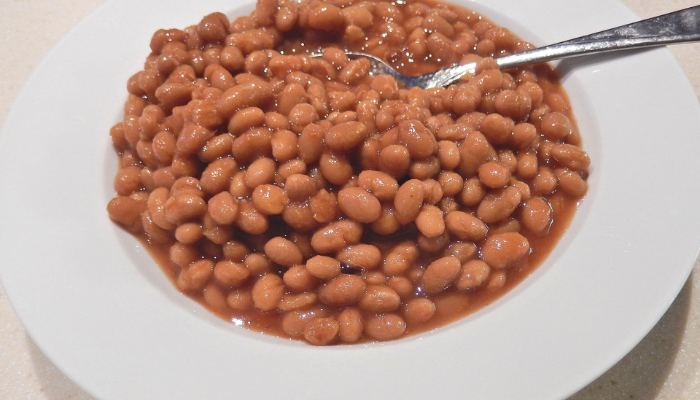
Harsh Mathur, Teagasc Research Officer, Jane Lavin, Teagasc Walsh Scholar, and Samuel Breselge, assistant professor for Functional Beverage Technology at the Technical University of Munich, tell us how some foods, such as baked beans, are notorious for causing bloating and flatulence because they contain components which are hard to digest.
Bloating and associated flatulence are common conditions in the general population and are linked to a complex interplay involving an individual’s diet, their gut microbiome profile and other factors. In extreme cases, bloating can cause severe gastrointestinal discomfort, as well as socially embarrassing situations associated with flatulence. The main types of gases involved in bloating and associated flatulence include hydrogen sulphide, methane, carbon dioxide and hydrogen.
At Teagasc Moorepark Food Research Centre, we have developed what is known a method in the lab to evaluate the propensity of various foods to either cause or alleviate bloating. These specific types of experiments are called ‘faecal fermentation experiments’, in which faecal samples from a healthy population are pooled together to form what is known as a faecal slurry (this is done to reflect this population in general).
This faecal slurry is then mixed with the microbiological media – known as a faecal fermentation media, which provides some basic nutrients for the gut microbiome. Lastly, the food being evaluated is added to the slurry and media to perform these faecal fermentation experiments, to assess to what extent different foods trigger gas production by the gut microbiome.
The truth behind beans and bloating
To validate this newly developed model, we are evaluating the propensity of certain food groups to cause bloating and associated conditions. We decided to test foods which are notorious for causing bloating and flatulence, including baked beans, kidney beans, cannellini beans, black beans and soybeans.
These types of foods are rich in components called FODMAPs – a type of short-chain carbohydrate noted for their poor absorption in the small intestine. High-FODMAP foods can sometimes be difficult to digest, and incomplete digestion is one common cause of gastrointestinal bloating.
We then measured the total amount of gas production that these foods caused in these faecal fermentation experiments. Their findings shows that these foods did indeed cause a significant increase in the total amount of gas produced by the gut microbes.
Another substrate which we tested included a type of complex sugar called raffinose. Raffinose is found in some vegetables and grains that are difficult to digest and thus is known to cause bloating. As was expected, we found that the addition of raffinose in these faecal fermentation experiments did indeed cause a significant increase in the total amount of gas produced, compared to negative controls where no raffinose or other foods were added.
Why do some diets produce more gas?
We also assessed these foods and sugars using two different faecal fermentation media. The first media mimicked a diet low in fibre, protein, and complex nutrients, while the other media mimicked a diet high in fibre, protein, and complex nutrients.
The experiments that we conducted showed that the more complex and richer faecal fermentation media already triggered a relatively high amount of gas production by the gut microbes. In contrast, the faecal fermentation media which was low in fibre components and complex nutrients triggered a much lower amount of total gas production by the gut microbes.
Therefore, adding the selected bean varieties to media which was low in fibre triggered a much more pronounced increase in total gas production than adding these beans to an already rich media high in fibre and protein.
Although some fibre components are associated with bloating, importantly, they do contain numerous health benefits. Therefore, a fine balance has to be struck between consuming a sufficient amount of fibre to elicit health benefits, whilst simultaneously minimising any bloating-associated symptoms that an individual might experience.
We are currently in the process of studying samples from these faecal fermentation experiments in even greater detail to try to ascertain which microbes are implicated in bloating. For example, it may be the case that certain groups of gut microbes are increased because of adding these beans. These may be associated with an increased amount of gas production, which likely triggers bloating and flatulence in physiological conditions.
Similarly, certain groups of gut microbes may decrease because of ingestion of foods rich in FODMAPs, and a decrease in these groups of microbes may be associated with bloating.
Combined with their in vitro model, we have used a simple mechanical system to measure gas production. It is anticipated that this will serve as a useful model for quickly screening a variety of food substrates to assess their potential to increase or decrease total gas production.
As such, these faecal fermentation experiments can serve as a proxy for bloating-associated conditions and can help shortlist foods for further testing and predict which foods are likely to cause flatulence and bloating-associated conditions upon consuming them.