
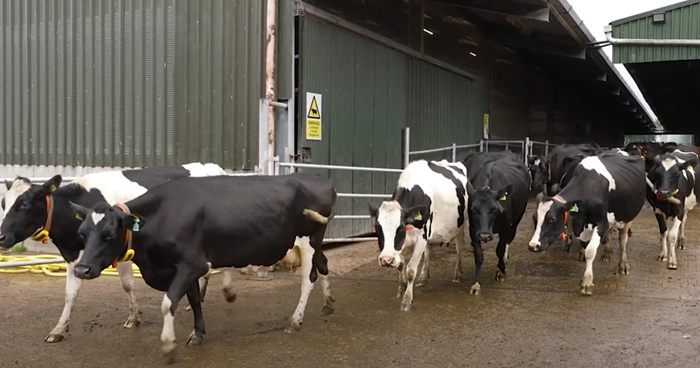
Lameness is one of the most pressing health and welfare challenges facing Irish dairy farms. To coincide with Animal Health Ireland's (AHI) new video series to tackle lameness, Eoin Ryan, School of Veterinary Medicine, UCD), and Stephanie Ronan, the Department of Agriculture, Food and the Marine, explore why lameness matters not just for animal welfare, but also for farm productivity, sustainability and public trust.
What is lameness?
Lameness is a clinical sign of pain, usually involving one or more limbs. In dairy cows, it affects walking ability, behaviour and comfort. Lameness can be caused by either non-infectious or infectious lesions.
Non-infectious causes include sole bruising, sole ulcers, white line disease and foot abscesses. These are often linked to risk factors like rough or uneven roadways, long walking distances, high stocking densities, inadequate cubicle design, or body condition loss around calving.
Infectious causes include digital dermatitis (Mortellaro), foul-in-the-foot, and slurry heel. These conditions thrive in wet, dirty environments and are more likely in herds where slurry builds up in housing or on roadways.
A widespread issue
Recent Teagasc research found that approximately 1 in 10 Irish dairy cows is lame at any one time, with levels rising to over 30% in some herds. The top 20% of Irish herds maintain lameness prevalence below 5%.
Why does it matter?
Lameness is first and foremost a welfare issue. It causes pain, restricts natural behaviour and makes it harder for cows to access feed and water. It also has major economic impacts. Lame cows eat less, lose condition, produce less milk and are more likely to have fertility issues. A lameness prevalence of 10% in a 100-cow herd costs an estimated €8,570 per year (€85.70 per cow), due to treatment costs, reduced production, and increased culling.
Sustainability is also affected. Lame cows have shorter productive lifespans, meaning more replacements are needed to maintain milk output, increasing the carbon footprint per litre of milk. Additionally, antibiotics are often needed to treat infectious lameness, making it harder for farms to reduce usage and prevent resistance.
Monitoring and recording
Early detection is key. Regular mobility scoring using the AHDB system helps farmers identify cows showing signs of impaired mobility (score 2 or 3) and intervene early.
Lameness can be recorded through the ICBF website or by text. Keeping good records helps track trends, manage treatments, and support better breeding decisions, as cows genetically predisposed to lameness are 44% more likely to be affected.
What can farmers do?
Reducing lameness involves addressing both infectious and non-infectious causes:
- Improve infrastructure: Maintain smooth, clean walking surfaces and avoid sharp turns.
- Hoof care: Carry out routine foot trimming.
- Nutrition: Minimise post-calving condition loss.
- Environmental hygiene: Regular slurry removal and effective foot bathing.
- Biosecurity: Avoid bringing in infectious agents via carrier animals.
- Have a lameness management plan: Set clear goals, carry out regular risk assessments, and take prompt action when lame cows are identified.
Learn more
The full video ‘An Introduction to dairy cow lameness’ is available to watch below:
This article is the first in a five-part series aimed at helping farmers tackle lameness through practical, evidence-based solutions.
For more information, visit the Animal Health Ireland (AHI) website.
More from Teagasc Daily: Tackling lameness: New video series launched