
Why high quality silage is better for ewes. And you
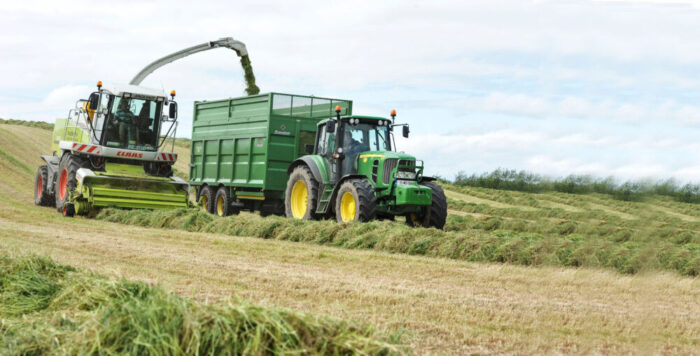
Teagasc research has highlighted the potential to reduce concentrates fed to ewes in late pregnancy when high feed value silage is available. Damian Costello, Sheep Specialist, Teagasc Animal & Grassland Research & Innovation Programme, Mellows Centre, Athenry, tells us more.
High DMD silage has a high net energy concentration. Ewes like it a lot. This results in high intake and high animal performance. In studies conducted at Teagasc Athenry, feeding high DMD silage to housed ewes was found to have a positive impact on ewe body condition at lambing and lamb birth weight. The benefits are substantial. Each 5% rise in silage digestibility improved ewe bodyweight immediately after lambing by 6.5kg and lamb birth weight increased by 0.25kg. This resulted in lambs being on average almost 1kg heavier at weaning time. Making high quality silage requires care and attention. You can’t make a silk purse out of a sow’s ear is an old saying that can be applied to making high feed value silage. Unless you are harvesting top-quality grass at the right growth stage that has been appropriately managed since pre-closing you simply will not end up with top-quality silage.
Potential financial benefits
For the average lowland mid-season lamb producer, the concentrate feed bill accounts for about 44% of the annual direct costs (Teagasc National Farm Survey 2024). Research carried out in Teagasc Athenry has highlighted the potential to reduce concentrates fed to ewes in late pregnancy when high feed value silage is available. Table 1 (above) summarises the total pre lambing concentrate supple mentation required by twin bearing lowland ewes when fed along with both precision chopped pit silage and unchopped silage bales of varying DMD values. Feeding ad lib high feed value silage along with lower levels of concentrate supplementation clearly offers financial benefits. And you will still be hitting key performance targets in relation to ewe body condition, colostrum production and optimum lamb birth weights. Short chop length silage increases ewe intake. This further lowers concentrate requirements relative to the similar DMD unchopped silage. Chopped silage is always preferred for sheep, but to make really big savings on concentrates you must be making high digestibility silages.
| Table 1: Effect of silage feed value on concentrate requirements of twin bearing ewes in late pregnancy (kg/ewe) | ||||
| Silage DMD % | ||||
| 79 | 72 | 65 | 60 | |
| Precision Chopped | 8 | 18 | 25 | 35 |
| Big bale/single chop | 12 | 24 | 34 | 40 |
| ( Keady, 2016) | ||||
How much silage do ewes require?
The guideline silage requirement for the average lowland ewe is 0.15 tons pit silage per ewe per month or 0.19 bales per ewe per month. Budget for 15 to 16 tons pit silage or 19 to 20 bales per 100 ewes per month. If you are rotational grazing (highly advisable), some or all the sheep silage requirement will be met from removing surplus grass covers as high quality silage bales.
Use permanent spray paint to identify the different batches of bales. Ensure that bales likely to be high DMD material are stored so that they will be accessible when needed. The actual quality of the various batches should be determined later by analysing representative silage samples. Ideally, ewes should be offered high feed value silage right throughout the housing period.
Management of paddocks at closing
Graze out tightly to 4cm to remove any dead material prior to closing for silage. Roll ground where necessary to reduce the risk of soil contamination. If clods of soil end up in silage (whether pit or bale) there is a risk that sheep fed on this silage can ingest the bacteria that cause listeriosis. Check P & K requirements based on the most recent soil analysis, taking care not to exceed P allowances. Apply up to 100 to 120kg/ha N in the form of an appropriate compound or protected urea. Remember that about 30% of N previously applied for grazing will still be available to the plant. Reducing chemical N applied at closing will enable earlier harvesting. It will also reduce the risk of crop lodging pre-harvest which negatively impacts digestibility. If, for example, 80kg/ha N is applied in mid-April, under normal growing conditions this nitrogen will be used up in four to five weeks allowing for a late May harvest date. This in turn allows for closing in time for a second cut where necessary.
Harvest at correct growth stage
The main factor affecting DMD is crop maturity at harvesting. The target for high quality first cut silage is to be cutting before grass seed heads start to emerge. A common reason for delaying
harvesting is concern over whether the crop has used up all applied N. If in doubt, contact your local Teagasc advisor to test grass sugar levels and nitrates – it may enable crop to be safely ensiled sooner given the right conditions.
Don’t delay harvesting
Research has shown that for each week harvest is delayed digestibility goes down by 3% units. The aim is to harvest leafy material before the grass heads out and before base of the sward begins to decay – regularly walk and inspect the crop, watch the weather and take the best available opportunity to mow.
Tips on mowing
The optimum time for mowing is in the afternoon of a sunny day when grass sugars and dry matter levels are at their highest. This is not always practical but at least aim for a dry day and allow the dew to evaporate from grass before mowing. Don’t mow too tightly to avoid ensiling dead material and the risk of soil contamination. Ensure that mowers and tedding machines are set at the
correct height to avoid rooting up soil. Where soil contamination may be an issue due to poor ground conditions at harvest, identify this silage as not-to-be-fed-to-ewes next winter. Effect of wilting on silage quality Wilting negatively impacts digestibility and the rate of reduction in DMD due to wilting has varied among different studies. Each day (24 hours) of wilting will reduce silage DMD by between 0.5 and 2 percentage points. Aim for a rapid wilt of 24 to 36 hours after mowing. Target 25% dry matter at ensiling for pit silage and 30% dry matter for bales. Spreading heavier crops over the ground straight after mowing helps achieve this but is generally not necessary for light cuts. Surplus bales or light crops should be baled and wrapped relatively soon after cutting particularly if good drying conditions prevail.
Anaerobic conditions for good preservation
Ensure your silage pit is covered and fully sealed as soon as possible after filling. With bales, extra layers of plastic wrap combined with careful handling and storage will help ensure air is totally excluded from the bale. Don’t allow birds or other vermin damage your silage clamp or bales and don’t forget to repair any bales damaged in transit. This will help minimise moulds and wastage.
The article was first published in Today’s Farm Teagasc, April-June 2026