
30 September 2022
Winter diets for organic cattle systems
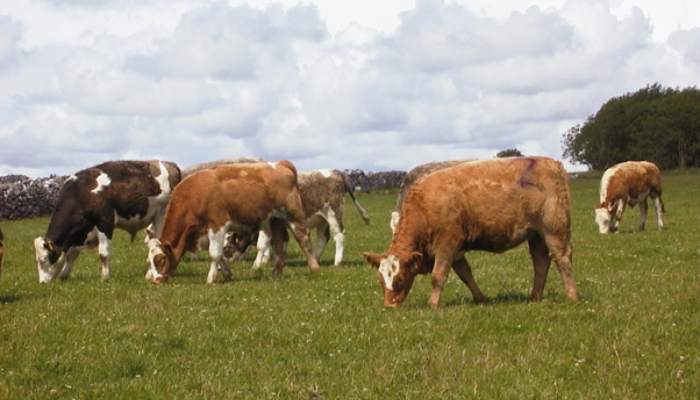
The correct winter diet for cattle depends on the breed, age, and class of stock to be fed. Good intakes of high energy feed with adequate protein are the main benchmarks to look at. Teagasc specialist Joe Patton gives information and advice
Summary
- To achieve good daily weight gains over winter, cattle need high intake of energy with adequate protein, plus minerals and vitamins
- Given the cost of organic feed supplements, it is essential that home-produced forages are of sufficient quality to meet most of the animal’s requirements.
- Crop growth stage, and management at harvest, determine silage quality through effects on sward fibre content and preservation. These are more important quality factors than choice of crop per se.
- Silage quality on beef and dairy farms remains very poor at national average level. Farms considering a switch to organic must review this issue for their own system.
Introduction
For weanling cattle, an intake of around 1.9% to 2.0% of liveweight, that is 6.3kg for a 330kg animal for example, should be possible with good forage. There tends to be a lot of focus on diet crude protein (CP) on organic and conventional farms alike. It is relatively straightforward to meet the needs of weanlings with 14% CP in diet and finishing cattle with 1-12% CP in diet. The bigger issue at farm level is having forage that has high energy and excellent intake characteristics.
Feed Quality
Good preservation characteristics, pH, lactic acid, ammonia must be met across all silage types. After that, the main question is feed ‘quality’. Digestibility of the crop dry matter (DMD) is the best overall measure of quality as it measures how much of the feed eaten can be utilized by the animal for maintenance, weight gain or milk. For example, 1 tonne of 66% DMD silage contains 660kg of animal feed whereas a tonne of 75% DMD silage contains 750kg of animal feed. Cattle will eat up to 20% more per day – 2kgDM – of the higher DMD silage. This gives much faster carcass gain, 7.5kg per month and reduced days to slaughter. It takes much less ‘good silage’ to finish an animal than ‘bad silage’ as a result. For cattle in their first winter, the difference in 75% v 66% DMD silage amounts to almost 2.5kg less meal to achieve a daily gain of 0.6kg per day.
Silage quality is affected by a range of factors, however crop growth stage at harvest is the most important element. Growth stage determines the fibre content of the crop, which translates directly into digestibility, energy and intake values. Dietary fibre, measured as neutral detergent fibre, NDF, is the main determinant of feed intake capacity. Animals usually can’t eat much more than 1% of liveweight as NDF so excess fibre slows down intake. Energy content per kg is also reduced because the additional fibre is less digestible than leaf or starch.
Therefore, whether the silage crop is red clover, a grass legume mix, or a cereal-legume combi-crop, the main factor determining quality is management of harvest stage. This will evidently differ depending on the crop type, however it is important to remember that it is possible to have excellent or very bad quality crops across all these silage types.
Given the relative cost of purchased concentrates, the priority for organic livestock farmers should be to optimize their forage system to produce high quality silage in tandem with a long grazing season. This will involve the use of grass/legume silages and cereal/combi crops in rotation.
For all forage types, achieving high digestibility and energy content at acceptable dry matter yield per hectare will be the key driver of winter diet quality. However, average silage quality on beef farms nationally remains well below target, at 66% DMD compared to a target of 74% plus. Based on survey work, this is primarily due to delayed cutting date beyond the optimal growth stage for quality. The main reason cited is placing a priority on silage bulk over quality for silage management decisions. For farmers currently routinely making ‘national average’ silage but considering a switch to organic beef production, decision rules and priorities on silage making will need be reviewed.
A forum took place at the OrganicBeef22 Open Day on the farm of John Purcell, Co. Tipperary on Wednesday, 28 September and was addressed by Minister Charlie McConalogue. The forum chaired by Damien O’Reilly included panel speakers Joe Bourke, Bord Bia; Catherine Roche, Irish Country Meats; Jack Nolan, Department of Agriculture, Food and the Marine; Pat Dillon, Teagasc and host farmer John Purcell
Download the Organic Beef Open Day booklet here
Find out more about organic farming here