
Winter feed guidance on dairy and beef farms
Farmers visiting the Teagasc exhibit at the National Ploughing Championships can avail of winter feed guidance from Teagasc advisors and specialists.
The Teagasc display on ‘Getting the most from winter feed on beef farms’ examines the importance of making high-quality silage and using it efficiently to keep supplementation costs under control this winter.
This demonstration will showcase the varying feed requirements of various classes of beef cattle, focusing particularly on the importance of silage testing in formulating winter diets, thus allowing supplementation rate and ration ingredients to be matched to achieve the required level of animal performance at the best value.
Dairy farm feed budgeting
Teagasc dairy specialists and advisors are also present, encouraging farmers to audit feed stocks and winter feed demand as soon as possible. At a minimum, dairy farmers should aim to have 80% of the forage needed present on farm by early November.
At the Teagasc display, Teagasc staff will be available to discuss the various strategies available to farmers to meet this shortfall – if one exists – over the coming winter. Some actions might include the early sale of dry cows, adding forage/straights to dry cow diets or sourcing forage locally, with the latter, however, transport and feed-out costs should be considered.
Although the winter is approaching, dairy farmers also need to keep one eye on next spring. Teagasc representatives are advising farmers to complete an autumn closing plan, commencing to close paddocks in October to ensure a spring grass supply. The importance of maintaining a high-quality silage buffer (1-2 bales/cow) will also be outlined.
Fodder budgeting
Teagasc advisors are available at the Teagasc stand at the National Ploughing Championships, to meet and talk to farmers about their fodder situation for this coming winter. There will be an opportunity for farmers to complete fodder budgets for their farms.
Options on how to fill fodder gaps will be discussed, and the best options for individual farms will be outlined.
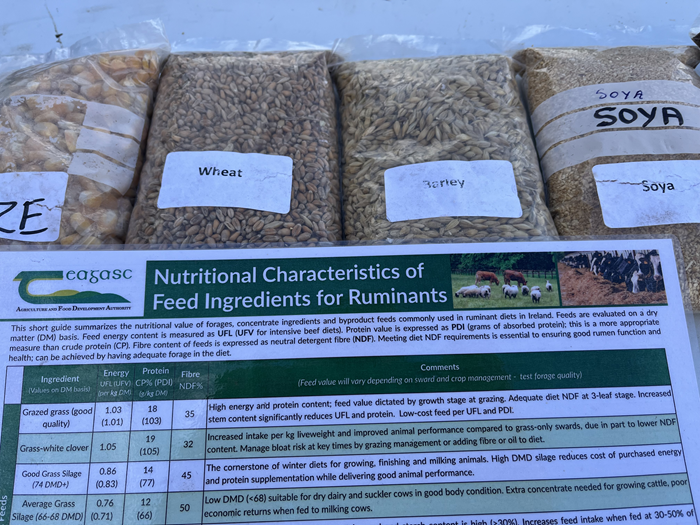
A new factsheet on the ‘Nutritional Characteristics of Feed Ingredients for Ruminants’ has been prepared by Teagasc and is available to help farmers make informed decisions when comparing various feed options.
For more on meeting the dairy nutrition needs of all stock on your farm, visit the Teagasc exhibit at this year’s National Ploughing Championships. The Teagasc stand is located at Stand 137, Row 7, Block 3.