
Winter feeding costs – where savings can be made
In recent years, global conflicts, including the ongoing Iran war, have increased volatility in energy, fertiliser and machinery markets, driving up costs. Austin Callaghan, Teagasc Drystock Advisor, outlines practical measures farmers can consider to help reduce costs on farm.
Fertiliser costs are now, in some cases, multiples of what they were previously, as are building and machinery costs. The Iran war caused the price of green diesel to practically double overnight. This price has eased somewhat in recent weeks but remains very high. Machinery costs have also spiralled.
With the increases in the price of fertiliser, green diesel and silage plastic, the costs of wintering cattle have greatly increased. Unfortunately for beef farmers, this increase in costs has also coincided with a large drop in beef slaughter prices. So, here are a few options to consider to reduce those costs.
Cost per utilised energy unit for feedstuffs
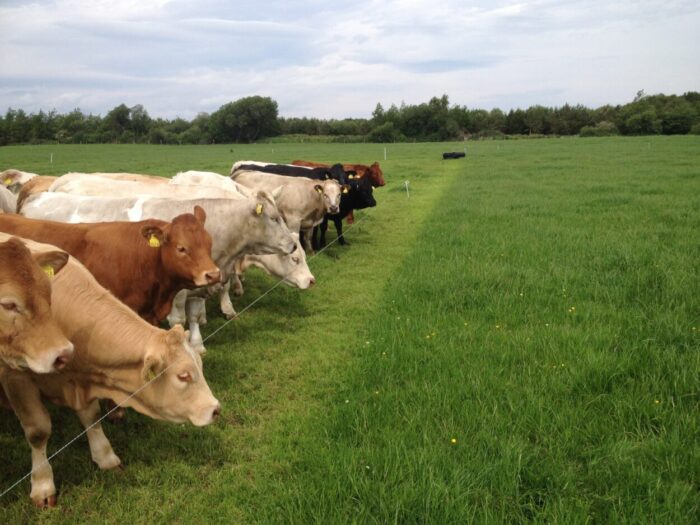
On Irish farms, grazed grass remains the lowest-cost feed available. A renewed focus on grazing management on cattle farms needs to be undertaken. A proper paddock system should be in place so that grass quality and utilisation of the grass grown are maximised. Grazing management in the spring and autumn needs to be carried out so as to maximise grazed grass in the diet. This, of course, is difficult on wetter farms, but there is scope for improvement on all farms.
Winter silage costs on all farms will spiral and this will be felt more so on the wetter farms where the winter housing period is longer. In all cases, it is important to make high-quality silage where growing cattle are housed. Where cows are being fed, bulk is important; however, bulk is detrimental to quality in most cases. Where the farm is cattle rearing only (no cows), silage quality is your number one priority. It is a large part of reducing winter feed costs. First-cut silage should be harvested by the 20th of May, and farmers who do this recognise the improved quality of their silage and the resultant increased growth rates of cattle over the winter housing period. They will never revert to making first-cut silage into June. In the scenario where you do not have adequate silage, then consider feeding fewer cattle.
Number of cattle wintered
On suckler farms where weanlings are sold in the autumn, only in-calf cows should be housed, along with replacement stock. What tends to happen on farms is that late-born calves, which have not achieved adequate weights by the autumn and are unsuited for sale, are housed. Appropriate meal feeding of these cattle needs to take place. Feeding very expensive poor-quality silage with low meal feeding is a complete no-no for these growing cattle.
Silage costs
Baled silage, including fertiliser and contracting charges (slurry, cutting and baling), will now cost close to €35 per bale. Add in a land charge and these bales will have a cost in excess of €50 per bale. Farmers making large numbers of bales may need to look at making pit silage.
Those farmers with a good paddock system should be able to get 20% of their silage from these paddocks. This is where a paddock becomes too strong or heavy and is cut so as to maintain quality in the grazed sward. The land charge here will be lower as these fields are not excluded from grazing for periods of up to 14 weeks, as is the case in a two-cut silage system.
Red Clover Silage
Red clover silage is now much more price-attractive. It is giving increased cattle growth rates and is an option that should be looked at on many farms. The management of red clover silage will result in better silage quality. In addition, there are no nitrogen fertiliser applications to the second and third cuts (slurry is required).
Meal feeding
As silage-making costs increase, meal feeding becomes more cost-beneficial. Meal prices reduced last winter. Surprisingly, there are still farmers who do not feed meal at appropriate levels over the winter months. They continue to feed poor-quality silage (very high cost per unit of energy) and do not supplement with meal as required.
High costs will affect every farming sector and the entire economy. On cattle farms, a huge portion of farm costs relates to the winter housing period. Every effort should be made to reduce the unit feed costs on every farm.