
17 February 2024
Working through an iceberg disease breakdown in Co. Wicklow
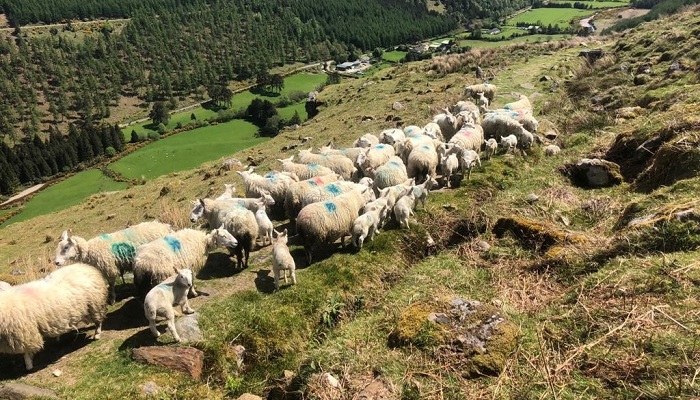
Operating on a combination of upland mountainous grazing and enclosed green ground, Patrick Dunne carries a 400 hill ewe flock in Co. Wicklow. As part of this year’s Teagasc National Sheep Conference, he shared his experiences of dealing with the iceberg disease ovine pulmonary adenocarcinoma (OPA).
A contagious virus, OPA causes tumours to form in the lungs of sheep. These tumours produce mucous, leading to reduced performance and death over time. No treatments or vaccinations are effective, so a culling strategy based on the identification of infected ewes is the avenue to limit its impacts within a flock.
A study conducted by the Department of Agriculture, Food and the Marine on the lungs of 2,000 cull ewes in abattoirs estimated a prevalence of 1.8% for this disease. In reality, its prevalence is probably higher, as many of the infected animals don’t make it to the factory stage.
It was back in 2015 that Patrick first noticed some ewes were in poor body condition, but he had initially blamed the genetics in play or a mineral deficiency. The same scenario occurred in 2016 when ewes were gathered off the hill for scanning. This time, Patrick offered the ewes concentrates and feed buckets on the hill, but some ewes remained thin at lambing time.
At scanning in 2017, the problem persisted and Patrick instead opted to house the ewes over the winter months, adding: “There was an awful lot of thin ewes so I kept them in the sheds to try and feed them. It was in that winter that we started to see all these sick ewes and ewes drooling from the nose.
“I presumed it was just pneumonia and I was treating any sick ewe. I done that for a few weeks and it wasn’t working.”
Following a veterinary examination, the finger was pointed at OPA, with the presence of this virus later confirmed through post-mortem examinations at the Regional Veterinary Lab.
“I had to google OPA,” Patrick said, “I didn’t really know what it was or understand it. There’s no vaccine and there’s no cure, so we had to separate off any ewe that was thin or any ewe that might have it. It was a guessing game really and we were only going by the thin ewes.”
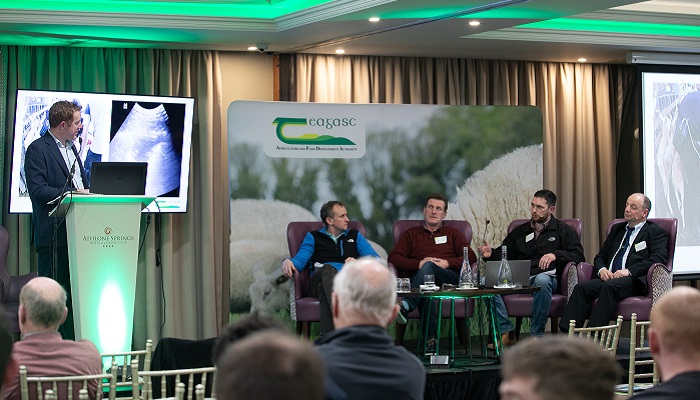
Darren Carthy (pictured at podium), Irish Farmers Journal, chaired a discussion featuring from L:R: Seamus Fagan, DAFM; John O’Connell, farmer; Patrick Dunne, farmer; and Michael Gottstein, Teagasc Head of Sheep Knowledge Transfer, at the Teagasc National Sheep Conference.
Patrick then learned that OPA can be diagnosed through scanning the lungs of the ewes. This was initially completed in June 2018. At this time, 83% of the flock were identified as being clear, 4% slightly suspicious, 4% highly suspicious and 9% condemned. From this information, Patrick made the decision to cull 13% of the flock (condemned and high suspicious fractions), something he described as a “savage hit to take”.
Commenting further, Patrick said: “90% of the ewes that were pulled out that day were thin ewes and I probably could have guessed, but there was young ewes and good ewes that seemed perfect and they were the danger ones because they were in the main bunch and they were spreading it.”
It didn’t take long to see the impact this culling policy had on the flock. A further round of scanning was completed in February 2019 and just 1% of the flock were highly suspicious and 2% were condemned; both categories were culled. At scanning for OPA in July 2022, similar results were again observed.
“Culling at the start made all the difference,” Patrick said, “the sheep looked all the better, fertility was up and scans were up straight away. Ewes were in better order and I stopped spending as much money on mineral drenches and boluses.”
The results of this culling strategy are also evident in the scanning rates being achieved. In the 2017/2018 period, the year before the first cull was completed, 19.5% of the flock failed to lamb and a scanning rate of 1.02 was recorded. In 2019/2020, two years after the initial cull, 9.4% of the flock failed to lamb and the scanning rate had increased to 1.13%.
Patrick has plans to scan his ewes again for OPA in the future and, although there is a small amount of OPA still circulating within the flock, he’s changed his culling and management policies to account for this. This includes an increased focus on monitoring body condition score and culling thin ewes with no other obvious cause.
For more from the Teagasc National Sheep Conference, click here.
Also read: Overcoming an abortion ‘storm’ in Co. Leitrim
Also read: Shedding light on the key considerations of succession planning
Also read: Pregnancy nutrition – the foundation of flock profitability