
EU Commissioner visits Teagasc at the National Ploughing Championships
Teagasc outlined the actions farmers are taking to improve water quality and address fodder deficits when the EU Commissioner for Agriculture and Food, Christophe Hansen visited the Teagasc Exhibition at the National Ploughing Championships.
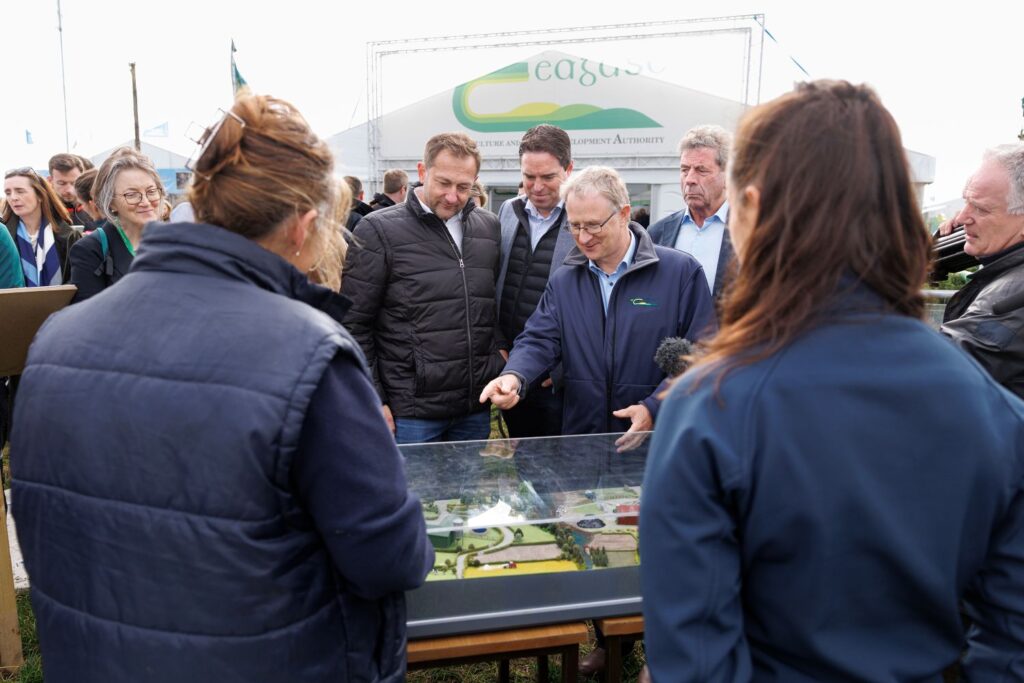
Pictured at the Teagasc Exhibition at the National Ploughing Championships in Tullamore, discussing the Better Farming for Water Campaign, were: Teagasc Director, Professor Frank O Mara (centre) with Christophe Hansen, EU Commissioner for Agriculture and Food; Martin Heydon TD, Minister for Agriculture, Food and the Marine; Sinead McPhillips, Secretary General in the Department of Agriculture, Food and the Marine, and Liam Herlihy, Teagasc Chairperson
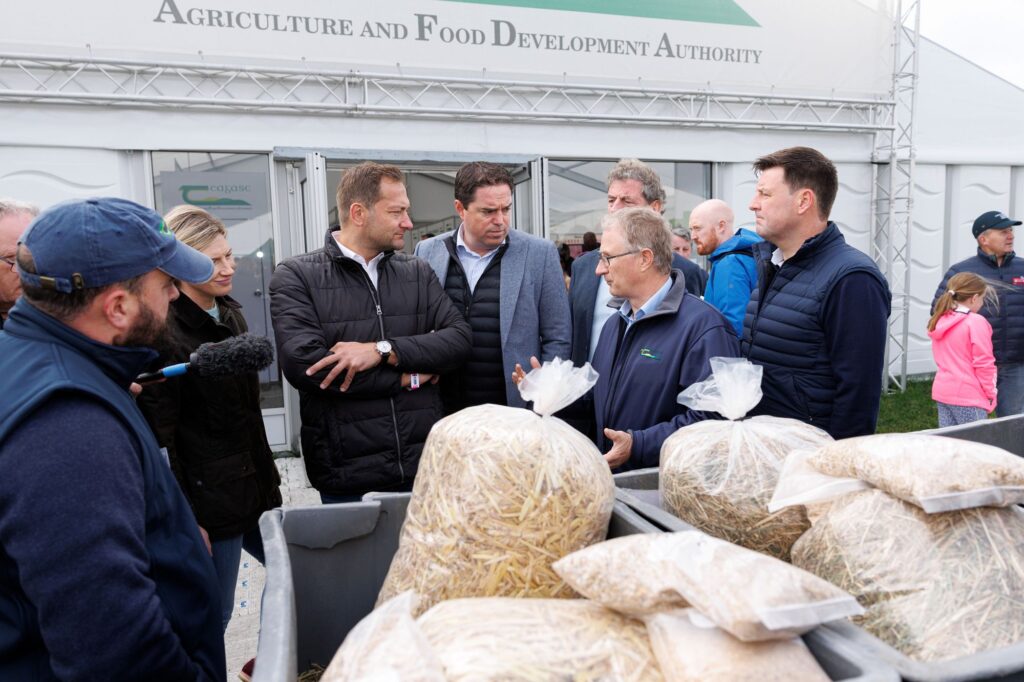
Pictured at the Teagasc Exhibition at the National Ploughing Championships in Tullamore, discussing winter feeding options were: Teagasc Director, Professor Frank O Mara (centre) with Christophe Hansen, EU Commissioner for Agriculture and Food; Martin Heydon TD, Minister for Agriculture, Food and the Marine; and Liam Herlihy, Teagasc Chairperson.
Teagasc Director, Professor Frank O’Mara and Teagasc Chairperson, Liam Herlihy welcomed Commissioner Hansen and Minister for Agriculture, Food and the Marine, Martin Heydon TD to the Teagasc stand last week.
Fiona Doolan, the Boyne catchment co-ordinator with Teagasc, along with Roisin McManus, Sustainability Advisor with ASSAP, showcased the Better Farming for Water Campaign, and the positive actions farmers are taking to play their part in addressing water quality. An exhibition showing good farm practice was discussed with the Commissioner when he visited, accompanied by the Minister Heydon.
James Dunne, Teagasc Dairy specialist and Annemarie Kearney, Dairy Business and Technology advisor highlighted the winter-feeding options available to farmers who were impacted by the drought during the summer months. The main message is to address any fodder deficits during the dry cow period on dairy farmers, when alternative forages like hay and straw can be introduced to the diet with additional concentrate to replace some of the silage requirement.