Grass Growth Recovering
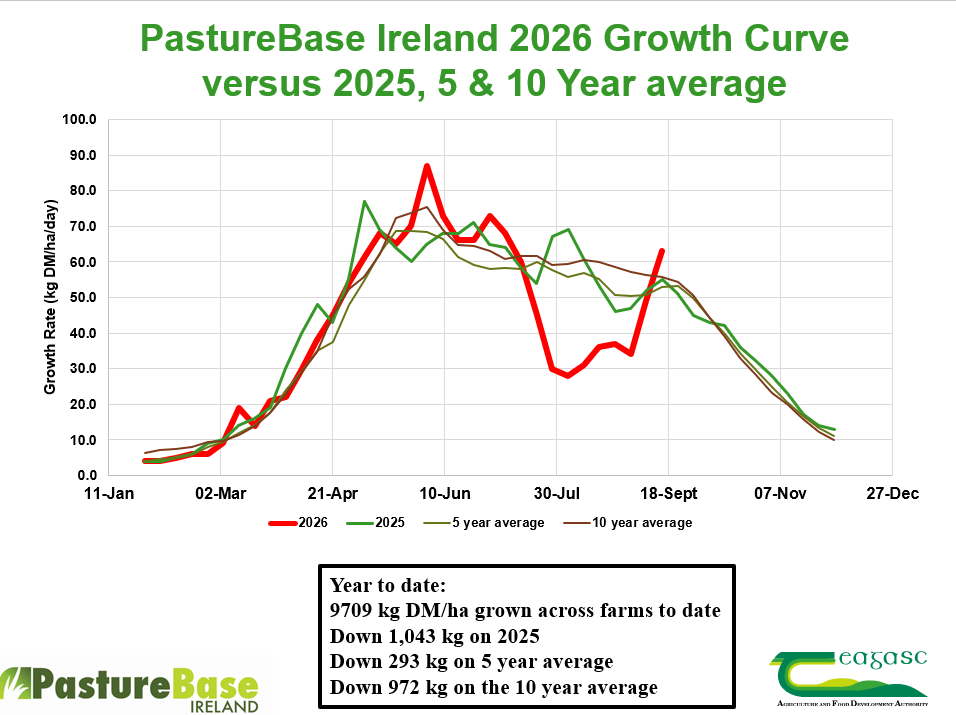
The rain which fell across the country following the prolonged period of dry weather in July and August, has had an impact on grass growth. When the rain eventually came, grass growth has bounced back. Data from the national grassland database, PastureBase Ireland has pointed to a significant recovery in grass growth rates.
As recorded by farmers, average grass growth rates of 60+ kilograms of grass dry matter per hectare per day were measured last week and predictions from the Teagasc MoSt Grass Growth Model suggest this these growth rates are likely to hold into the coming weeks.
Commenting on the extent of this grass growth recovery, Head of the Teagasc Grassland Science Department, Professor Michael O’Donovan said: “The return of moisture to warm soils where nitrogen mineralisation has occurred has resulted in a significant increase in grass growth rates.
“Since August 11, grass growth rates have doubled, and evidence of a high grass growth recovery is now visible in all parts of the country.”
See Grass Growth Curve from PastureBase Ireland below.
Fodder Budgets
Teagasc advisors are available at the Teagasc stand at the National Ploughing Championships, to meet and talk to farmers about their fodder situation for this coming winter. There will be an opportunity for farmers to complete fodder budgets for their farms.
Options on how to fill fodder gaps will be discussed, and the best options for individual farms will be outlined.
A new factsheet on the ‘Nutritional Characteristics of Feed Ingredients for Ruminants’ has been prepared by Teagasc and is available to help farmers make informed decisions when comparing various feed options.