
New Teagasc Booklet Highlights Biodiversity Opportunities on Irish Equine Farms
A new booklet, “Biodiversity on Irish Equine Farms”, has been published by Teagasc equine specialists in collaboration with research colleagues in Johnstown Castle and biodiversity specialists.
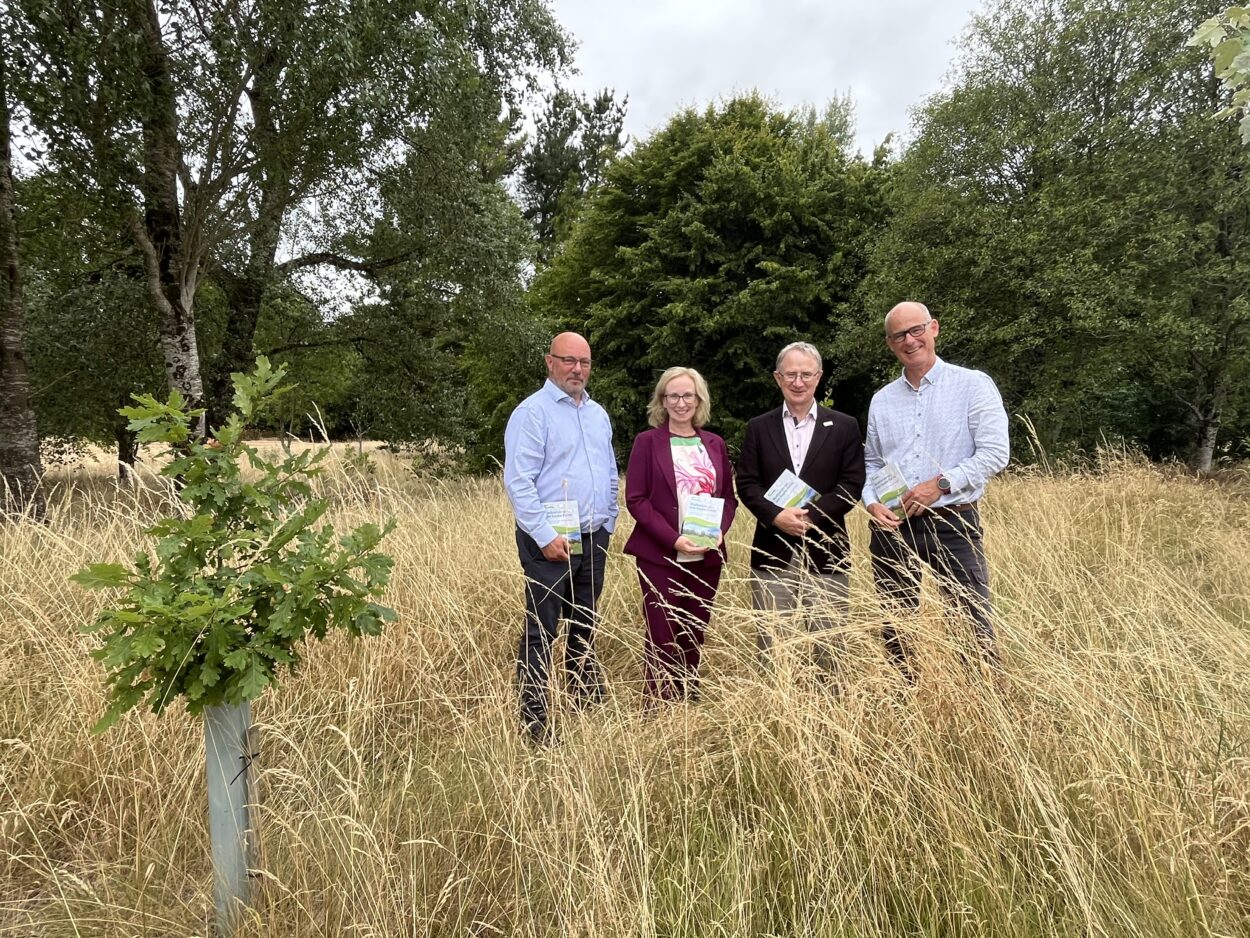
Pictured launching the booklet were (l to r): John Spink, Head of the Teagasc Crops, Environment and Land use Programme, Wendy Conlon, Teagasc Equine Specialist; Teagasc Director, Professor Frank O’Mara, and Kevin Hanrahan, Head of the Teagasc Rural Economy and Development programme.
This practical new resource offers examples of how to support biodiversity on equine farms, providing simple actions equine farmers can take to protect and enhance nature on their farms.
Equine farms have an important role to play in contributing to protecting and enhancing the natural environment. Protecting biodiversity is centred on identifying effective measures to enhance the biodiversity that already exists, while helping to reverse the decline in biodiversity evident across the wider landscape.
Wendy Conlon, Teagasc Equine Specialist said: “Many farms already actively enhance biodiversity by maintaining diverse landscapes, allowing native hedgerows to grow tall and wide, sowing diverse, horse-friendly grasses and herbs, and preserving vegetated field borders with flowering grasses that provide food sources for birds, and habitats for insects and wildlife. Environmental stewardship and horse welfare are also interlinked, and prioritising both contributes to securing a sustainable future for the sector.”
Saorla Kavanagh, Teagasc Research Officer said: “Reducing hedgerow management and allowing hedgerows to flower can play a huge part in enhancing biodiversity on equine farms. Using organic manures, strategic grazing and pasture management can help to improve soil health, increase the number of flowers found within the fields, providing food for pollinators and other insects”.
John Spink, Head of the Teagasc Crops, Environment and Land Use Programme said: “There is an urgent need to halt and reverse the decline in biodiversity and actions taken by farmers and landowners are critical to achieving this. However, it is not always easy to know exactly what to do, particularly as in the past some policies which farmers were encouraged to follow have been detrimental to biodiversity, this simple brochure which explains what to do and why you should do it, is therefore an excellent resource for the equine sector.”
Teagasc Director, Professor Frank O’Mara said;” Improving environmental sustainability is one of Teagasc’s priorities for the agri-food sector as this contributes to both competitiveness and resilience. Biodiversity is one of the cornerstones of a good environment and this booklet outlines simple but effective measures that equine farmers can take”.
The new booklet highlights how practical farm management decisions can contribute to protecting and enhancing biodiversity while supporting healthy soils, pasture management, and the welfare of horses. Actions such as allowing hedgerows to grow tall and wide, allowing field margins to flower, improving soil health using organic manures, and adopting appropriate grazing strategies can all contribute to enhancing biodiversity on equine farms, ensuring the resilience of the equine farming sector.
The “Biodiversity on Irish Equine Farms” booklet is one of a range of Teagasc resources addressing farmland biodiversity and the protection of the Irish countryside.
The new booklet can be accessed here
The previously published booklet “Grassland for Horses” complements the messages in “Biodiversity on Irish Equine Farms” and provides further information relevant to the management of grassland on equine farms. It can be accessed here