
HNV Identification
Identification of High Nature Value (HNV) farmland on lowland farms in East County Galway, Western Ireland
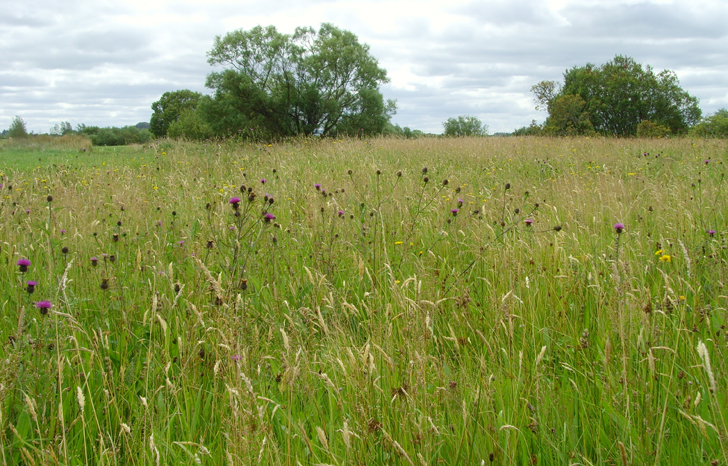
There is increasing interest in the extent and distribution of wildlife habitats on farmland, to demonstrate public good benefits of CAP expenditure, address specific policy goals to protect biodiversity, and to support the validation of sustainability claims for food production systems.
We developed methods for identifying semi-natural habitat cover on farmland, and surveyed grassland habitats on lowland farms located outside EU- or nationally-designated sites in the west of Ireland (e.g. outside of Natura 2000).
- We found a widespread occurrence (43% of surveyed fields in east Co. Galway) of a ‘semi-improved grassland’ category that is not currently recognised in the Irish grassland classification system. Failure to identify semi-improved grassland can underestimate the biodiversity levels on farmland. When considering Type 2 HNV farmland in Ireland in particular, a good grassland classification system is necessary to accurately quantify the biodiversity value of those grasslands. The use of a ‘semi-improved grassland’ category has potential for improving the identification of HNV farmland, agri-environment biodiversity targets, and grassland restoration.
- Semi-natural habitat cover on lowland farms was best predicted using the variables ‘stocking density’, ‘soil diversity’ and ‘river and stream length’. Such modelling approaches could be further developed and used to provisionally target areas with high percentage of semi-natural habitat. Farm-scale assessments may still be required for verification and local targeting of measures of greatest environmental merit.
- Field boundaries are important components of Type 2 HNV farmland but their ecological value can vary between regions. Although hedgerows are the dominant field boundary habitat, other field boundary habitats can also make significant contributions to the biodiversity of a farmed landscape. Field boundaries contribute significantly (up to 100%) to the semi-natural habitat cover of some farms. Improving the ecological quality of these existing field boundaries should be catered for in agricultural policy, particularly agri-environment schemes.
- These results point to significant opportunities for the targeting of agri-environmental funding toward the protection and/or restoration of existing farmland habitats and species of conservation value.
Further information
- End of project Report. Surveying and modelling of semi-natural habitat cover on farmland. 2009. RMIS 5729 Teagasc.
- Caroline A. Sullivan, John A. Finn, Mike J. Gormally, Micheline Sheehy Skeffington. 2013. Field boundary habitats and their contribution to the area of semi-natural habitats on lowland farms in east Galway, western Ireland. Biology and Environment 113B, 2, 1-13.
- Sullivan, C.A., Bourke, D., Gormally, M.J., Sheehy Skeffington, M., Finn, J.A., Green, S. and Kelly, S. 2011. Modelling semi-natural habitat area on lowland farms in western Ireland. Biological Conservation 144: 1089-1099.
- Sullivan, C.A., Sheehy Skeffington, M., Gormally, M.J. and Finn, J.A. 2010. The ecological status of grasslands on lowland farmlands in western Ireland and implications for grassland classification and nature value assessment. Biological Conservation 143: 1529-1539.
- Sheridan, H., McMahon, B.J., Carnus, T., Finn, J.A., Kinsella, A., Purvis, G. (2011) Pastoral farmland habitat diversity in south-east Ireland. Agriculture, Ecosystems & Environment 144: 130-135.
Funding
C. Sullivan was funded by the Teagasc Walsh Fellowship Scheme.
